cyborg from terminator and murder bot Despite the rapid adoption of artificial intelligence and robotic technology around the world, the series remains fictional for now.
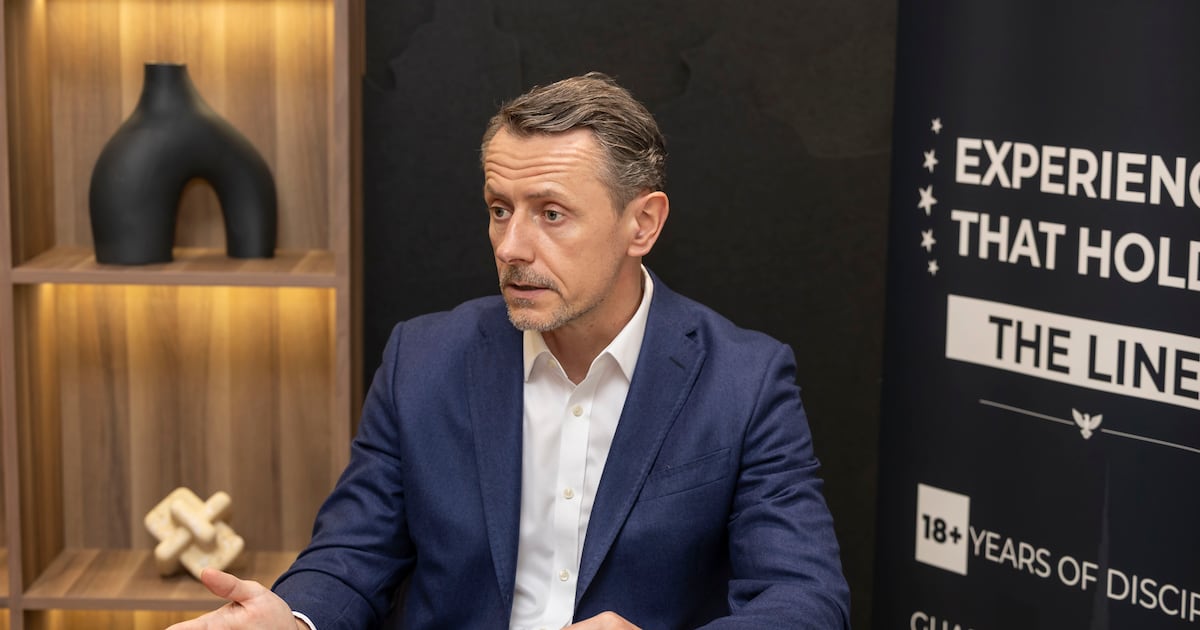
says Radovan Opitz, founder and CEO of Dubai-based private security company Falcon Shield. While AI is already disrupting the private security business, the human element will continue to be irreplaceable, he says.
“My opinion is that the future of the security industry is purely about humans. Observation skills and predictions and seeing something and then actually solving it are not possible without the physical presence of humans,” Opitz said. The National in an interview.
Services such as CCTV and AI tools can help with facial recognition, but “being there, patrolling, or even physically being there is irreplaceable,” he argues.
Originally from Slovakia, Opitz worked in the private security industry for nearly 20 years, based in New York and London, before starting his own company in Dubai last year. Falcon Shield is licensed in the emirate and provides bodyguard services, close protection, and security for hospitality and events.
He gave an example of when a US politician was attending an event in the British capital while in London. “She gave a speech and stayed for three nights. There were also demonstrators, so there were some challenges. We had to make sure everyone was happy and everyone was safe, but the team was great on the scene and isolated the whole incident… and everything went well.”
“That’s what we do day and night. Just make sure that no matter what situation comes up, we have to step in and respond. So it’s all about how we react to those issues on the ground. She was very appreciative and the whole team was definitely happy with the outcome.”
The key is to be “very private, very discreet” and to make people feel safe “because they trust us,” Opitz said. Whether they’re actors, singers, politicians, members of the royal family, “we go into their private lives. Based on where they are, who they are, where they travel… Whoever they are, they want to make sure they’re safe.”
growing demand
Despite strong regional competition in the sector, Opitz says there is room for growth and room for more players to join, especially because the industry is not transforming at the pace it needs to.
Clients “tell us in meetings that we need fresh ideas and new approaches,” he says. That’s needed to revitalize the industry, he explains. It’s not just about talent, it’s also about technology and how companies have to evolve to become more agile or more pragmatic.
“It’s how we improve training, it’s how we improve communication between our office and field operations teams.” New technology applications speed up communication between team members and allow information to pass through quickly. “I am very surprised that even well-established companies still use Excel sheets and other forms to conduct their business.”
This sector has recorded significant growth in the Gulf region. The value of the security industry across the Gulf is expected to increase to about $6.9 billion by 2034, up from about $3.4 billion last year, according to IMarc research. The report said, “Increasing adoption of advanced security systems to protect assets and reduce risks, increasing employment in the transportation sector to ensure passenger safety, and rising cyber crimes, cyber threats, and data breaches represent some of the key factors driving the market.”
Citing similar estimates, Opitz said that as more buildings are built in the area, demand for services such as home security, concierge and reception services will also increase.
“The decision to open an office in Dubai in April 2025 was the right one and we are looking forward to the future. We are really excited to be working with so many big brands and big companies. The region is definitely positioned to expand further after these unfortunate events.” [during the Iran war]However, I am confident that a positive future is here and security companies will grow based on the right approach and demand,” he says.
Another area with potential for future growth is maritime security, an issue particularly highlighted by the blockade of the Strait of Hormuz during the war.
“Private security companies are coming in, or are already coming in, and they’re getting into the part that supports the Department of Defense, and they’re contracting to support the teams with technology, how to operate the drones, how to actually monitor patrols in certain areas,” Opitz said.
Private shipping companies may also request the deployment of armed or unarmed security teams once the strait is fully reopened and operations resume. “This is the next step in bringing in private security companies,” he says.
Looking ahead, the company aims to hire between 75 and 150 people by the end of this year and launch operations in other emirates by October or November. It expects revenue to reach about 5 million dirhams ($1.36 million) this fiscal year.
Opitz said Falcon Shield also aims to expand into Saudi Arabia by the end of the first quarter of next year.
“We believe we are in the right industry and in the right place at the right time, where…the demand for security services will only continue to grow,” he says. “It’s up to us to ensure that the quality we offer is the best that our customers can accept and for a reasonable price.”