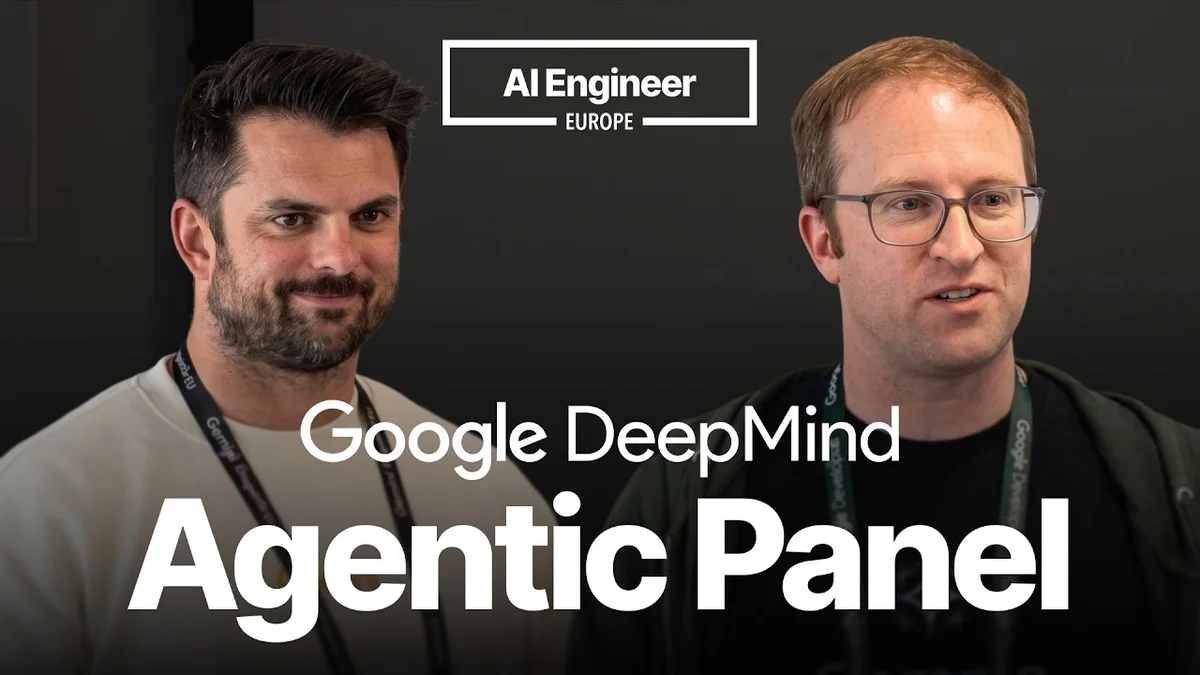
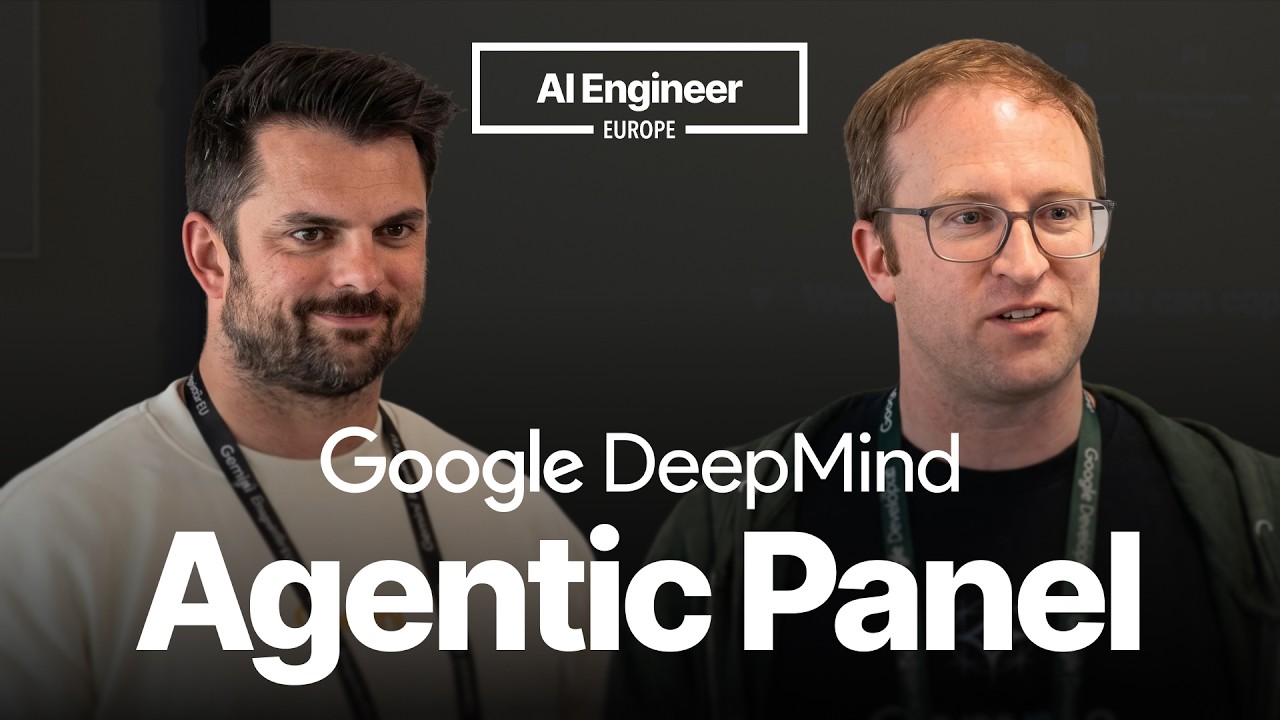
Google DeepMind’s KP Sawhney and Ian Ballantyne recently shared insights into the complex systems that power AI agents at scale. This presentation at the AI Engineer Europe event provided a glimpse into the engineering challenges and solutions behind running advanced AI agents that can perform complex tasks. Sawhney and Ballantyne detailed how DeepMind tunes these agents to ensure they work efficiently and reliably across a variety of applications.
Scale DeepMind: How Google runs agents — from an AI engineer
Visual TL;DR. DeepMind agents are required for complex AI tasks. DeepMind agents built using scalable infrastructure. Scalable infrastructure enables orchestration systems. Orchestration systems lead to efficient operations. Efficient operations promote research and application. Scalable infrastructure informs future direction.
Complex AI tasks: The need for highly automated tasks across different applications
DeepMind Agent: An advanced AI agent that performs complex automated tasks
Scalable infrastructure: Build the infrastructure and tools needed to run your agents
Orchestration System: How DeepMind orchestrates agents to ensure efficiency and reliability
Efficient operations: Ensures that agents operate efficiently and reliably across applications.
Research and Applications: Enabling breakthroughs in AI research and real-world applications
Future Directions: Exploring new possibilities and advances in agent functionality
Visual TL;DR
Speaker introduction
KP Sawhney, a developer relations engineer at Google DeepMind, and Ian Ballantyne, a software engineer on the AI Platform team at Google DeepMind, are at the forefront of developing and deploying scalable AI solutions. Their work includes building the infrastructure and tools needed to run advanced AI agents, enabling breakthroughs in research and applications.
Run agents at scale
Sawhney and Ballantyne explained that Google DeepMind’s approach to running agents at scale includes a multifaceted system designed for flexibility and robustness. They highlighted the concept of “agent factories” that enable the creation and management of multiple agents, each tailored to a specific task or project.
The demonstration showed how to generate agents with specific task specifications and how the system then handles execution, monitoring, and feedback loops. Agents can interact with web pages and perform actions such as scrolling, typing, and navigation while providing real-time feedback about their progress. This level of control and monitoring is very important for debugging and verifying that the agent is working as intended.
The presentation also touched on the importance of an underlying planning system that guides agent actions. This system allows complex tasks to be broken down into smaller, more manageable steps, ensuring a structured and efficient approach to problem solving. Agents are designed to be able to reason about their environment and adapt their strategies based on the feedback they receive.
Key components and considerations
The discussion highlighted several important components.
Agent manager: This central component coordinates the agent lifecycle from creation to execution to termination.
Agent framework: The flexible framework enables the development of diverse agents with different capabilities.
Task specifications: Agents are guided through detailed task specifications to ensure they understand objectives and constraints.
Monitoring and feedback: Real-time monitoring and feedback mechanisms are introduced to track agent performance and identify deviations from expected behavior.
Speakers emphasized that building and scaling these systems requires a deep understanding of both AI principles and software engineering best practices. The ability to manage large numbers of agents simultaneously while ensuring individual performance and overall system stability poses significant engineering challenges.
Future directions and applications
Sawhney and Ballantyne also discussed the future potential of these agent systems. They are continually working to improve the efficiency, scalability, and functionality of their agents, and are exploring new ways to leverage AI to solve complex problems. Ongoing developments aim to make these agents more autonomous, adaptable, and easily integrated into different workflows and applications.
The presentation ended with a Q&A from the audience, who answered questions about the specific technology being used, the challenges in handling complex web interactions, and the technology’s potential applications across various industries. The insights provided provide valuable information about the cutting-edge work being done at Google DeepMind in the area of large-scale AI agent deployment.