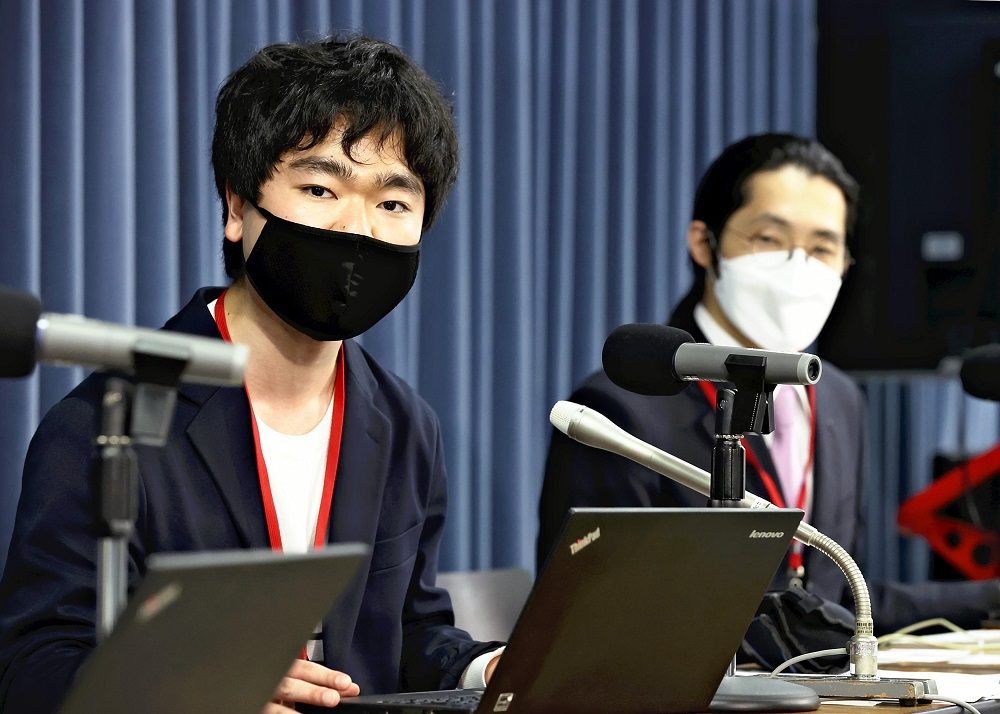
Creative will hold a press conference in Tokyo on Thursday.
April 28, 2023 18:26
The emergence of powerful artificial intelligence tools such as ChatGPT has raised concerns among Japanese creators. Rapidly process large amounts of data and transform sounds, images and texts using copyrighted material.
Waseda Law School Professor Tatsuhiro Ueno described the situation in Japan as a “machine learning paradise.”
Section 30-4 of the Copyright Act allows almost unlimited use of copyrighted material for training AI models.
“We need to use this provision to improve AI technology. It will also have the effect of attracting foreign IT companies,” says Ueno.
However, that view is not shared by many copyright holders.
“There is a risk that AI will be used to generate content that is not intended by creators who used their works to train their skills, which could damage the reputation of creators and their works,” said Fumio Tauchi. . Japan Photographic Copyright Association.
Generative AI could have an impact on Japanese culture, including manga, anime, and traditional literary forms such as haiku and tanka.
A few months ago, a 30-year-old Tokyo-based manga artist learned that about 20 of his works were used without permission to train an AI image generator overseas.
A man who started posting manga and illustrations online about 10 years ago became an independent illustrator in 2019. It takes about 10 hours to draw one illustration, three to four months to complete one manga, and an income of about 4 yen. million per year. “I feel like I’m working hard for the benefit of an AI company. I don’t understand this,” he said.
On Thursday, a group of more than 30 manga artists, musicians and other creators met with government officials to demand action to address the negative impact generative AI is having on their creative endeavors.
At a press conference held in Tokyo later that day, paying royalties to copyright owners and establishing an opt-out system were among the proposals presented by Creative.
“My work is being used by AI image generators. said one of the
Under Article 30-4 of the Copyright Act, a work cannot be used in an AI model if “the act unreasonably prejudices the interests of the copyright holder.”
However, the use cases presented by the Agency for Cultural Affairs are limited, causing confusion among developers and calling for clear guidelines.
When Tokyo-based software developer Celsys attempted to release software with AI image-generating capabilities last November, it said it would use the application if it was unclear who used the copyrighted material. I got a lot of comments from people who said they didn’t want to. Train an AI model.
Celsys announced a release pause the following month, citing a lack of forethought.
Koji Fujimoto, 61, chairman of AI development firm Tensor Consulting, said, “Even if it doesn’t violate the law, carelessly using copyrighted material can damage a company’s reputation. [the government] We build systems that enable smooth business operations. ”
Lawyer Hajime Idei said, “The government and experts have not sufficiently discussed what constitutes when copyrighted material cannot be used. To dispel the concerns of copyright holders and developers, specific We may need to establish guidelines.”