

In many offices in Asia, indoor environments are overcooled by air conditioning. But space cooling in buildings and urban areas is likely to continue as we face the inevitable reality that extreme heat creates stress and has devastating effects on urban communities.
by International Energy Agency (IEA), air conditioning usage is expected to skyrocket and become one of the biggest drivers of global electricity demand over the next 30 years. By 2030, more than half of all floor space additions will be in areas with high cooling needs. – And by 2050, half of the world’s air conditioning units will be located in China, Indonesia, and India.
Real estate developers and companies expanding their building space are increasingly turning to smart, advanced technologies to enable better cooling applications. Regarding the need for urban cooling, the United Nations Environment Program (UNEP) said that many of the solutions available to meet this challenge can be implemented at the urban scale.
“We can’t just get out of this crisis with air conditioning.” said. “There is an urgent need to move towards more sustainable and equitable ways to ensure cooling on demand without further warming the planet.
Reduce summer energy usage
Around the world, many cities are experiencing their worst heat waves in recent years.
Power producers are struggling to keep up with rapidly rising temperatures during the hottest summer ever. China has an electricity grid that serves the east coast region, including economically important cities such as Shanghai, Suzhou, and Hangzhou. reach peak load It was about 400 million kilowatts (kW) during last summer.
Anticipating the challenge of mitigating the effects of extreme heat on its Hangzhou campus, which can house thousands of employees, tech company Alibaba Group has turned to the use of smart technology and artificial intelligence (AI) to automate temperature management. taking into account. . This is one of the energy-efficient solutions to save water and ensure access to nature.
The 423,000 square meter corporate campus, which has served as the company's headquarters since August 2022, is primarily air-conditioned, with air conditioning accounting for at least half of the surge in electricity consumption. However, heating and cooling schedules can be more optimized with AI-powered energy management tools designed by Alibaba Cloud, the group's digital technology and intelligence backbone.
According to statistics provided by Alibaba, in a pilot operation covering half of the campus, annual electricity usage has been reduced by 600,000 kW hours since the solution was applied, and off-peak energy usage has been reduced by 30%.
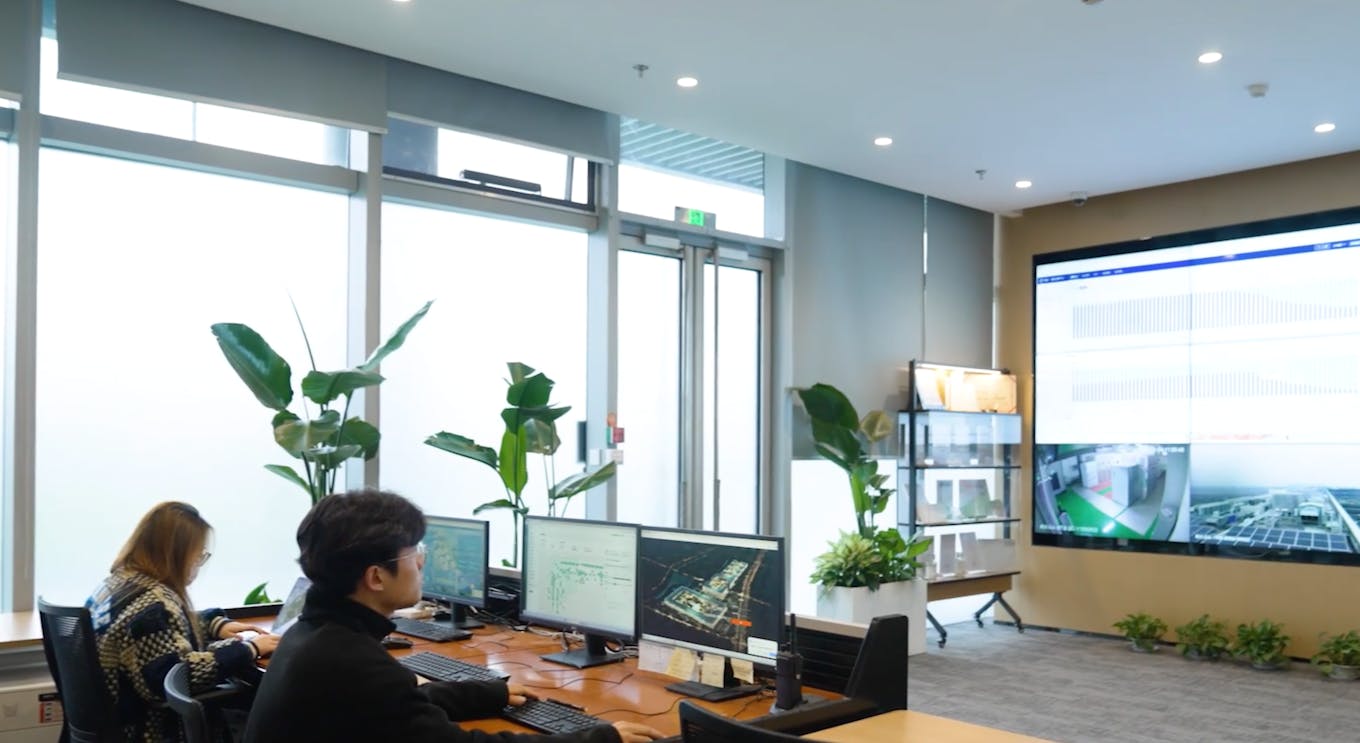
Energy Expert's application helps simplify and automate the process of raising and lowering the temperature of various rooms and areas within Alibaba's corporate campus.Image: Alibaba
Known as Energy Expert, the platform integrates forecasts based on a combination of historical and real-time data on weather conditions and occupancy to raise or lower the temperature of different rooms and areas over different temperature ranges. I was able to better adjust the commands for , reducing the amount of energy wasted.
William Xiong, vice president of Alibaba Cloud Intelligence, said this simplifies the entire process and balances modern cooling needs with environmental considerations.
Xiong shared that before the smart campus project began, many people struggled with timing as administrators manually turned on and off fans and other temperature control systems every day.
“The weather outside is always changing, and so is the number of people using different spaces on campus. The cooling system collects sensor data, but little action is taken based on the information.”
Conversely, Energy Expert helps you create more accurate forecasts, optimize energy use, and reduce emissions, in line with Alibaba's group-wide commitment to achieve carbon neutrality by 2030. Sion said suggestions can be made. During peak periods when an event is in progress and the office is likely to be crowded, the air conditioning unit can emit more cold air in advance to keep the room cool.
“Sponge City” design
Alibaba Cloud is also trying to replicate the efficiency savings tested through its smart campus model for partners in Southeast Asia, Xiong said. This includes applying his Energy Expert to fast cooling of manufacturing facilities and factories.
In addition to providing cooling throughout Alibaba's campus, AI can also be used to create accurate lighting schedules based on the comings and goings of people in different rooms. During the design phase, the campus adopted a “sponge city” design known for its sunken gardens, permeable pavers, and green rooftops to collect and distribute rainwater. This will ensure that 70% of the water used for campus-wide irrigation will be recycled as rainwater.
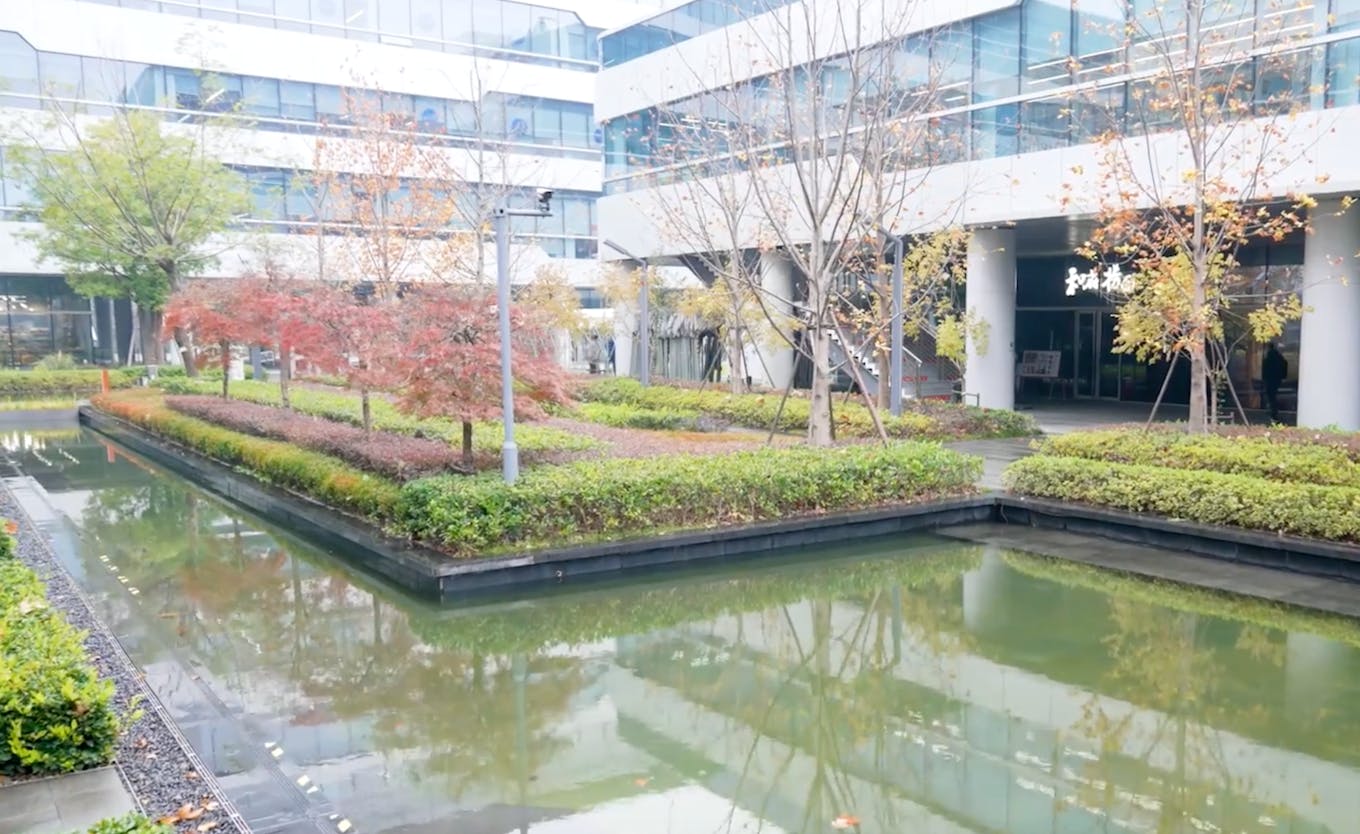
The gardens at Alibaba's corporate campus in Hangzhou are designed to sink so that rainwater can be collected and recycled.Image: Alibaba
The term “sponge city” is traditionally used to refer to urban areas with rich natural areas such as trees, lakes, parks, or similar designs intended to absorb rain and prevent flooding. It has been.
Solar energy from rooftop panels also accounts for about 40 percent of the total electricity used on site. 100% of street lights are solar powered. Alibaba said all of its new construction will also meet China's green building standards and the Leadership in Energy and Environmental Design (LEED) Gold Standard, a global certification developed by the nonprofit U.S. Green Building Council. .
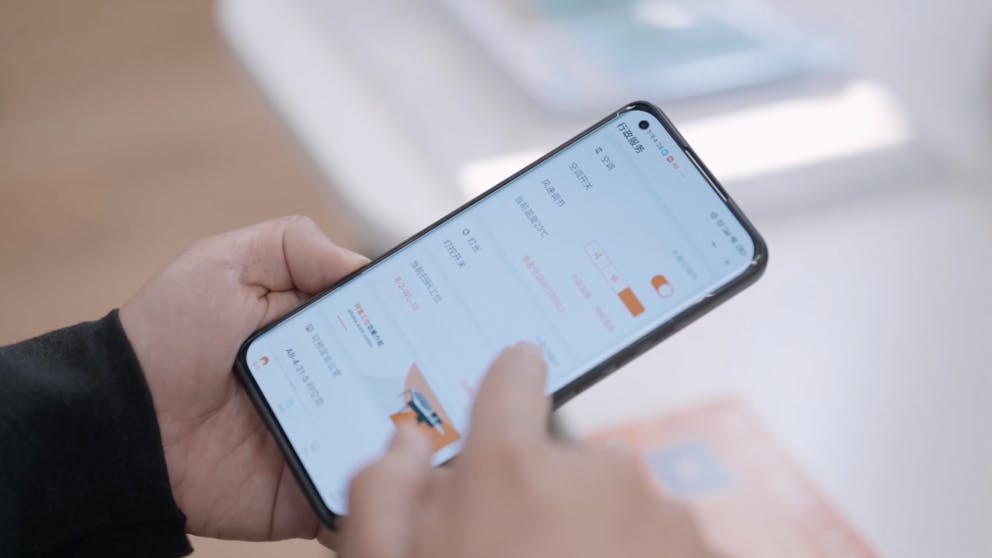
Employees working at Alibaba's Hangzhou campus can also turn their heating and air conditioning on and off through a mobile application.Image: Alibaba
What's interesting is that even with smart automation in place, city campuses and commercial districts can also use technology to increase environmental awareness by encouraging participation, Xiong said. Ta.
At Alibaba's campuses, employees also have access to platforms such as Alibaba's enterprise collaboration mobile application, which allows them to adjust temperature and lighting controls. Incentives are offered for environmentally friendly behavior, such as turning off lights and air conditioners when leaving a room.


