
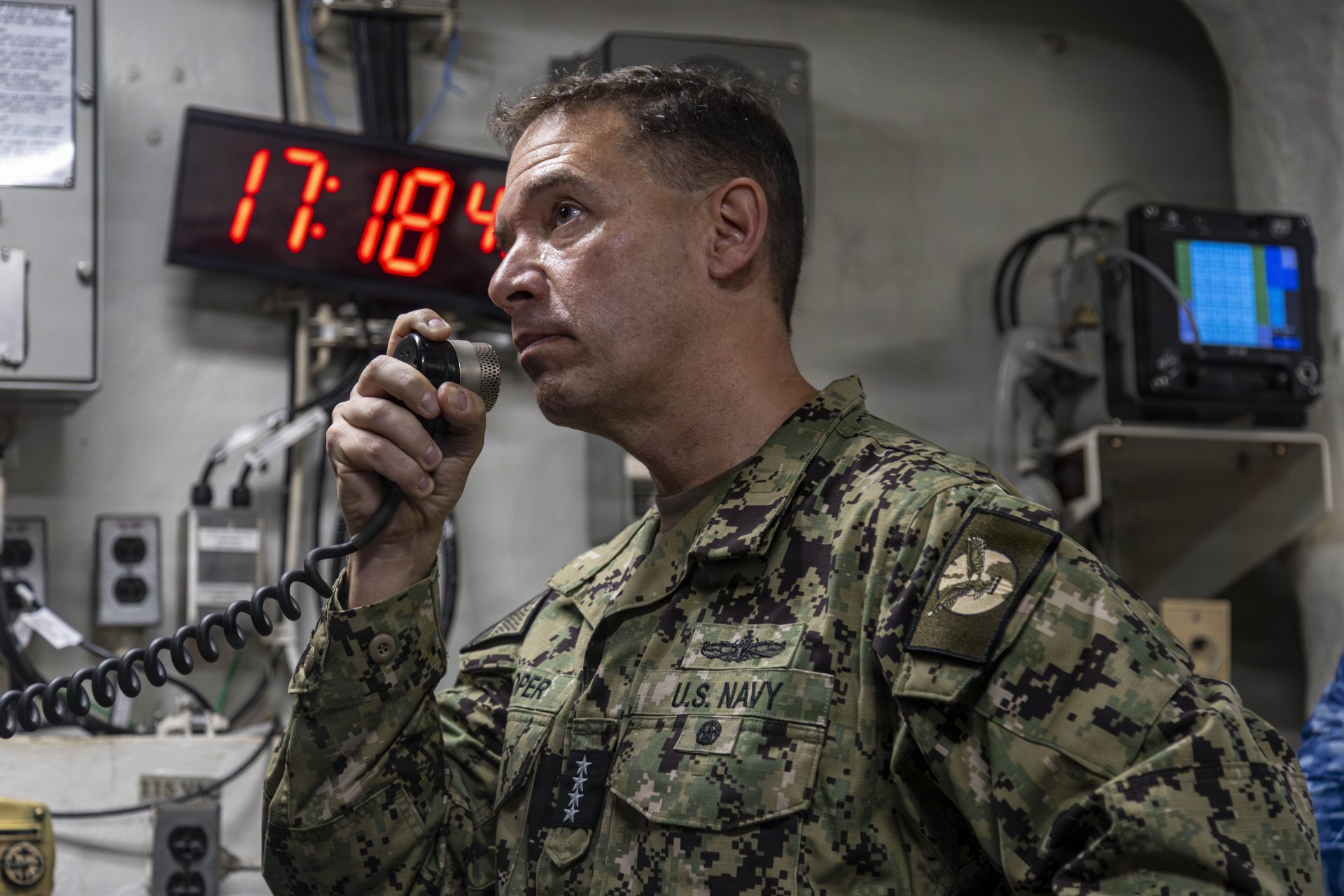
Artificial intelligence tools are helping the U.S. military fight faster and smarter during Operation Epic Fury, according to the commander overseeing the war effort.
Adm. Brad Cooper, the commander of U.S. Central Command, said in a video released Wednesday that U.S. forces have struck more than 5,500 targets inside Iran.
“We are on a path to eliminating Iran’s ability to threaten Americans and our friends, and we are achieving this through a combination of lethality, precision, and rapid technological innovation,” he said, noting that the fighters use a variety of advanced AI tools.
“These systems can help sift through vast amounts of data in seconds, so leaders can cut through the noise and make smart decisions faster than the enemy can react. Humans will always make the final decisions about what to shoot, what not to shoot, and when to shoot, but advanced AI tools can turn processes that previously took hours or even days into seconds,” Cooper added.
Centcom’s chief did not specify the specific artificial intelligence system used by the command.
The U.S. military is reportedly using the Maven Smart System, built by Palantir and Anthropic’s Claude AI technology, to support the Epic Fury campaign.
The Pentagon recently designated Anthropic as a supply chain risk after a heated dispute over the terms of use of the contractor’s technology, and the company sued the Pentagon and other federal agencies in response.
During the first 10 days of Epic Fury, which was launched on February 28 at the behest of President Donald Trump, Centcom attacked a variety of targets, including drone and ballistic missile bases, command and control facilities, ships, air defense systems and military communications capabilities.
The campaign also includes the combat debut of new weapon systems such as the LUCAS drone and Precision Strike Missile.
“America’s combat power is increasing. Iran’s combat power is decreasing,” Cooper said in the video.
Since the first day of the war, Iranian drone and ballistic missile attacks have decreased “dramatically,” he noted.
Cooper said last week that Iran launched more than 2,000 drones and more than 500 ballistic missiles early in the fighting.
Gen. Dan Cain, chairman of the Joint Chiefs of Staff, said at a news conference Tuesday that Iranian drone attacks have decreased by 83 percent since the operation began, and Iranian ballistic missile attacks have decreased by 90 percent.
It’s unclear how long Epic Fury will last.
On Wednesday, President Trump told Axios that the operation could end “soon” and that “there is virtually nothing left to target.”
Trump administration officials previously predicted the effort could last several weeks, but could last longer depending on how the situation develops.
Cooper said about 50,000 U.S. military personnel are currently deployed in and around the Middle East.
At least seven U.S. soldiers were killed during “Epic Fury,” including one from an Iranian drone strike on a location in Kuwait. According to reports, about 140 people were injured.


