
Author: Frank Long, Dr. Ali Shafti
Across the global mobile network landscape, increasing market competition and the stagnation of traditional revenue streams are directly squeezing operators in the middle. To break out of this commodity trap, carriers have spent years exploring enterprise use cases that drive the value chain beyond connectivity.
The commercialization of physical AI, particularly the introduction of a robotic workforce within the human workforce, presents an opportunity for telcos to gain an early and dominant position in what promises to be a large and valuable market.
When these robots move beyond physically impressive demonstrations and onto unmapped factory floors, logistics hubs, and medical centers, they hit a significant wall. The new bottleneck for scalable humanoid robotics is not mechanical design. That is the limit of intelligence on robots, which is greatly enhanced by moving cognition to low-latency networks that host edge AI, also known as distributed intelligence.
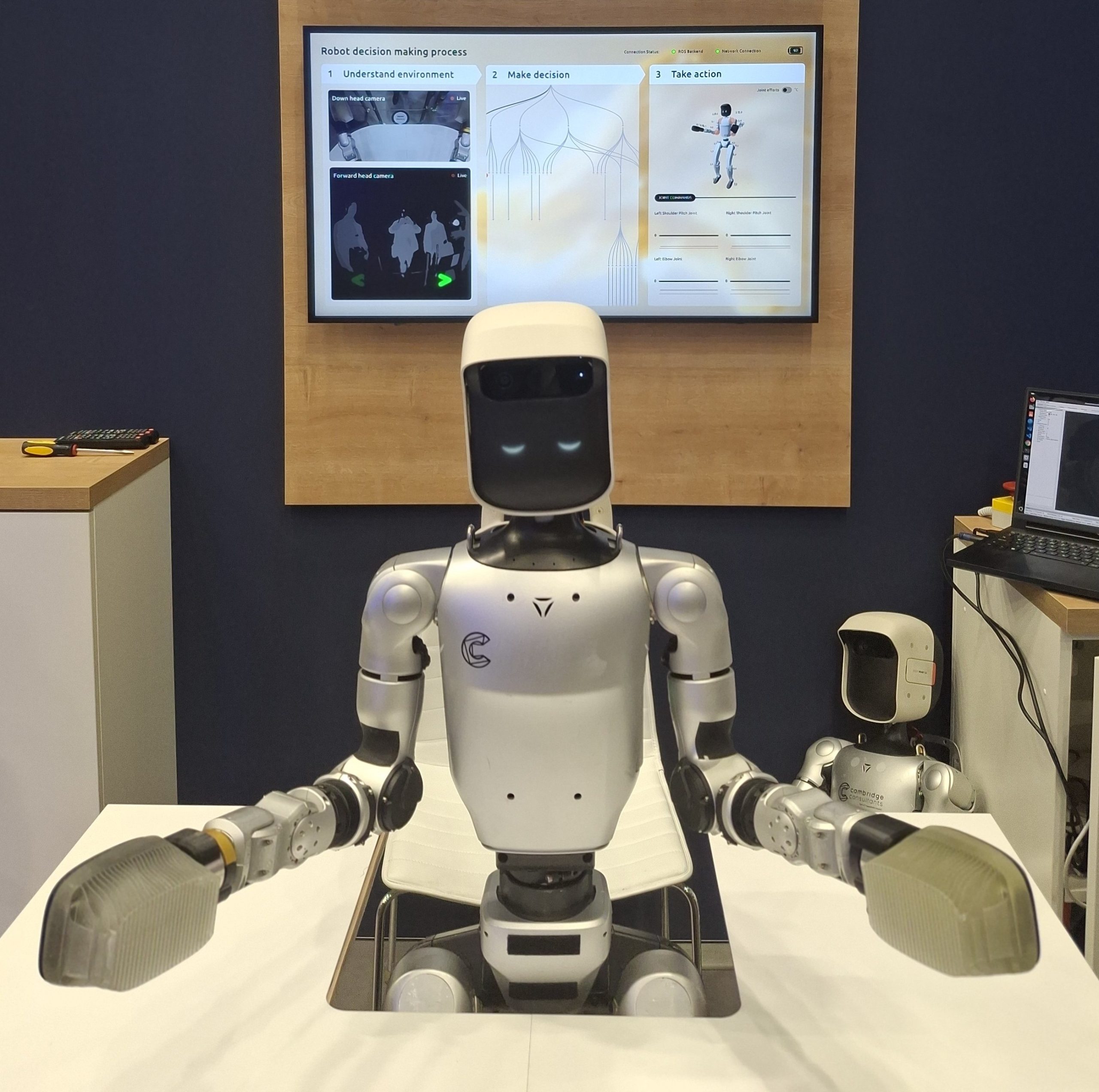
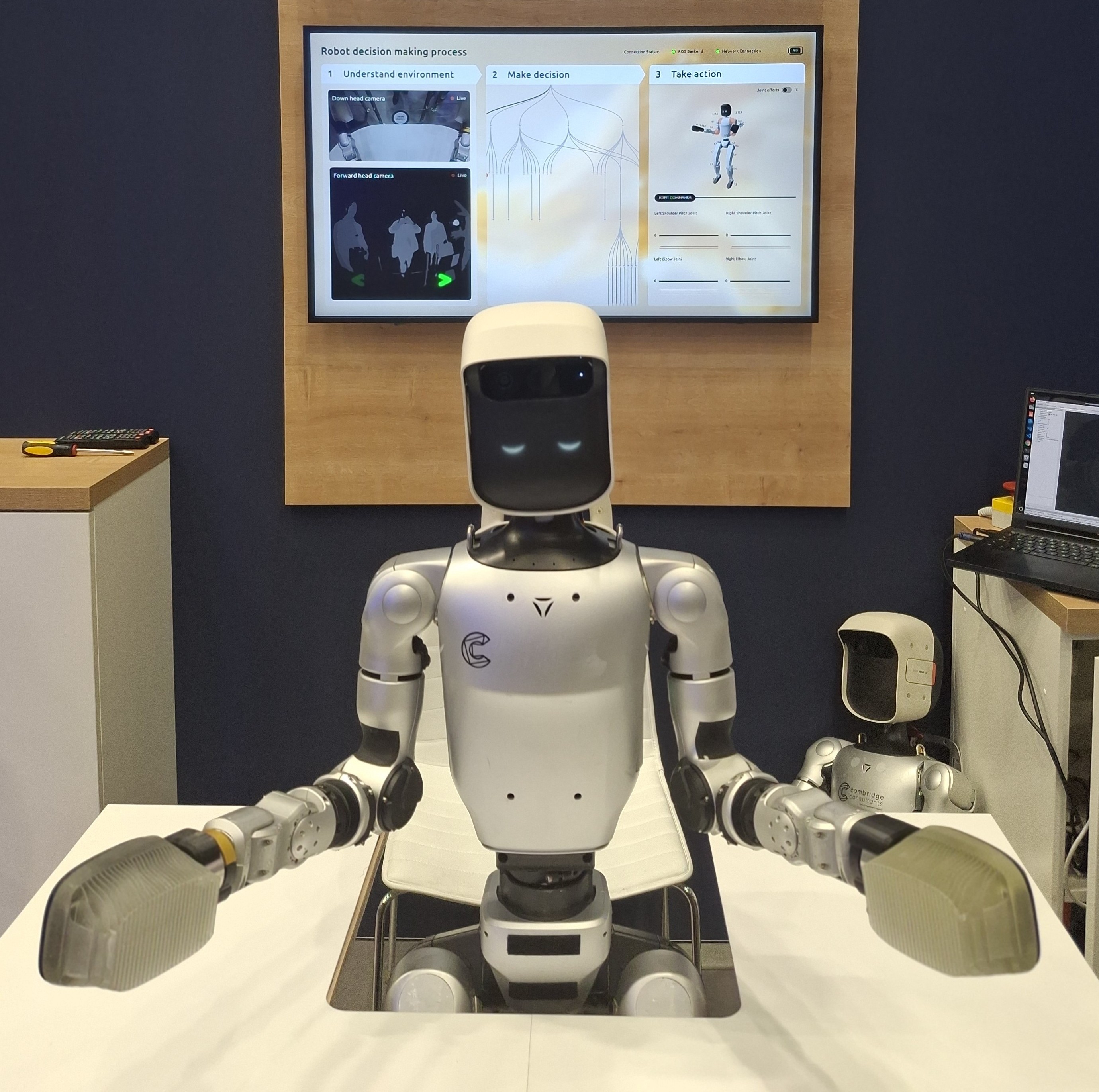
At this year’s Mobile World Congress, advanced humanoid robots were unveiled in a live demonstration of physics AI on the Capgemini stand. There was no breakdancing or jumping kicks. Instead, a human operator moved a specified box from one location to another. By performing real-time task decision-making and understanding natural human behavior, the system not only caught the attention of enterprise architects, but also earned Tom’s Guide’s “Best in Show” award for its breakthrough capabilities. Robots did not have the cognitive intelligence that enabled these functions. This was provided via an edge AI connected to the robot via a network link.
By combining intelligence from the network with the emerging human machine understanding (HMU) models validated in this showcase, telcos can stake a claim as the fundamental operational backbone of tomorrow’s autonomous labor market. But there are some challenges to overcome first.
Deploying mobile, autonomous humanoids alongside human workers requires seamlessly merging three different technology vectors into a single real-time control loop:
Physics AI: Machine learning models integrated with physical shapes must simultaneously perform spatial computing, object grasping mechanisms, and complex neural networks for dynamic balancing.
Human-machine understanding (HMU): An important behavioral layer that allows robots to interpret human intentions and support them effectively. Rather than executing rigid code, the HMU continuously monitors operators, the environment, and the task at hand to enable secure, reliable, real-time collaboration.
Network automation: An automated software layer that dynamically provisions cellular paths, guarantees dedicated bandwidth slices, and balances intensive computing workloads to ensure no packet drops or jitter in critical safety loops.
In practice, this triad creates a high-stakes control loop paradox. When a humanoid worker encounters unexpected human movement in a shared hallway of a warehouse, its HMU layer must be immediately notified of the change in intent. To ensure safety, this context data must be offloaded to local edge servers via automatic network slicing. This recalculates the robot’s physical path in milliseconds. Any lag in the links in this network fabric can cause physical AI to fail, turning an expensive corporate asset into an imminent industrial hazard.
For commercial buyers, one of the most pressing engineering challenges hindering the development of humanoid robots is balancing physical payload, battery life, and local computing costs. Equipping a humanoid directly with enough raw GPU power to handle all the cognitive, motivational, and planning functions required to successfully perform a task increases the weight, heat, and cost of the individual robot.
The path to commercial scalability requires a distributed intelligence architecture. As demonstrated by MWC winners, the humanoid’s onboard systems must handle immediate, low-latency reflex control, while heavy processing tasks such as high-fidelity semantic mapping, task planning, and detailed HMU behavior analysis are offloaded to operator-hosted edge AI nodes.
To enable distributed intelligence, MNOs must provide reliable intelligence from their networks that is designed around three key technical criteria:
Connection dependencies: Offloading intelligence to the network requires that the network be always available. 5G can provide the mobility, QoS guarantees, and high-performance throughput needed to maintain continuous and secure operations. Achieving this will increase the need for intent-driven network slicing to dynamically separate and prioritize traffic. Telemetry data for decision making requires minimal bandwidth but guarantees absolute zero failure delay. Conversely, contextual video logging can absorb small transmission delays but requires large amounts of throughput.

