
Are companies hiding poor performance with “AI cleaning”?
Source link
Continue Reading

Pennsylvania State University researcher Ahmed Shokri and colleagues have developed a new black-box validation protocol for quantum metric learning algorithms. This protocol allows a limited quantum computer to audit the performance of an algorithm without any internal knowledge of the algorithm’s behavior. This addresses the main risk of error in mapping classical data to quantum […]
Continue Reading
Your AI agent worked in the demo, impressed stakeholders, handled test scenarios, and seemed ready for production. Then you deployed it, and the picture changed. Real users experienced wrong tool calls, inconsistent responses, and failure modes nobody anticipated during testing. The result is a gap between expected agent behavior and actual user experience in production. […]
Continue Reading
James WT Keeble and colleagues at TIFPA’s Trent Institute have constructed a neural quantum state representation of an atomic nucleus that is highly entangled and deviates from easily representable “stabilizer” states. These representations show that states exhibiting greater instability are more difficult for the network to learn, and this property has a significant impact on […]
Continue Reading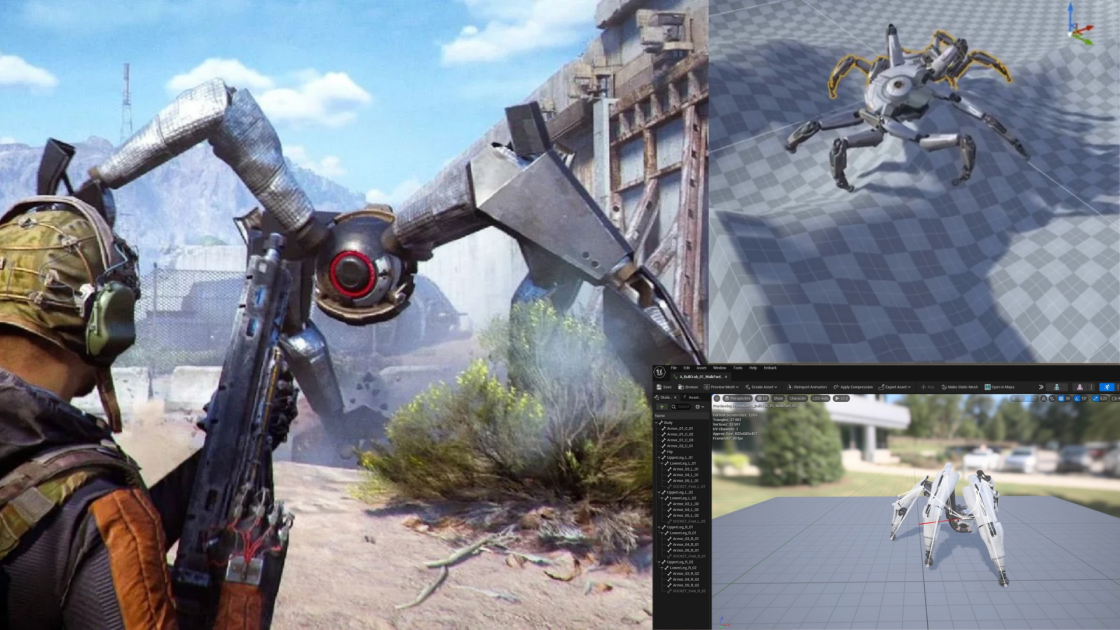
Why doesn’t this game rely on traditional enemy patterns or scripted encounters? Martin Singh Blom: Physics doesn’t actually allow you to do that. We tried to build a more traditional behavioral system, but as soon as something unexpected happens, like an enemy being pushed, that pattern breaks down. It all comes back to physics. Physics […]
Continue Reading
Machine learning is now shaping the daily work of QA engineers in clear and practical ways. It is no longer set aside as just an automation tool. Instead, they participate in test design, defect prediction, and risk analysis from the beginning of the project. Machine learning moves QA engineers from repetitive manual checks to more […]
Continue Reading
Hello and welcome to Eye on AI. In this edition…Anthropic suffers multiple sensitive data leaks…OpenAI ditches Sora, and loses its deal with Disney…Mistral raises money for AI data center drive…AI could reduce political polarization…and why countries that are late to adopt AI could be in even worse economic shape than you think. The big news […]
Continue Reading
Financial institutions are facing an unpleasant reality as attackers leverage large language models to create synthetic identities and automate fraud. That means the tools financial institutions rely on to fight fraud weren’t built for this moment. The arms race has turned Fraud has always been the subject of an arms race, but AI has fundamentally […]
Continue Reading
Traditional vendor lock-in was manageable, if not ideal. Today’s AI model dependencies pose other challenges, but most companies treat AI vendor lock-in as if it’s business as usual. This is wrong. Although nothing is business as usual when it comes to AI. Centralization of models Even less so. This is a significant business risk that […]
Continue Reading
Artificial intelligence (AI) is a branch of computer science that aims to create machines that can perform tasks that typically require human intelligence. These tasks include natural language understanding, pattern recognition, problem solving, and decision making. AI is not a single technology, but rather a combination of disciplines such as machine learning, robotics, computer vision, […]
Continue Reading