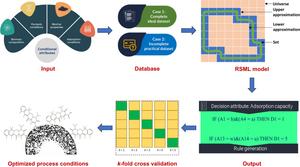
New machine learning model provides blueprint for superadsorbent biochar

New research published in journal carbon research We are deploying advanced machine learning models that can predict the most effective way to create biochar to remove antibiotics from water. A collaborative team of scientists from National Institute of Technology Rourkela, University of Aucklandand Tarim University demonstrated that their model can generate reliable and scientifically consistent […]

Continue Reading


The Future of Trading: How AI Agents Will Transform the Markets

Moving to an intelligent market Trading today is very different than before. Previously, people relied heavily on intuition and manual decision-making. Then came rule-based systems that followed fixed instructions. Now, with the help of artificial intelligence, more flexible trading methods are becoming a reality. Estimates suggest that the AI-driven trading and analytics segment is rapidly […]

Continue Reading

Why “curate first, annotate smarter” is changing the shape of computer vision development

Automate quality gates Replace subjective manual reviews with deterministic quality gates. Automated checks are the only way to detect systematic errors such as schema violations and class imbalances that are inevitably missed by human reviewers at scale. from fiftyone import ViewField as F # Find bounding boxes that are impossibly small tiny_boxes = dataset.filter_labels( “ground_truth”, […]

Continue Reading

SPARK & SAD: A new deep learning IDS for SCADA cybersecurity in 2026 – News and statistics

April 4, 2026 According to pv magazine, researchers have developed two new deep learning-based intrusion detection systems designed to improve the cybersecurity of SCADA networks. These systems are particularly suited for large-scale solar power plants where SCADA monitors energy production, monitors panel performance, optimizes output, identifies faults, and maintains operations. The research team noted that […]

Continue Reading

Persist session state with filesystem configuration and execute shell commands

AI agents have evolved significantly beyond chat. Writing code, persist filesystem state, execute shell commands, and managing states throughout the filesystem are some examples of things that they can do. As agentic coding assistants and development workflows have matured, the filesystem has become agents’ primary working memory, extending their capabilities beyond the context window. This […]

Continue Reading

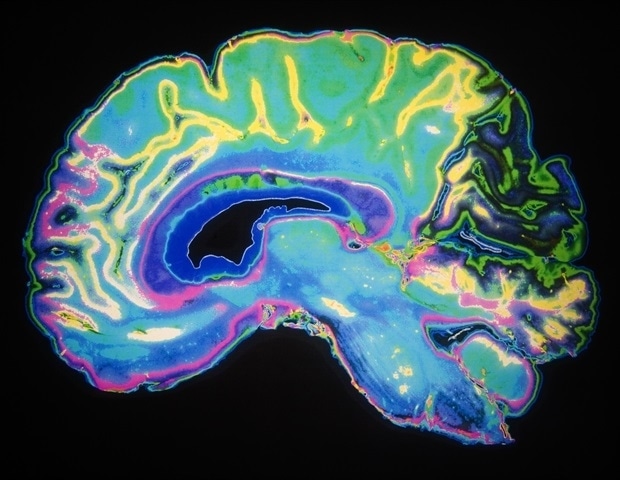
Biological neural networks may serve as a viable alternative to machine learning models

A research team from Tohoku University and Future University Hakodate has demonstrated that living biological neurons can be trained to perform supervised temporal pattern learning tasks that were previously performed by artificial systems. By integrating cultured neuronal networks into a machine learning framework, the research team showed that these biological systems can generate complex time-series […]

Continue Reading

Google DeepMind’s research allowed LLM to rewrite its own game theory algorithm, and the results outperformed experts

The design of algorithms for multi-agent reinforcement learning (MARL) in imperfect information games (scenarios such as poker, where players act in sequence and cannot see each other’s private information) has historically relied on manual iteration. Researchers identify weighting schemes, discount rules, and equilibrium solvers through intuition and trial and error. Researchers at Google DeepMind propose […]

Continue Reading

Strengthening LLM Guardrails with Synthetic Data Generation

As you scale the use of generated AI across your company, robust guardrails are essential to mitigate risk and promote responsible and ethical operation of your LLM, thereby maintaining trust and supporting innovation. To meet these needs, JPMorganChase developed the Fence guardrail framework. Fence uses data-driven methodologies to proactively identify, test, and mitigate vulnerabilities such […]

Continue Reading