Reproducible symptom subtypes of depression identified using unsupervised machine learning

Abstract Depression is a heterogeneous disorder, often diagnosed based on symptom co-occurrence. However, individuals may present with markedly different symptom profiles, potentially reflecting distinct underlying mechanisms. Identifying common patterns of symptoms using data-driven approaches could help clarify the heterogeneity of depression. Furthermore, examining the sociodemographic and lifestyle characteristics, health status, and polygenic scores of individuals […]

Continue Reading

Established Machine Learning Matches Tabular Foundation Models in Clinical Predictions

Abstract Foundation models (FMs) promise to standardise predictive modeling across domains, yet their clinical value for tabular data remains unproven. To test this, we performed a large, fully reproducible benchmark of TabPFN, a leading FM for tabular prediction, against twelve established machine learning (ML) methods across twelve binary clinical tasks. Cohorts spanned 788 – 139,528 […]

Continue Reading

A multimodal large language model for materials science

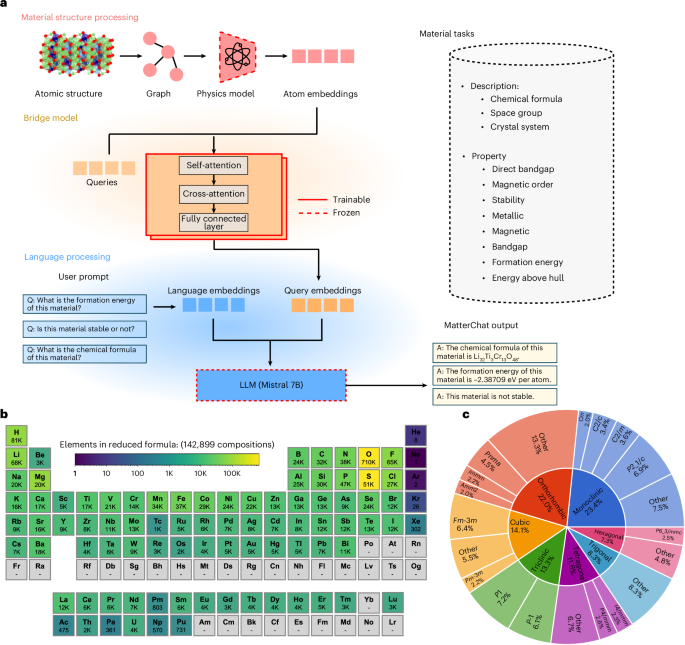
Overview of MatterChat Figure 1a presents the architecture of MatterChat, designed to process both material structures and user requests as inputs to generate text-based outputs for tasks such as material property prediction, structural analysis and descriptive language generation. MatterChat consists of three core components: the material processing branch, the language processing branch and the bridge […]

Continue Reading

The AI ​​industry is realizing that the general public hates AI.

Once again, there is a gap between official statements and facts on the ground. Microsoft’s Community-First Initiative sounds great, but it doesn’t have an independent accountability mechanism built in. OpenAI’s new white paper signals a move toward progressive technology policy, but its president, Greg Brockman, has poured millions of dollars into a SuperPAC that opposes […]

Continue Reading

Machine learning helps detect roars from lion collars without recording actual audio

Tailen: 2026.04.23 09:00 Mixed signals: Machine learning helps detect roars from lion collars without recording actual audio Roaring over long distances is an important lion behavior. They use unique sequences of moans and growls to communicate within their pride as well as with other animals. Scientists from the GAIA Initiative have published a machine learning […]

Continue Reading

CTO Anita Oehley talks about how to lock data with encryption and protect it by transforming it with VEIL

Integrated Quantum Technologies flagship products veil This allows businesses to protect data before inputting it into ML models using a new privacy protection framework that removes personally identifiable information (PII) while preserving and enhancing the data’s usefulness. VEIL enables scalable innovation without trade-offs and is designed to be future-proof. The threat of quantum computing. The […]

Continue Reading