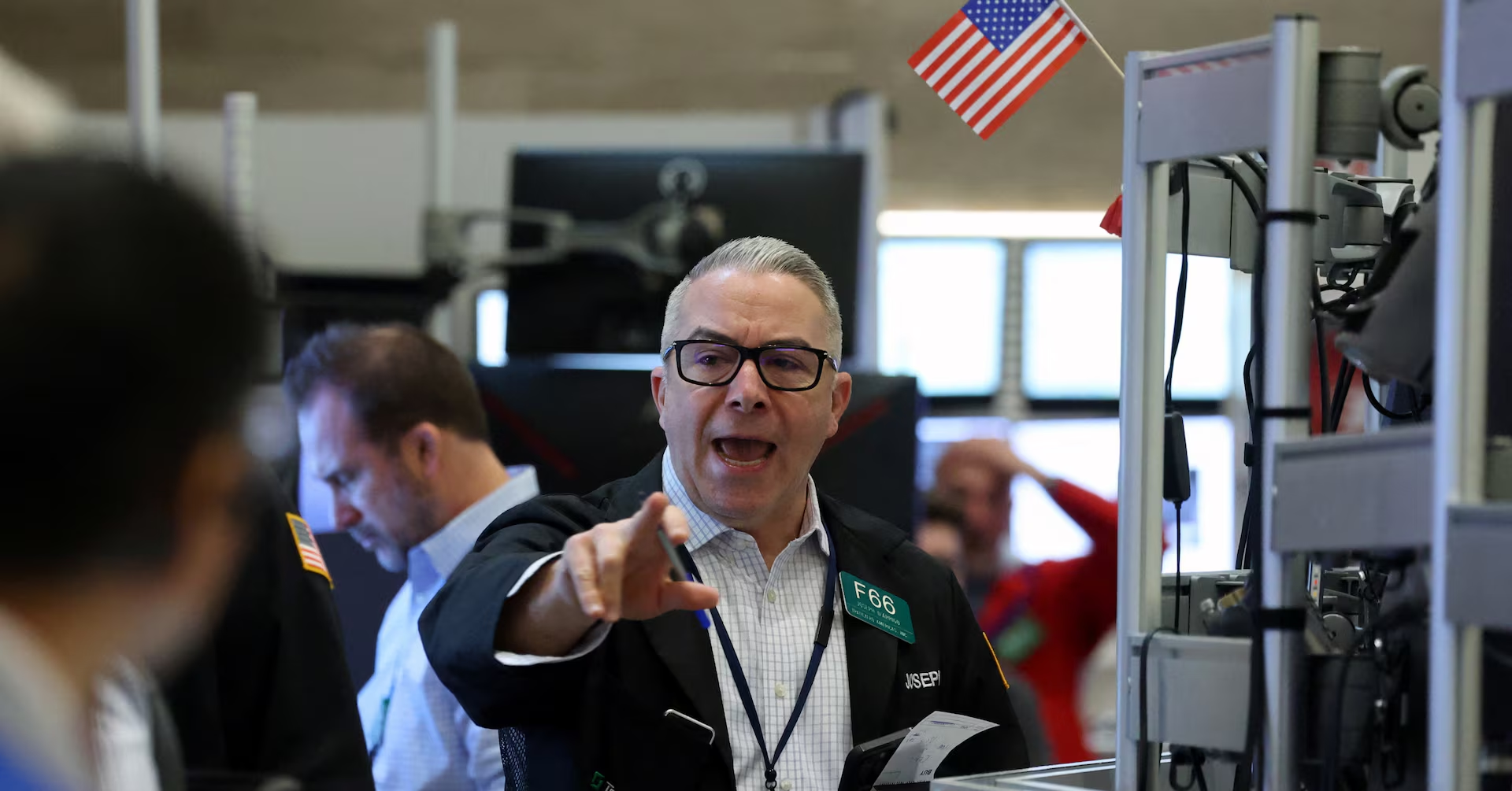
The soaring valuations of AI stocks this year have raised concerns that Wall Street is inflating a new speculative bubble, some of which came to the fore after AI powerhouse Nvidia’s stellar earnings report failed to lift its stock price and the broader market.
sign up here.
In recent days, investors have noted signs of new cracks in the AI investing story. Several high-flying AI stocks have experienced sharp declines, raising questions about when investments in AI will lead to real returns and raising concerns that enthusiasm is outweighing the technology’s short-term capabilities.
Investor concerns about market bubbles center on high valuations. Despite the recent pullback, valuations remain elevated, with investors wary of customer capital spending and financing risks, as well as the challenges of expanding data center capacity due to energy constraints and memory chip shortages.

Not all bubbles are created equal, and the warning signs of excess buildup in one bubble may be very different from those in another.
Historical data shows dramatic changes in the evolution of asset mania, from the speed of collapse to the number of years needed for recovery. While the Japanese stock market crash of the early 1990s took decades to recover, the 2021-2022 cryptocurrency crash was over in a matter of months.
Understanding these patterns is important for investors trying to determine whether today’s AI frenzy represents a rational enthusiasm for a revolutionary technology or a speculative excess.
Some charts here will help you assess how AI Mania compares to historical bubbles and where we are at if this is indeed a bubble.
overrated
Despite recent volatility, U.S. stock market valuations have soared into territory that historically precedes major declines, and billionaire investor Warren Buffett’s favorite Buffett Indicators are showing warning signs.
The measure, which compares U.S. stock market capitalization to gross domestic product, recently surged more than 200%, surpassing levels last seen during the pandemic-era market peak in 2021. This metric is currently near all-time high levels, surpassing even the dot-com bubble of 2000.
Named after Berkshire Hathaway’s chairman, this ratio measures the rise before the market’s major corrections since 1975.

Other stock valuation indicators are also showing an increase, although they are not at historic highs. The S&P 500’s price-to-earnings ratio, based on 12-month earnings estimates for its constituent stocks, has risen about 23 times, near a five-year high, and well above the 10-year average of 18.7 times, according to LSEG Datastream.

The CAPE ratio (Shiller P/E), another valuation measure that measures 10-year average returns to adjust for business cycles, is also showing an increase in the measure, although it has not yet reached the heights reached during past bubbles.

early days
The Nasdaq’s current trajectory during the artificial intelligence boom is strikingly similar to that of the dot-com era, albeit a lackluster one, supporting the view that if this is a bubble, it may still be in its early stages.
The technology-heavy index is up nearly 100% in the three years since ChatGPT’s launch in November 2022, reflecting the early excitement following Netscape’s August 1995 IPO.

not there yet
A key ingredient in past stock market bubbles was runaway investor optimism, but that doesn’t seem to be the case anymore.
The American Association of Individual Investors, a weekly poll that measures individual investor sentiment in the U.S. stock market, found bullish sentiment at 38%, in line with the long-term average. This is a far cry from the 75% high in January 2000 or the 57% high during the meme stock mania of 2021. Although heightened bullishness is not a necessary prerequisite for a market reversal, heightened historical data suggests that market turmoil is often preceded by long periods of above-average optimism, as crowded trades and inflated valuations leave little room for disappointment.

Report by Saqib Iqbal Ahmed. Additional reporting by Lewis Krauskopf and Matt Tracy. Editing: Megan Davis and Deepa Babington
Our standards: Thomson Reuters Trust Principles.