

Image by author
Large-scale language models are revolutionizing the field of natural language processing, offering unprecedented capabilities in tasks such as language translation, sentiment analysis, and text generation.
However, training such models is time-consuming and expensive. Fine-tuning has therefore become an important step in tailoring these advanced algorithms to specific tasks and domains.
To make sure we're on the same page, we need to remember two concepts:
- Pre-trained language model
- Tweak
So let's break down these two concepts.
What is a pre-trained large-scale language model?
LLM is a specific category of machine learning that aims to predict the next word in a sequence based on the context provided by the previous word. These models are based on the Transformers architecture and trained on extensive text data, allowing them to understand and produce human-like text.
The best part about this new technology is that it is democratized as most of these models are under open source licenses or can be accessed through APIs at low cost.
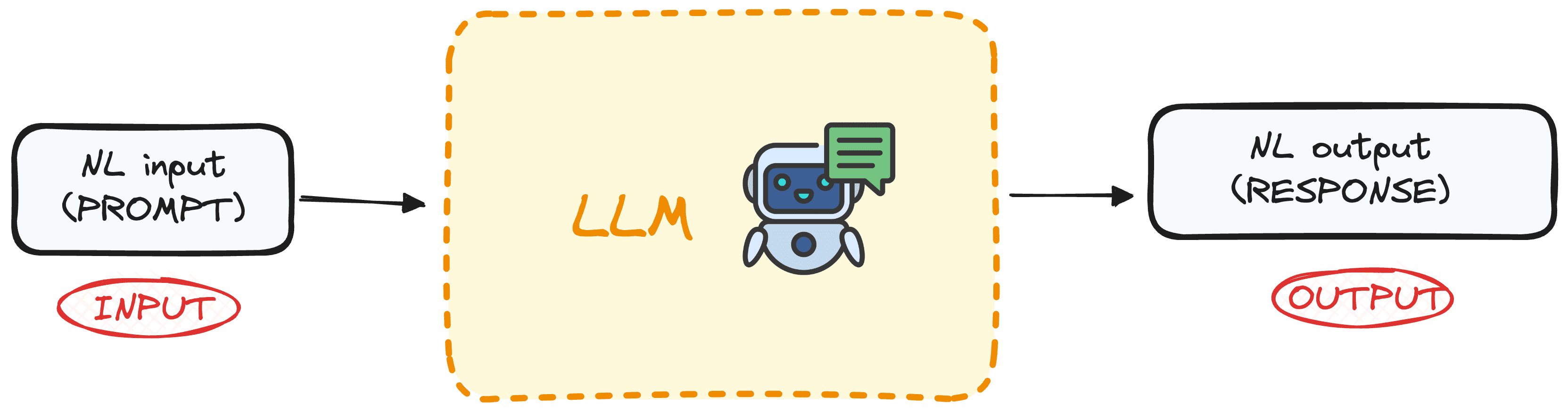
Image by author
What is a tweak?
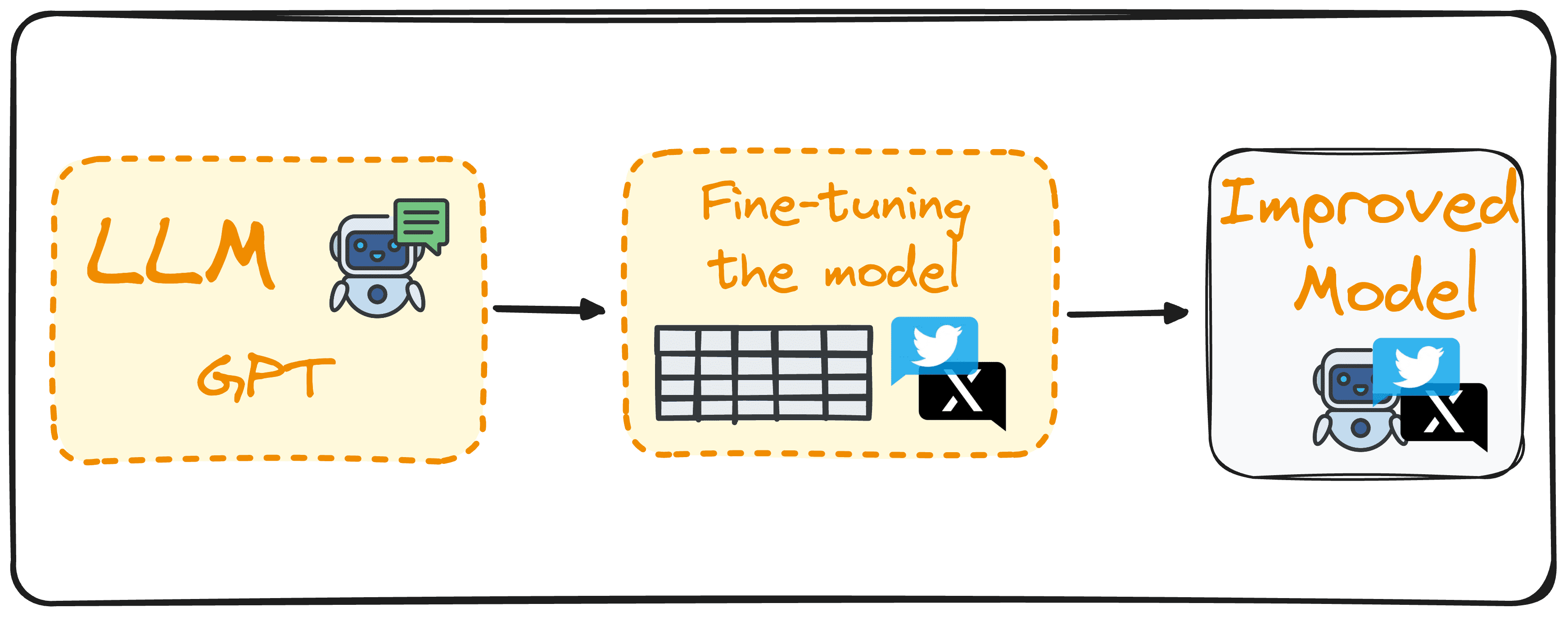
Fine-tuning involves using a large-scale language model as a base and further training it on domain-based datasets to improve performance on specific tasks.
As an example, consider a model that detects sentiment from tweets. Instead of creating a new model from scratch, you can take advantage of GPT-3's natural language capabilities and further train the model using a dataset of tweets labeled with corresponding sentiments.
This improves this model on the specific task of detecting sentiment from tweets.
This process reduces computational costs, eliminates the need to develop new models from scratch, and makes models more effective for real-world applications customized to specific needs and goals.

Image by author
Now that you understand the basics, you can learn how to fine-tune your model by following these seven steps.
Different approaches for fine-tuning
Tweaks can be implemented in a variety of ways, each tailored to a specific purpose and focus.
Supervised fine-tuning
This common method involves training a model on labeled datasets related to a specific task, such as text classification or named entity recognition. For example, for sentiment analysis tasks, you can train a model on sentiment-labeled text.
Few shot learning
Few-shot learning is useful in situations where it is not possible to collect large labeled datasets. This method uses only a small number of examples to give the model the context of the task, thus avoiding the need for extensive fine-tuning.
transfer learning
All fine-tuning is a type of transfer learning, but this particular category is designed to allow the model to tackle a different task than it was initially trained on. Take the breadth of knowledge gained from common datasets and apply it to more specialized or related tasks.
Domain-specific fine-tuning
This approach focuses on preparing models for understanding and producing text for a specific industry or domain. Fine-tuning your model based on text from your domain of interest improves context and expertise in domain-specific tasks. For example, a chatbot can be tailored specifically for medical applications by training a model on medical records.
Best practices for effective fine-tuning
For fine-tuning to be successful, you need to consider several important practices.
Data quality and quantity
The performance of a model during fine-tuning is highly dependent on the quality of the dataset used. Always keep in mind:
Garbage goes in, garbage goes out.
Therefore, it is important to use clean, relevant, and appropriately sized datasets for training.
Tuning hyperparameters
Fine-tuning is an iterative process and often requires adjustments. Experiment with different learning rates, batch sizes, and training durations to find the best configuration for your project.
Accurate tuning is essential for efficient learning and adaptation to new data, and helps avoid overfitting.
Periodic evaluation
Continuously monitor model performance throughout the training process using a separate validation dataset.
This regular evaluation helps you track how well your model is performing at your desired task and check for signs of overfitting. To effectively fine-tune model performance, you must make adjustments based on these evaluations.
Avoid the pitfalls of LLM fine-tuning
This process may yield unsatisfactory results if you also avoid the following pitfalls:
overfitting
Training a model using a small dataset or too many epochs can lead to overfitting. This allows the model to perform well on training data, but performs poorly on unseen data, resulting in poor accuracy in real-world applications.
underfitting
This occurs when training is too short or the learning rate is set too low, resulting in the model not being able to effectively learn the task. This produces a model that doesn't know how to perform a specific goal.
catastrophic oblivion
When you fine-tune a model based on a specific task, you run the risk of forgetting the extensive knowledge that the model originally had. This phenomenon, known as catastrophic forgetting, reduces the effectiveness of models across a variety of tasks, especially when considering natural language skills.
data leak
Make sure your training and validation datasets are completely separated to avoid data leakage. Overlapping datasets can falsely inflate performance metrics and inaccurately measure model effectiveness.
Final thoughts and next steps
When you begin the process of fine-tuning a large language model, you have a huge opportunity to improve the current state of the model for a particular task.
By understanding and implementing detailed concepts, best practices, and necessary precautions, you can customize these robust models to your specific requirements and take full advantage of their capabilities.
Josep Ferrer I'm an analytical engineer from Barcelona. He graduated in Physical Engineering and currently works in the field of data science applied to human mobility. He is a part-time content creator with a focus on data science and technology. Josep writes about all things AI, including the exploding applications in the field.


