The development of lithium-ion batteries required decades of research. A new multi-institutional project led by the Department of Energy’s Lawrence Berkeley National Laboratory (Berkeley Lab) aims to use AI and supercomputers to speed up the discovery of materials for batteries, semiconductors and other energy technologies, and significantly shorten their timelines.
The project, called FORUM-AI (Foundation Models Orchestrating Reasoning Agents to Uncover Materials Advances and Insights), supports the Genesis Mission, a new Department of Energy-led national initiative aimed at accelerating advances and discoveries in AI and delivering solutions to science, energy, and national security challenges.
“FORUM-AI aims to be the first full-stack agent AI system for materials science research and discovery,” said Anubhav Jain, staff scientist in Berkeley Lab’s Energy Technologies Division and principal investigator leading the project. “We support scientists at every stage of their energy materials research, from hypothesis generation and computer simulations to laboratory experiments and analyses.” Jain is also the associate director of the Materials Project, an open-access materials database maintained by Berkeley Lab, and the materials feature lead for the Department of Energy’s Durable Modular Materials (DuraMat) consortium.
The effort is a collaboration between Berkeley Lab, Oak Ridge National Laboratory, Argonne National Laboratory, Massachusetts Institute of Technology, and Ohio State University, with the goal of developing an open-source general-purpose AI platform for materials and physical science research. This multi-agency team was selected by the Department of Energy under the Scientific Discovery through Advanced Computing (SciDAC) program to co-lead a four-year, $10 million collaborative project to develop FORUM-AI using some of the nation’s most advanced high-performance computers.
In this Q&A, Jain shares his perspective on the exciting evolution of computational materials science and the critical role of AI in accelerating materials discovery.
Q: What led to FORUM-AI? How does it help materials researchers?
Jain: The advances in machine learning that have occurred over the past few years inspired us to develop the FORUM-AI platform. Just about everyone uses ChatGPT to brainstorm ideas, and scientists do this as well, but FORUM-AI aims to push the boundaries of what’s possible by using the Department of Energy’s Leadership Computing Facility to evaluate hundreds of hypotheses and hundreds of research action plans in parallel.
Traditionally, when you have a research problem, you test one hypothesis at a time. This new framework can instead use FORUM-AI to run large-scale simulations on supercomputers at Berkeley Lab’s National Energy Research Scientific Computing Center (NERSC), Oak Ridge National Laboratory’s Oak Ridge Leadership Computing Facility (OLCF), or Argonne National Laboratory’s Argonne Leadership Computing Facility (ALCF), and perhaps run some robotic experiments on your behalf to see which of these hypotheses is most promising.
“FORUM-AI aims to be the first full-stack agent AI system for materials science research and discovery. It supports scientists at every stage of energy materials research, from hypothesis generation and computer simulations to laboratory experiments and analysis.” – Anubhav Jain, Staff Scientist, Energy Technology Area, Associate Director, Materials Projects
The assistant uses three classes of AI to accomplish this task. Generative AI that creates images and writes text. Inference model. This allows internal thought processes to provide recommendations on how to solve materials science problems and assist in data interpretation. Agent models perform actions on your behalf, such as running simulations and controlling laboratory facilities.
This is important because we face complex energy problems that require more resources to solve. High-performance computers and AI can help greatly accelerate the pace of discovery at every step of the process, from designing research studies to running computer simulations to lab experiments.
Q: How do I know if the information in FORUM-AI Assistant is factual?
Jayne: That’s a great question. Because one of the drawbacks of AI in science is that these AI models tend to hallucinate information, meaning they return false or untrue information.
This project has several aspects designed to prevent such problems.
The first is a high-quality database of specific materials data. This means that when an AI agent is asked, for example, what the band gap is between cadmium telluride and silicon, the agent doesn’t have to rely on its own model weights or its own memory to respond. Rather, it can search for data in a validated database and return accurate results for that question.
The second is transparency so that researchers can see how AI plans to tackle a particular problem. Traces of research plans and reasoning can be inspected and visualized, allowing researchers to edit or ignore them if they feel they are incorrect.
And finally, these AI agents use standard physics-based simulation tools to predict material properties. These tools and methods are well-benchmarked, so the agents use community-standard approaches to ensure reliability.
Q: I hear a lot about the energy demands of AI. How can FORUM-AI enable an AI platform that is more energy efficient than current AI technologies?
Jain: We’re going to work on something called distillation. This is about taking a more expensive, computationally intensive model and then finding a way to train a smaller model that essentially replicates the behavior of the larger model. This distillation model results in lower energy consumption.
Distilled models often fit on laptops and can be run on their own computers, making them very convenient for researchers. For example, they can be attached to devices such as X-ray diffractometers, but larger models available only in supercomputers are much more difficult for ordinary users to operate.
Q: Why are national laboratories essential for AI research?
Jain: National laboratories are ideal places to develop AI-enabled materials research because they have laid the groundwork over the past few decades.
For example, Berkeley Lab is creating the Materials Project, a large database of material properties that Agent AI can use to make better decisions. We are also developing software tools that can automate the simulation of material properties, which has traditionally been extremely difficult. In fact, when we started our materials project, many people thought it would be impossible to automate materials simulation. This is because determining the parameters requires too much physical insight.
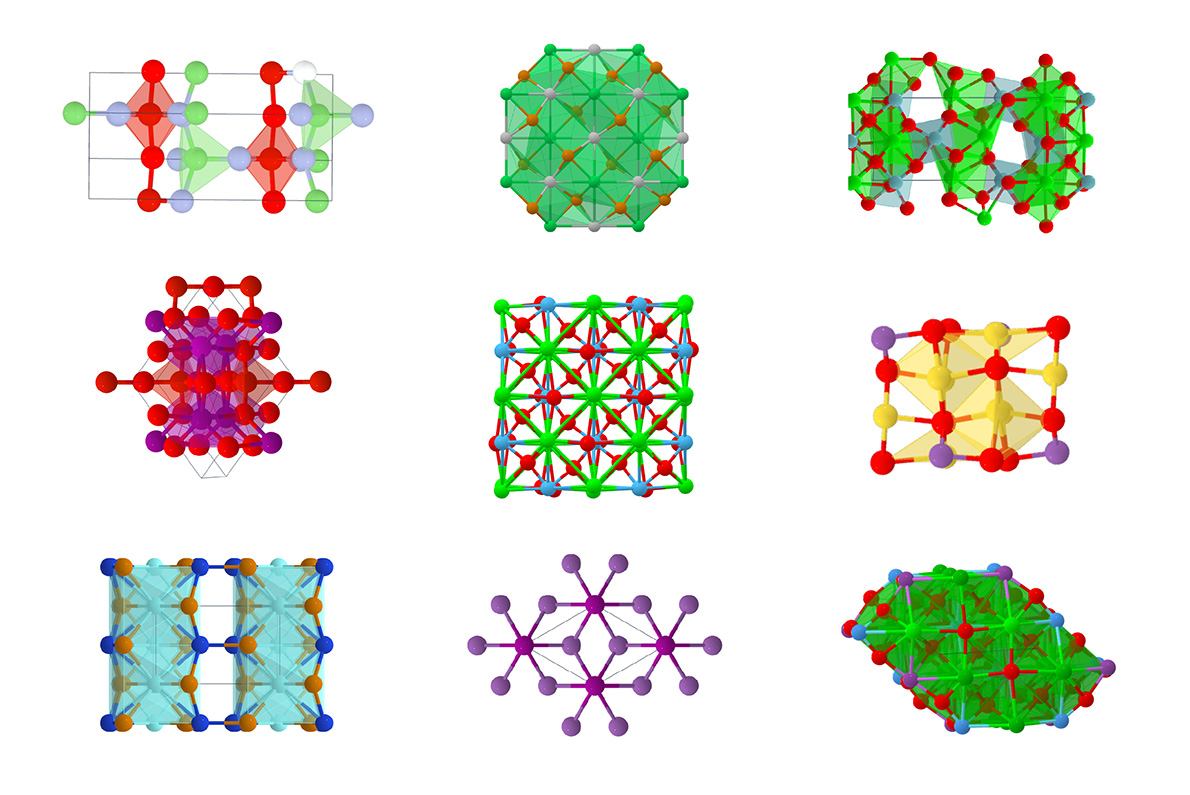
Now that we have solved many of the problems needed to automate physics simulations, we can now combine these AI tools that we have developed over the last decade or so into Agentic AI systems.
Berkeley Lab has also developed robotic synthesis facilities, including the A-Lab, one of the few places where computer-controlled inorganic powder synthesis reactions can be performed.
DOE National Laboratories also has the world’s fastest supercomputers. This vast network of leadership computing facilities allows us to push the boundaries of AI inference.
Q: What do you hope to accomplish by the end of the project?
Jain: An end-to-end autonomous platform for discovering scientific insights for new materials and applications.
To do this, FORUM-AI first comes up with hypotheses for compositionally complex materials that have the potential to meet the required property goals. Traditionally, this type of material has been very difficult to study because it is difficult to predict the behavior of the material when it is made of a mixture of many elements.
When it comes time to synthesize the material, the AI tool provides A-Lab with property goals. For example, a battery material that meets a certain level of cyclability or a constant rate function that determines how quickly a battery can be charged and discharged.
After conducting the first round of experiments, FORUM-AI analyzes the data to determine what is working and what is not working, and comes up with the next round of experiments. The experiment is automatically deployed to A-Lab to iterate and improve the results.
Q: What will happen to FORUM-AI in the future?
Jain: One of the things we would like to do in the future is to connect FORUM-AI to experimental user facilities such as light sources. The idea is that when a user submits a proposal, the agent AI will perform some experiments or preparatory work before the user arrives, or assist with the experiment after the user actually arrives at the light source, so that the experiment can be done as quickly, efficiently, and accurately as possible.
It would also be great to collaborate with the broader research community across application areas to find other ways this tool can be applied to different types of materials and scientific problems. For example, how can FORUM-AI be used to study catalysis, or structural materials, semiconductors, or interfaces? There is certainly a lot to explore.
Ultimately, FORUM-AI could become an essential partner in this nation’s scientific enterprise, accelerating the discoveries that power America’s future.
The National Energy Research Scientific Computing Center (NERSC), Oak Ridge Leadership Computing Facility (OLCF), and Argonne Leadership Computing Facility (ALCF) are DOE Office of Science user facilities.
/Open to the public. This material from the original organization/author may be of a contemporary nature and has been edited for clarity, style, and length. Mirage.News does not take any institutional position or position, and all views, positions, and conclusions expressed herein are those of the authors alone. Read the full text here.