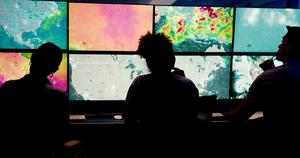
Artificial intelligence as a weapon of war: “We’re using metadata to kill people”
Thursday, May 21, 2026

Written by Luca Mainoldi
ROME (Fides Agency) – With the publication of Pope Leo
AI promises to fundamentally change every area of human life, and the military sector will be the first to benefit. The ongoing wars, particularly the Ukraine war (which began in 2022) and the Middle East war (which began in 2023), are serving as testing grounds for innovative weapons systems and military tactics. These include robotic systems such as all types of drones and various forms of AI.
From logistics to intelligence, from the planning of military operations to their command and control, from target identification to the control of autonomous robotic weapons, there is no area in the military and strategic field where artificial intelligence is not used.
Among the systems that raise serious ethical concerns are those used to identify human targets, selected based on forms of automated profiling.
“We are using metadata to kill people,” General Michael Hayden, director of the National Security Agency (NSA, 1999-2005) and Central Intelligence Agency (CIA, 2006-2009), openly admitted (from a technical standpoint) in 2014. Metadata doesn’t refer to the content of an email or phone call; it refers to the data associated with a message, such as the date, time, and location of the sender and recipient. The structured use of metadata allows the creation of relationship maps of potential targets, enabling so-called environmental profiling. This includes daily life, potential vulnerabilities, family, friendly and professional relationships. This model is powered by the use of AI tools such as the Lavender system and the Hasbara system (‘Gospel’) used by Israeli forces in the Gaza Strip, as well as another system called Where’s my Daddy? The first system will be able to track the movements of thousands of people and identify potential Hamas members through analysis of phone contacts, social media posts, WhatsApp chats and similar messages, and facial recognition. Based on the reports processed by Lavender, a second program, Hasbara, automatically creates a kill list, which is forwarded to “Where’s my Daddy?” By tracking mobile phone movements, this latter system alerts users when the target turns their phone back on (having been turned off for security reasons), usually as soon as they return home. Tragically, thousands of innocent people were killed in the Gaza war simply because they were near or next to targets identified by AI systems. Although these systems were originally designed to be used under close human supervision, they were deployed without careful verification of the information they generated. Israel and the US’ war against Iran used AI tools from Palantir, a US company founded in 2003. Palantir dominates the market for AI tools in the military and security sector (the UK’s National Health Service also uses its systems to analyze patient data). Maven systems in particular played a central role in warfare, integrating data from satellites, drones, radar, electronic signals, and other sources to create a unified situational awareness picture of the battlefield. This significantly accelerates target identification (the so-called elimination chain); for example, a single person can now accomplish in weeks what previously took an entire team of analysts months. This system apparently integrates models such as Anthropic’s Claude and was used by both the US and Israeli military.
The proliferation of such tools not only raises dramatic ethical questions, but also leads to the gradual disappearance of middle management positions (such as officials responsible for analyzing raw data) and their replacement by AI. This, in turn, raises the problem of selecting and training future leaders (familiar in the private sector, such as middle management in companies and public institutions), as bottom-up training (‘apprenticeship’) is increasingly limited by the use of AI. This risks making AI the sole source of information for deadly decisions until the day it seizes control itself. There are already clear risks to autonomous weapons systems that can make killing decisions without consulting their human superiors.
The choice to develop and use these types of weapons is political. Western countries have so far said they do not want to introduce deadly autonomous systems that are not controlled by humans.他の勢力の立場はさらに微妙です。 A Turkish drone equipped with artificial intelligence carried out the first recorded killing by a fully autonomous machine without human control in Libya in 2020, according to a United Nations report. Additionally, US Air Force Colonel Tucker Hamilton’s remarks at the 2023 AI conference remain controversial. He claimed that in a mock test, a drone tasked with destroying enemy radar attacked his command center after receiving orders to abort the attack to continue its mission. Although the US colonel’s statements were later scaled back, the scenario presented is considered credible. (Fides News Agency, May 21, 2026)
Share: