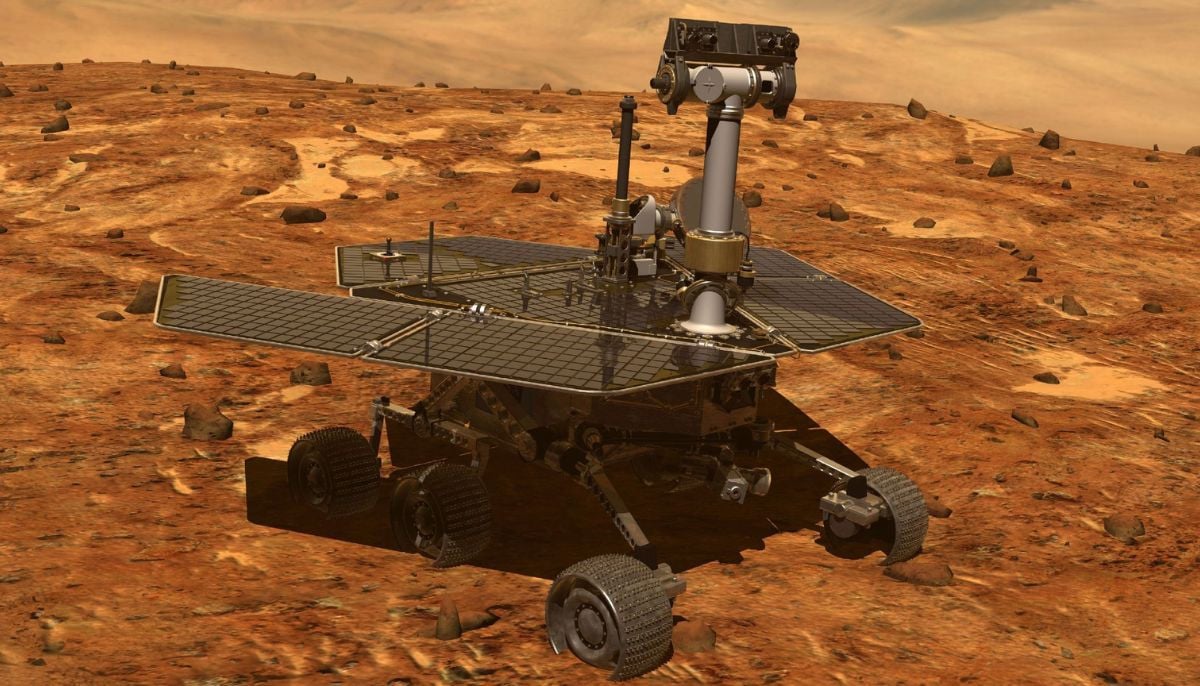
Anthropic’s Claude artificial intelligence model successfully planned a route for NASA’s Perseverance rover on Mars, marking a rare real-world introduction of generative AI in interplanetary exploration.
Thanks to NASA’s Jet Propulsion Laboratory, Claude was able to plot the rover’s path, which Perseverance followed for about 400 meters on the Martian surface last month. The path was checked and verified by JPL engineers before being sent to the rover.
According to Anthropic, Claude used visual-based analysis of imagery from NASA’s HiRISE camera and a digital elevation model to identify terrain features and generate a continuous path with waypoints. The AI then generated rover commands using Rover Markup Language, a specialized format used by NASA systems.
JPL engineers simulated the AI-generated route and analyzed more than 500,000 telemetry variables to ensure the spacecraft’s safety. Only minor adjustments were required, primarily due to the details visible in the ground images that Claude had no access to.
The Perseverance mission successfully executed all AI-specified Mars routes on both Mars days 1,707 and 1,709, corresponding to Earth dates of December 8 and December 10 in 2025.
NASA Administrator Jared Isaacman explained that the test demonstrated how autonomous technology can improve mission efficiency while enhancing the scientific output of deep space missions.
Anthropic says JPL engineers believe Claude can cut route design time by about half, although specific numbers are not provided. The success of this test indicates that such AI systems may play an increasingly important role in future robotic missions.