

How UNCG’s School of Nursing is leading the way in AI integration
At UNC Greensboro School of Nursing, artificial intelligence (AI) is no longer on the horizon. It is about how schools teach, train and Developing the next generation of nurses.
AI tools enhance instructional design, accelerate content development, improve instructor efficiency, and deepen student engagement.
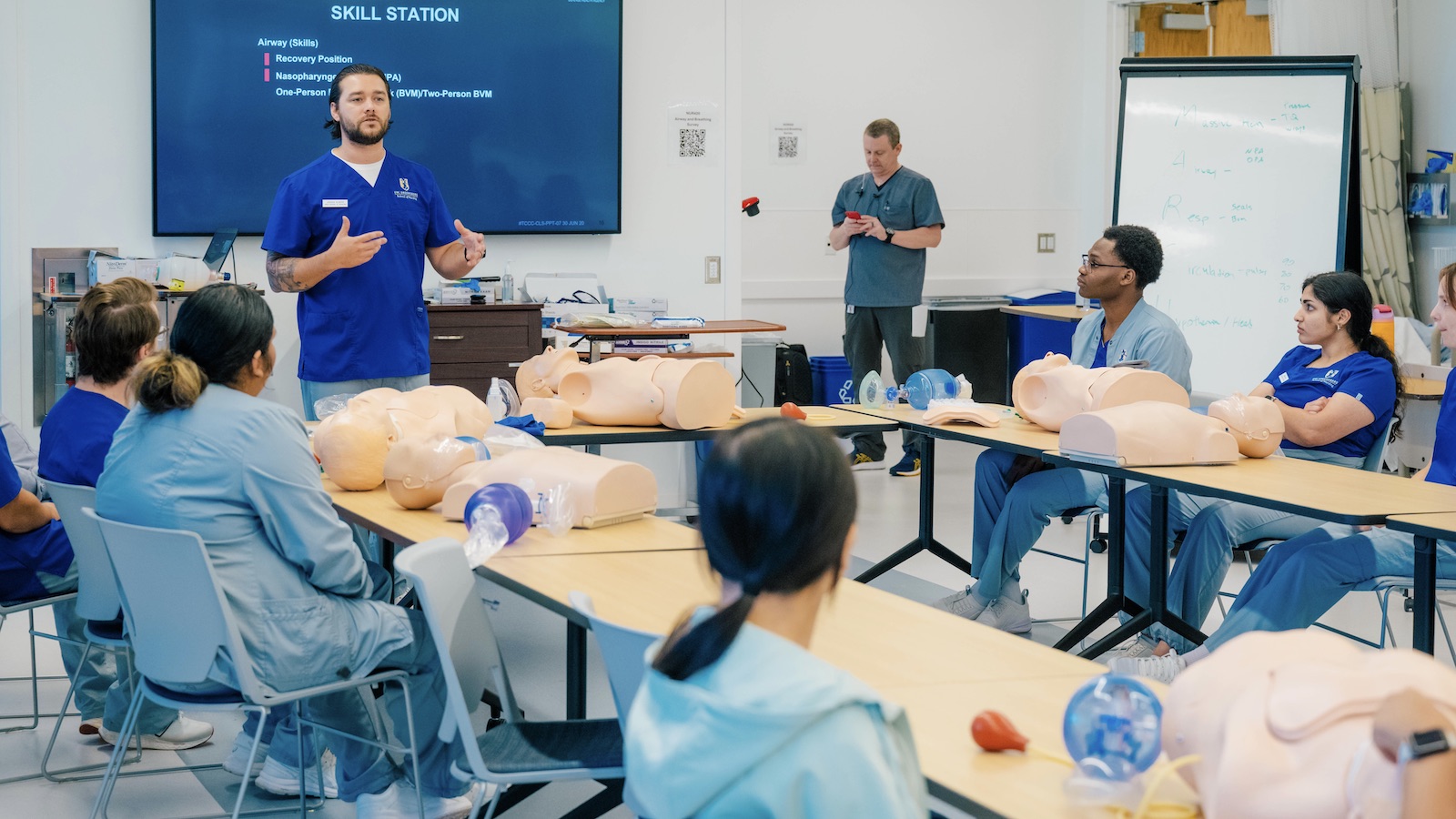
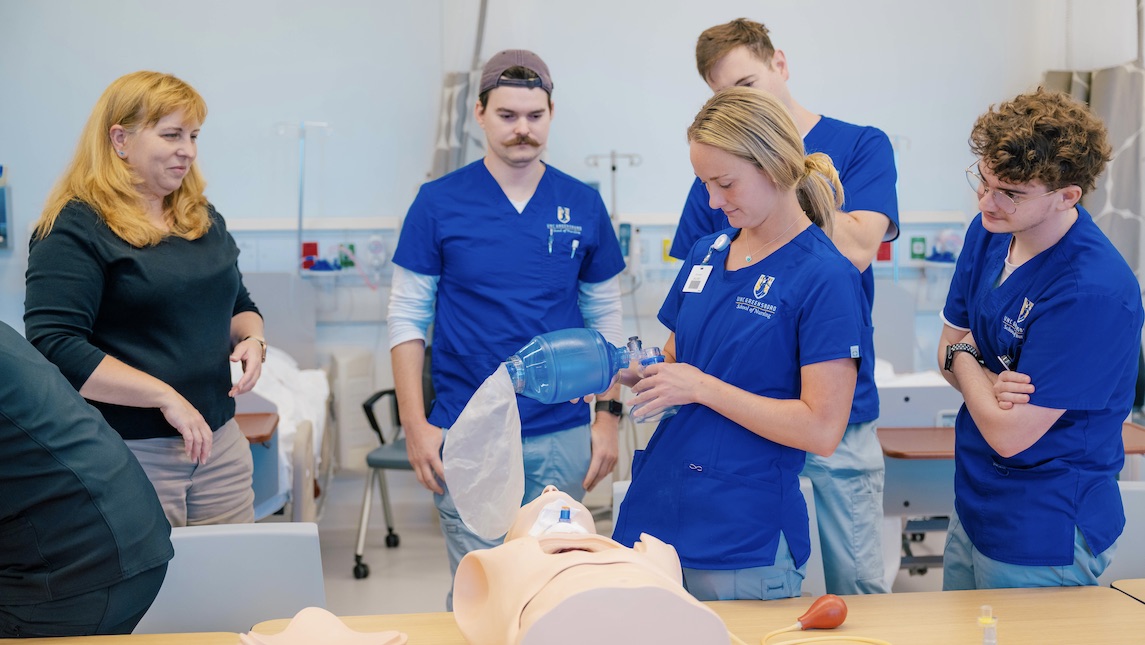
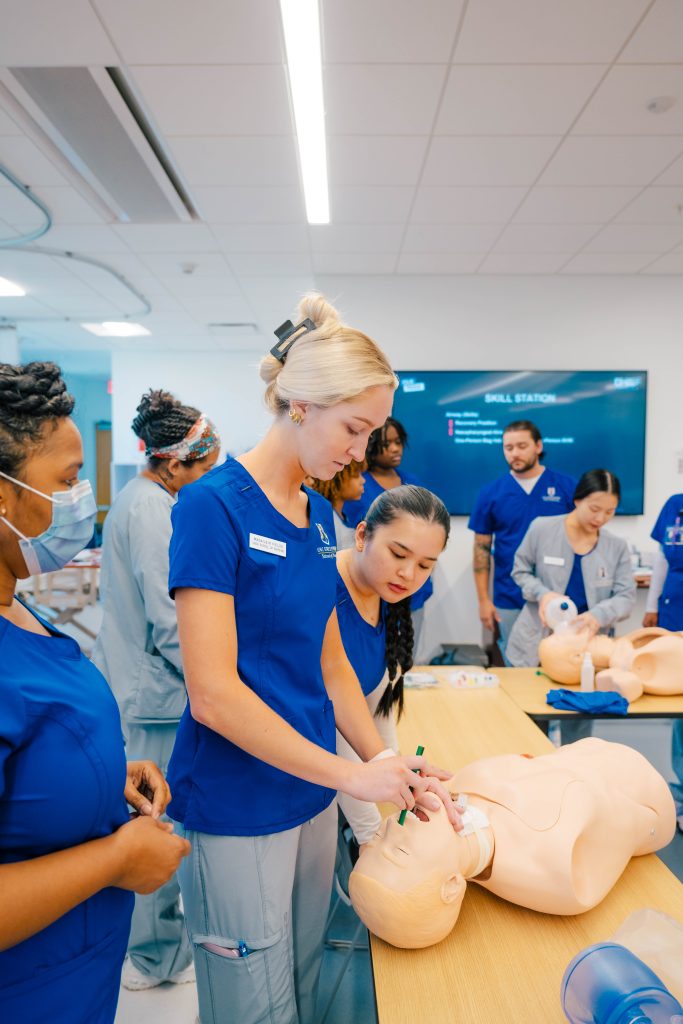
Tommy Mann is one of the School of Nursing’s AI champions. The Champions are a formal group of dean-appointed faculty members dedicated to integrating AI into nursing education. Mann is an assistant professor and director of the Simulation Center for Experiential Nursing Education (SCENE). A state-of-the-art facility that provides hands-on experiences that bridge theory and practice.
Dean Debra Barksdale recognizes that the School of Nursing (SON) needs to be on the “cutting edge” of AI, so she is driving faculty and AI champions to achieve this goal.
A self-described “technology enthusiast,” Mann recognized early on that AI was advancing rapidly and believed it had the potential to do a lot for academia, especially in curriculum and simulation development.
“This is a big passion of mine,” he says. “We continue to understand new capabilities in AI and how we can use them, question whether AI is valuable, and consider how it fits into our workflows.”
Support student learning using AI
From my conversations with Mann, it seems like AI is always about new thinking and recognizing that the way something has been done in the past isn’t necessarily the best way to do it now.
SON AI Champions uses AI to develop curriculum, create student learning outcomes (SLOs), and generate content. In fact, 70% of SON faculty are actively using AI in some way.
“With AI, teachers can simultaneously address different learning styles of students in one classroom, meeting students where they are and increasing student engagement with the content,” Mann said.
There is a common assumption that today’s college students are natural AI users because of their age and generational tech-savvy. Mr. Mann refutes this.
“Once they come in, “In the classroom, students aren’t using AI as much as people believe,” he says.
But Mann knows he can use it to improve academic performance.
For example, if your students’ schedules require them to listen to and study class material, you can use NotebookLM to convert PowerPoints to podcasts and create content in a way that meets their needs.
Therefore, SON is committed to supporting teachers to become AI leaders. This allows us to educate students about useful AI platforms, guide them in the right direction, and Demonstrates effective usage.

Faculty support in AI integration
The four-person simulation team, consisting of Merry Prior, Brittany Norman, Derrick Owsley, and Mann, conducts ongoing research aimed at: Identify the latest generative AI models to meet the needs of simulation centers and faculty.
Each team member uses AI differently, drawing on resources from the International Association for Clinical Simulation and Learning in Nursing (INACSL) and the Society for Simulation in Healthcare (SSH). Both organizations are increasingly focusing on the role of AI in simulation.
The team intentionally seeks free and easy-to-use platforms for teachers, prioritizing tools that lower barriers rather than those that create them.
Mann gives one example scenario for content generation. Instructors can use Microsoft Copilot to develop video scripts based on research and lecture notes. You can then use the video production platform HeyGen to create videos for your students.
All of this AI training for SON faculty will directly benefit nursing students, Mann said.
“The more we train and integrate AI within the faculty community, the better prepared we will be to deliver that content to students,” he says.
Mann’s team hosts AI training and discovery sessions for teachers to better understand how they use AI in the classroom.
The session curriculum will explore questions such as: How are teachers using AI? What have been the results for them? For students? Has the use of AI reduced or increased the work of teachers? Understand what’s working and what’s not. Shape your team’s next steps.

AI nursing education resources
Integrating AI in simulation-based education
Chat GPT It serves as the core engine for simulation development.
Claude Supports long-form scenario branching, multi-patient logic, faculty guides, manuals, and expanded explanations.
Improving student learning materials
notebook LM Create podcasts, flashcards, infographics, mind maps, and video summaries.
Kamba Visually professional infographics, clinical guides, student handouts, Simulation overview slide deck.
Instructor support and workflow efficiency
Chat GPT Draft pre-briefing language that aligns with psychological safety guidelines.
Claude Reorganize large curriculum documents, strengthen their structure, and support the creation of policies and manuals.
copy.ai Helps create announcements, reminders, and support messages for students.
notebook LM It brings together long reference materials, clinical guidelines, and simulation documents into a quick reference format for faculty.
Utilization of AI in nursing education
AI isn’t going away, and academia can’t afford to ignore it, Mann says. UNCG’s School of Nursing is leading the way.
This effort is consistent with a growing national consensus. The National Federation of Nursing, the American Nurses Association, and the American Academy of Nursing (AAN) recently issued a formal statement calling for nursing programs to incorporate AI literacy into education and practice.
The AAN “supports the responsible and ethical use of artificial intelligence (AI) as a transformative force in healthcare…” the AAN said. “The rapid and widespread growth of AI technology presents an exciting opportunity to advance innovation in person-centered care and healthcare delivery.”
The school will continue to educate faculty on what AI platforms are available to students, how to use them ethically and effectively, and how AI can help students grow and succeed in the classroom.
“The integration of AI across simulations, skills labs, and educational courses has significantly enhanced our ability to provide innovative, efficient, and student-centered nursing education at UNCG,” Mann said.
Written by Amy Birch, AMBCopy
Photo by Sean Norona, University Press
Stay on the cutting edge of AI integration.


