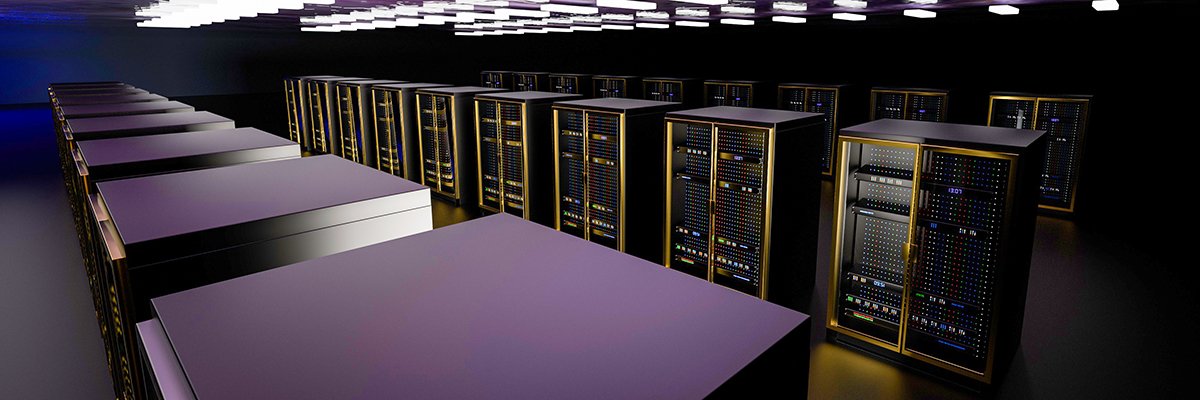
For years, mainframe conversations have been rip-and-replace. A smarter, more practical reality is taking hold.
Mainframe systems can process millions of transactions per second, making them essential for core business functions that require absolute consistency and speed, from database management to ERP and CRM. Far from being obsolete, they have become a quietly powerful foundation for modern commerce, processing 90% of all credit card transactions and serving more than 70% of the world’s businesses, according to Gartner.
But as digital demands grow, businesses need mainframes to keep up. Modernization enables businesses to be more agile, better support developers, connect to cloud technologies, and manage costs smarter. All of these are essential to staying competitive.
This requires new and more urgent questions for today’s IT leaders. As every investment comes under scrutiny, the focus has shifted from discussions about the future of mainframes to more practical challenges. So, how do you modernize this critical infrastructure and clearly demonstrate its value in a hybrid world?
Realistic modernization without a big bang
In conversations with IT leaders, it’s clear that the idea of a risky “big bang” migration is losing its appeal for technical reasons.
According to Forbes, more than 70% of Fortune 500 companies still rely on mainframes, often built on decades of interwoven COBOL, RPG code, and custom business logic. In this environment, attempting a large-scale lift and shift carries too much risk to be considered a viable strategy, as a single change can cause a domino effect across critical programs.
Instead, a more practical, incremental modernization has proven effective. The key is to connect mainframe and cloud environments to create a hybrid ecosystem that leverages the best of both worlds. A key technology pattern is to make core mainframe applications API-enabled so that they can seamlessly participate in this broader architecture. This enables teams to build new cloud-native front ends that leverage the unparalleled security and reliability of mainframe transaction processing on the back end.
There’s no denying that this approach requires significant investment, time, and careful planning. But this approach to modernize without tearing down allows teams to innovate safely, reduce technical debt, and ensure all changes are targeted and aligned with clear organizational goals. It’s an approach that allows teams to innovate without introducing unnecessary risk, systematically reduces technical debt, and ensures that all modernization investments are directly aligned with clear, measurable business objectives.
How AI is changing the performance conversation
AI is accelerating this modernization transition by directly addressing the long-standing challenge of data gravity, recognizing that bringing analytics to data rather than forcing it to move is the smartest approach.
Rather than go through the costly, complex, and risky process of moving large amounts of sensitive information to another platform, AI models can now be run directly on the mainframe.
For the first time, you get clear business insights from raw performance data directly at the source. For example, retail banks can analyze live transaction data to understand why customers abandon purchases. None of that information leaves the secure mainframe environment.
Building on this, generative AI accelerates the modernization process itself, providing powerful new ways to analyze legacy systems and streamline transformation.
This change in technology will completely reshape the investment conversation. Leaders can now justify mainframe spending not as a defensive capital investment to maintain the status quo, but as a growth-oriented operational expenditure that directly supports business success and a better customer experience.
Total cost of ownership as a strategic tool
And this is exactly where total cost of ownership (TCO) comes into play. As AI reshapes the way organizations extract value from the mainframe, IT leaders need a way to clearly and reliably quantify that value across the business.
Modern TCO is much more than a basic comparison of hardware costs. In the AI era, conversations need to mature from TCO to total business value. This means calculating your platform’s ROI by considering strengths that have real impact: built-in security to reduce the risk of breaches, resiliency to prevent costly outages, and transactional performance to support core business operations.
The 2025 BMC Mainframe Study confirms that mainframes are here to stay for the long term with a 97% long-term commitment rate. This reality brings new questions to the forefront: how to manage wisely. The answer lies in value-based TCO. It provides a framework for making important “modernize vs. migrate” decisions for all applications.
For one financial services giant, this meant standardizing how TCO is calculated across more than 4,500 applications. By creating a unified data model that captures this broad view of value, we gained the clarity needed to make honest apples-to-apples comparisons. This is why modern TCO is a strategic aid for businesses, providing the single source of truth needed to turn complex choices into clear business decisions.
something with a future
By leveraging AI to gain sharper insights, looking at TCO through a value-driven lens, and taking a hybrid path to modernization, leaders can get the most out of their most critical systems and remain at the heart of today’s digital business environment.
But this is just the beginning. The future of the mainframe depends on its ability to evolve, and AI is its primary accelerator. As we look to an era defined by AI and even quantum computing, the unique strengths of this platform mean that more and more applications will be ideally suited to the mainframe, delivering unparalleled value for years to come.