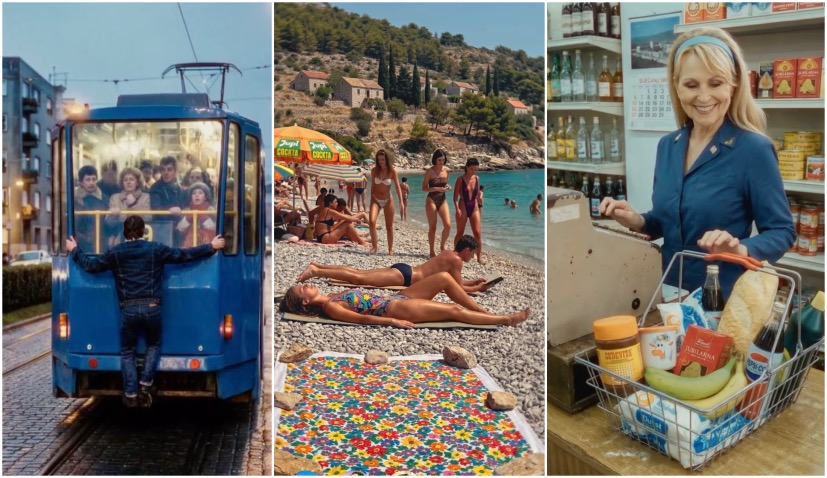
(Instagram/Filatz)
Written by Hannah Klein
Most people associate artificial intelligence with the future, but for Filip Filković, known as Filatz, it has become a way to reconnect with the past.
His AI-generated viral videos act as an emotional time machine, reminding many of the Zagreb they fondly remember and the younger generation finally discovering.
Through scenes such as neighborhood gatherings, winter walks, tram rides, trips to Sri Djeme, and daily habits that are slowly disappearing from city life, Firatz tapped into a strong sense of nostalgia while reminding the audience of values that are often overlooked in today’s fast-paced digital world.
his series spawner is a social media phenomenon because it’s not just a thing of the past. It also reflects what many feel missing today: a slower pace of life, stronger relationships, and a sense of belonging.
Award-winning director and creator of the documentary series Durm Zemlye, mali zagreb Filkovic has long explored the relationship between place, identity, and emotion, working on this project and numerous other film and artistic ventures.
In this interview, he talks about how AI videos are created, why nostalgia resonates so strongly today, and whether artificial intelligence can become a powerful new tool for preserving cultural heritage and collective memory.
AI videos often feel like living memories. When did you first realize that artificial intelligence was not just a technology, but could be a tool for storing emotions?
Since I don’t have any parents or close relatives anymore, I often went back to old photos. At some point, I started using them as a starting point for creating new scenes, images that were not documentary records but had the same emotional weight.
A friend encouraged me to turn this into a project related to my family. I generated a scene of a street that no longer exists, but when I look at the result, I’m not looking at an AI-generated image, I’m looking at a memory. Something that existed only within me suddenly became visible. You can also share it with others.
That was the moment I realized that I could use this technology to preserve things that were being lost.
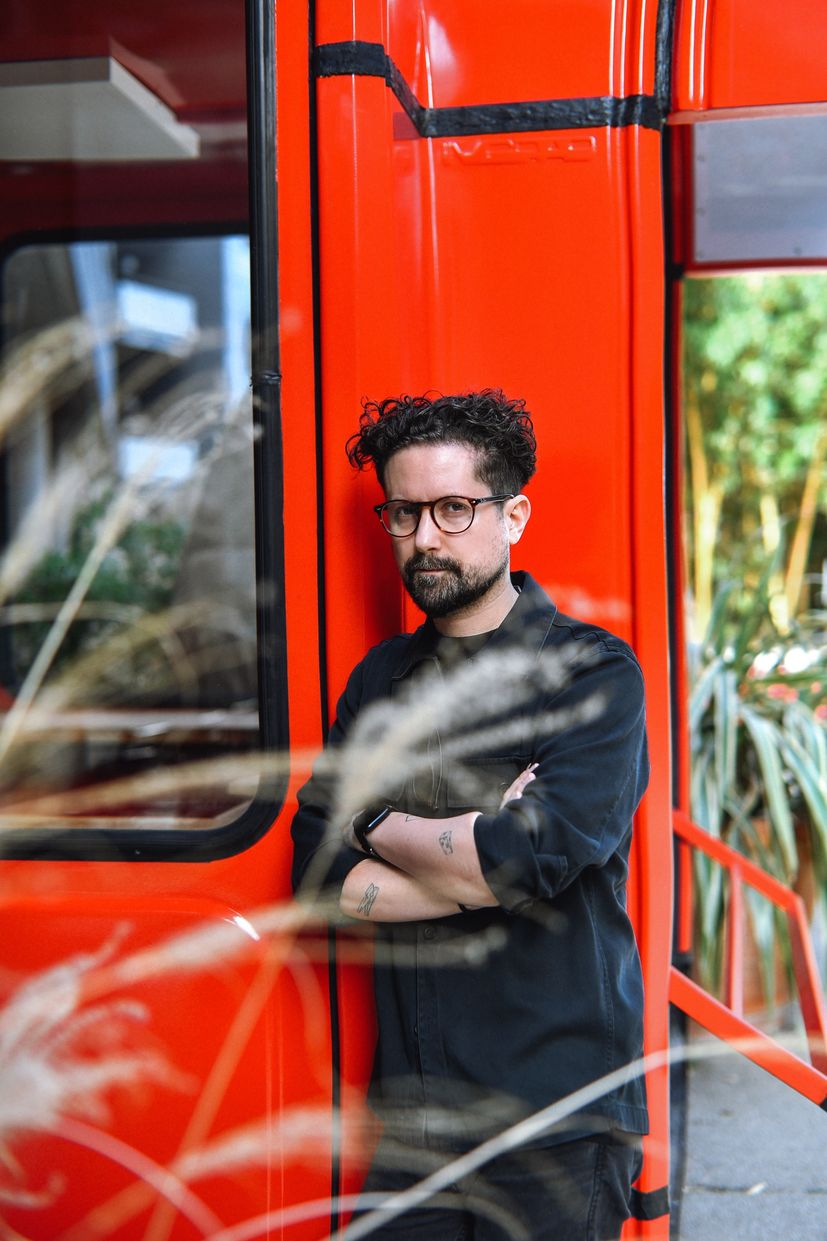
Philaz (Photo: Private Album)
Can AI become a kind of digital scrapbook for entire families, cities, and destinations?
At least in my case I think that’s already the case. spawner series. In fact, I believe this could be one of the most important uses.
Imagine what it would be like for every family to create a living visual archive from old photos, letters, and stories that their grandchildren could experience instead of just viewing.
Disappearing cities, destroyed neighborhoods, disappearing traditional crafts – all have the potential to be given new life and inspire future generations.
I’m not particularly nostalgic by nature, but I think nostalgia is incredibly valuable in this context. It doesn’t replace reality. It is a bridge between generations.
Which project affected you the most emotionally because AI was able to bring back memories that might have been lost?
There is one spawner A video that recreates an old-fashioned general store that no longer exists, but with its wooden counter and unique lighting.
All videos in this series are created primarily for myself. After that, I started receiving messages from people who said that when they visited their grandmother’s house when they were children, they were instantly transported back to a morning they thought they had forgotten forever, and they cried while watching it.
At that point, the memory was no longer unique to me. It became a collective thing. AI helped bring it back to the surface.
You have depicted Croatia many times through your unique visual style. If you had to show Croatia to a foreign tourist in a 30-second AI video, what would you include?
Dubrovnik does not appear.
Instead, it depicts a morning on an island that never appears on tourist posters. A fisherman pulling in a net. Children fishing for gobies on the pier. The scent of the sea. A dry stone wall that lasted for 500 years. A cat sleeping in the shade of a tree.
It actually captures the sound of silence, full of vitality.
It’s a Croatia that is well known to those of us who live here, but we rarely see it because tourists often focus on the places they are told they must visit.
How can artificial intelligence change the way tourists experience destinations like Croatia?
Visitors can experience the lifestyle even before they arrive. What interests me is that AI is not just a guide, but an introduction to the emotional characteristics of a place.
Imagine watching a short film before visiting Rovinj.
Instead of telling you where to park, you’ll reveal what the town has felt like throughout its history, what kind of people it has formed, and the stories hidden within its walls.
You will likely arrive already emotionally connected to your destination. Only then can you truly see what is right in front of you.
I think this is where many promotional films fall short. They approach destination marketing too narrowly, limiting locations to a few predictable shots.
Can AI help the stories of Croatia’s lesser-known destinations, local heritage, and communities receive the same attention as the country’s most famous tourist attractions?
That may be the most exciting possibility of all.
Major tourist destinations have budgets, agencies and powerful marketing machines behind them. A small Slavonian village, a forgotten Adriatic port, or a mountain hamlet with the last remaining blacksmith shop has no such advantage.
AI can help level the playing field.
Compelling stories, powerful videos, and genuine emotions can reach the world in days. Wealth is not required for a legacy to become visible. You just need to communicate it in the right way.
If you could bring one moment in Croatian history to life and turn it into an AI experience for visitors, which moment would you choose?
I would choose the moment when the first Croat saw the sea.
I don’t know whether it belongs to mythology or history, but as an image it has great power. The person who stands before the infinite for the first time and realizes that he has arrived, that this is home.
It is a story that tells the identity of an entire nation.
Visitors experiencing that moment may not be witnessing a historical reconstruction. They will be experiencing the feeling of beginnings.
If you were to create a video right now that would help someone book a trip to Croatia right away, what would its main message be?
The message is not “come and see.” It means, “Come and feel it.”
Croatia is a country that is not only a feast for the eyes, but a delight for all the senses. The scent of a bra, the texture of stones, the taste of the fish caught that morning, and a silence that somehow has its own color.
Those things can never be perfectly captured in a photo. They have to gain experience.
That is why I think Croatia should not be associated with just one season. If the experience is authentic, there’s reason to visit year-round.
If artificial intelligence is the tool of the future, what will always remain human in the stories we tell about travel, places, and memories?
Why we care in the first place.
AI can generate a perfect image of the ocean, but it can’t feel how the ocean affects your breathing. You don’t know why a certain street in a certain town became a part of you forever.
The story of the human journey is always a story of transformation. You leave as one person and come back as another.
That’s why travel shouldn’t just be a travelogue. In many ways, this is an emotional autobiography.
From there, AI reaches its limits and the human experience begins. AI can help us show things, but humans will always be the reason why AI moves us.
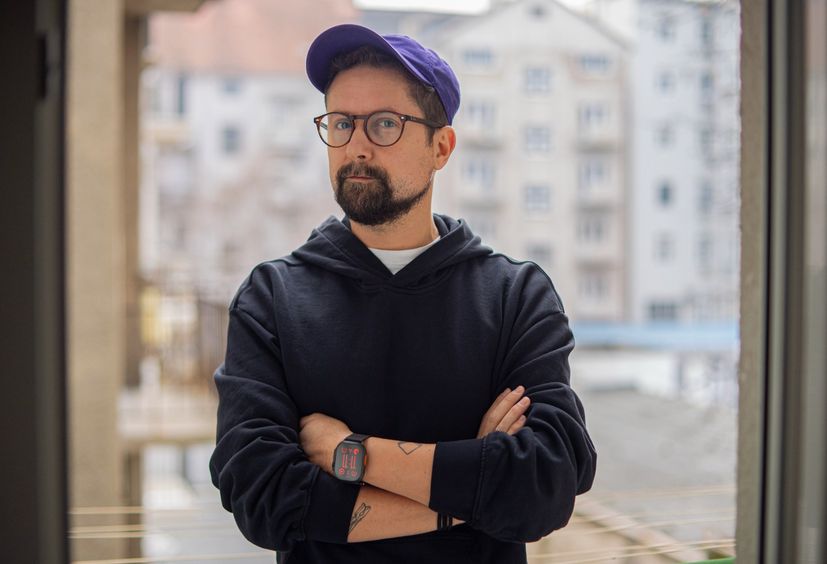
Philaz (Photo: Private Album)