University students and researchers are training AI agents to master complex strategic video games, and the field is considered an important training ground for the next generation of artificial intelligence (AI).
In a laboratory at the University of Electronic Science and Technology of China in the southwestern city of Chengdu, AI agents are being trained to play Honor of Kings, the hit game that has become wildly popular in the e-sports world. Students in the lab place the AI in different scenarios to optimize play.
“What we are mainly doing now is working on game-related technology with students, combining it with AI, and using it to solve different kinds of problems,” said Xie Ning, a professor at the School of Computer Science and Engineering at the University of Electronic Science and Technology of China.
Researchers say experiments that teach AI to play complex games lay the foundation for training AI to operate in realistic environments.
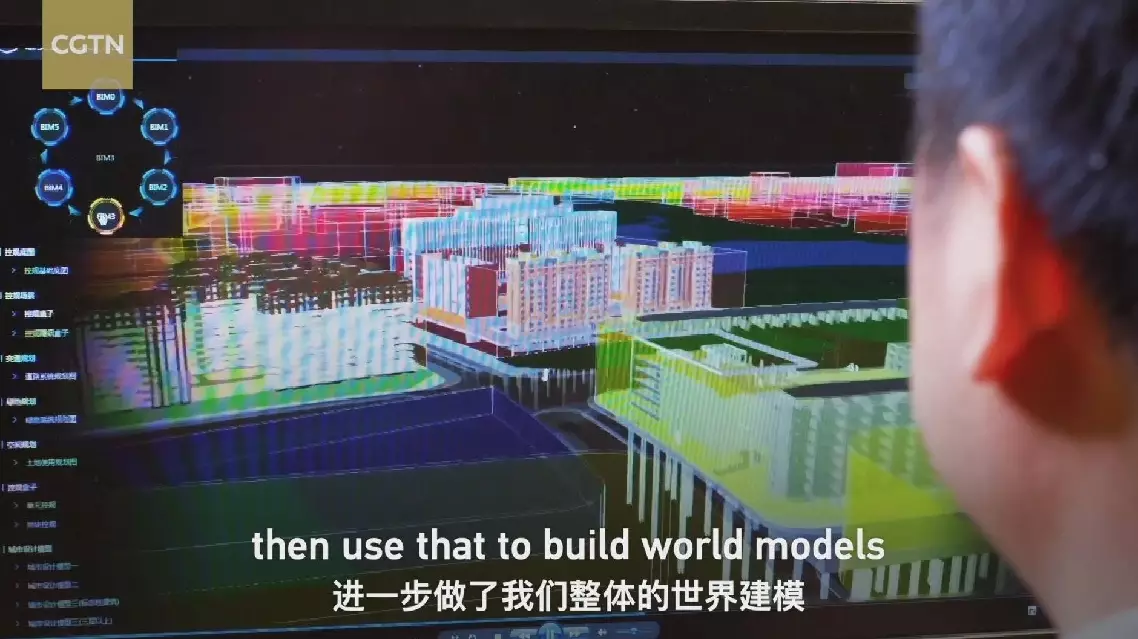
“Game engines allow us to build environments that mirror the real world, what people used to call things like ‘metaverses’. We run simulations in these ‘parallel worlds’, conduct research, and then use it to build world models and test AI algorithms. Once these AI algorithms are proven effective, we deploy them in real-world industrial systems,” said Liu Zhitao, research assistant in the School of Computer Science and Engineering. says Mr.
“What we want to do is take research from universities and push it into broader real-world use. This is basically what China has been talking about, turning scientific results into something that actually implements in the real world,” Xie said.
While this vision may sound far-fetched, the professor emphasized that video game-based research has already led to many AI breakthroughs that are reshaping industries.
“In fact, this now also includes smart city management, digital twin factories, and immersive operation systems, all of which were born out of gaming technology. They are now being used to power smart manufacturing, city management, and other industries,” Xie said.
Ever since China’s 14th Five-Year Plan (2021-2025) called for the digital transformation of the cultural industry, video games have become a powerful cultural medium, bringing works inspired by traditional Chinese culture to audiences around the world.
As China enters the first year of its 15th Five-Year Plan (2026-2030), AI is moving to the center of national development, and the gaming industry is gaining new importance in the rise of AI.
AI trained to play video games as a stepping stone to real-world applications
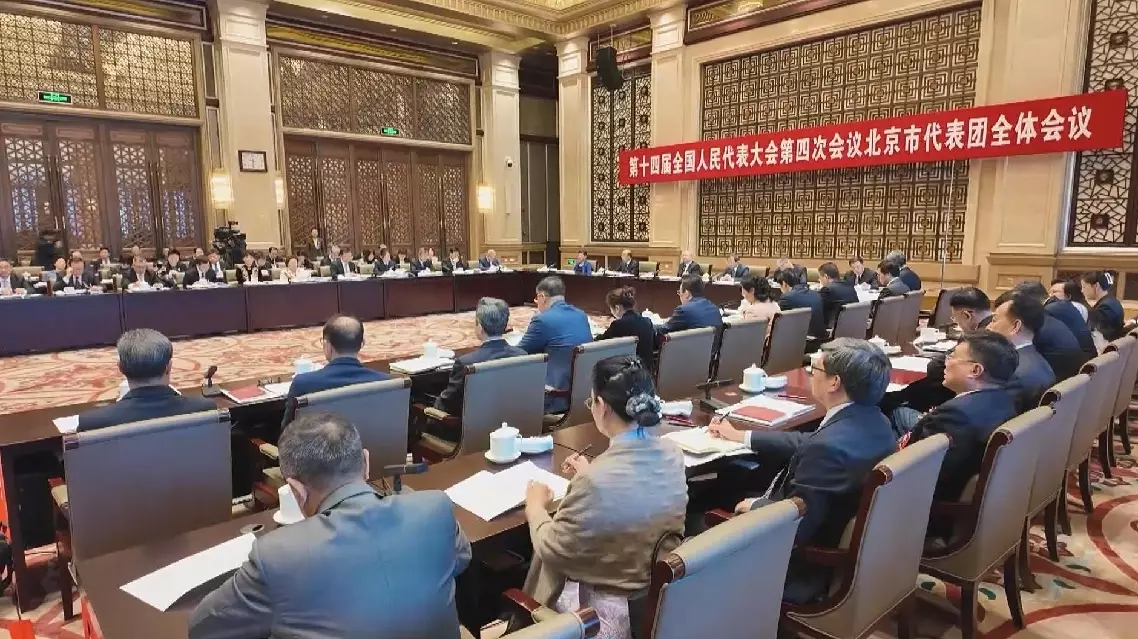
The rapid development of advanced industries across China, including AI and robotics, was a hot topic at Friday’s public press conference by leading researchers and industry executives who are members of the 14th National People’s Congress (NPC), which is currently in its fourth session.
China’s top parliament, the National People’s Congress, will hold its annual meeting from Thursday to March 12.
In a series of public press conferences, delegations from around the country, including Beijing, southern China’s Guangxi Zhuang Autonomous Region and eastern China’s Jiangxi province, asked questions about how their respective regions are shaping China’s technological progress.
Deng Langni, vice chairman of the 14th National People’s Congress and vice chairman of Guangxi University of Science and Technology, emphasized that universities, as a source of innovation, need to take the initiative and provide strong support for the development of the AI industry at the local level.
“The rapid pace of industrial transformation poses serious challenges to traditional academic disciplines and majors, prompting universities to ‘break down the walls’ and integrate classrooms into the industrial chain. “We have introduced a large number of AI-related micro-credentials across the country, allowing students from different majors to acquire ‘AI thinking’ and provide the multi-talented talent that is urgently needed for the industrial improvement of Guangxi,” said Deng Xiaoping.
Beijing lawmaker Lei Jun, founder of consumer technology giant Xiaomi, offered an optimistic vision of the transformative impact technological advances will have on manufacturing and industry.
“Scientific and technological innovation can accelerate the development of new, high-quality production capabilities. Private companies have the important advantage of being closer to markets and users, being able to react quickly and quickly applying new technologies to real-world scenarios. Humanoid robots are already being introduced into car factories, and I believe that they will be introduced into factories on a large scale in the coming years,” he said.
At a public event hosted by the Jiangxi National People’s Congress delegation, lawmakers said the province has laid out plans for six key areas for future industries, including bold new areas such as embodied intelligence, brain-computer interfaces and humanoid robots.
“Many of Jiangxi’s aviation, automobile, and equipment manufacturing enterprises are using intelligent robots, virtual reality, and Metaverse technologies to upgrade their manufacturing. Employees can use immersive interfaces to remotely control equipment. For many years, we have dedicated ourselves to researching the key algorithms needed for efficient collaboration between embodied intelligent humanoid robots, digital humanoids, and humans,” said NPC Deputy Vice-Minister Ming Weidong, who is also director of Nanchang University’s Metaverse Institute.
Innovation experts from across China highlight accelerating technology deployment