

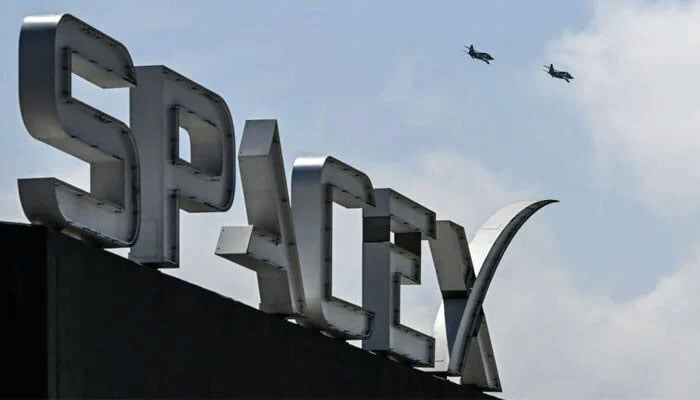
SAN FRANCISCO: SpaceX is partnering with Cursor, an AI coding startup co-founded by Pakistani-born Sualeh Asif, in a planned $60 billion acquisition later this year.
The move by Elon Musk’s rocket and satellite company comes as the company prepares to go public and comes on the heels of its acquisition of the billionaire’s artificial intelligence company xAI.
Founded in 2022 and based in San Francisco, Cursor specializes in AI, specifically for writing software code for business applications.
“SpaceXAI and @cursor_ai are now working closely together to develop the world’s best coding and knowledge work AI,” the company said in an X post on Tuesday.
Combining Cursor’s software and product expertise with SpaceX’s AI training supercomputer Colossus will enable the company to “build the world’s most useful models,” the company said.
The partnership comes as rivals in the AI space compete to become the preferred choice for software developers.
Cursor competes with Microsoft’s social coding platform GitHub, which is a major resource for the developer community.
OpenAI announced Tuesday that its coding tool Codex has 4 million weekly users, up from 3 million just a few weeks ago.
Meanwhile, Anthropic announced a surge in revenue from its Claude Code tool for developers.
It is pertinent to mention here that Karachi-born Asif joined Nixall University before attending Massachusetts Institute of Technology (MIT) and represented the country in the International Mathematics Olympiad from 2016 to 2018.
Meanwhile, he co-founded Anysphere, the maker of the popular AI code editing tool Cursor, with three friends from MIT.
The company currently has annual revenue of more than $1 billion and is one of the fastest-growing AI startups, Forbes said.
Sky AI
Musk announced in February that SpaceX would acquire xAI as part of a plan to launch a solar-powered, satellite-based data center to run future AI models.
SpaceX has been at the forefront of the space launch market by offering reusable rockets that dramatically reduce the cost of putting satellites into orbit, and by owning the largest constellation of satellites, Starlink.
The company plans to list on the stock market this year, widely expected to be the largest in history, with media reports pointing to an initial public offering as early as June.
Musk said SpaceX’s acquisition of xAI is “not just the next chapter, but the next book” for the company.
“The global power demand for AI simply cannot be met by ground-based solutions…The only logical solution is therefore to transport these resource-intensive efforts to locations with vast amounts of power and space,” Musk wrote when his companies merged.
The project is in line with Musk’s long-term ambitions to establish colonies on the moon and Mars, he wrote, and is “the first step towards a Kardashev II-level civilization.”
Coined by Soviet astronomers in the 1960s, this futuristic term refers to a civilization that can harness all the energy from stars in its own system.
SpaceX filed documents with U.S. regulators earlier this year setting the stage for what could be the largest initial public offering in history, people familiar with the matter told AFP.
The confidential filing puts the rocket and satellite maker on track to go public by July, The Wall Street Journal reported, citing anonymous sources.
For a venture with stratospheric ambitions, the initial public offering could be worth more than $75 billion, according to media reports.
If successful, SpaceX could enter Wall Street with a valuation of more than $1.75 trillion, making it among the world’s 10 largest companies by market capitalization.
In addition to SpaceX, two other tech giants, AI developer OpenAI and Anthropic, are reportedly planning IPOs this year.


