AI is everywhere and helps society move forward. However, due to the increasing influence of technology, it is important to adjust it appropriately. The AI Act aims to ensure this, but the law has been criticized for various quarters. It is said that there is inadequate caution in protecting intellectual property and copyright. How can I use AI responsibly? Technology is now widespread, where do you draw the lines? We spoke with two AI experts, Patricia Jaspers and Jos Van Dongen.
AI pitch competition
This story was written accordingly AI pitch competition. This is the competition to showcase the most innovative AI solutions. The contest will be held on September 29th. You can register here Until August 29th.
AI is rapidly changing the world. How we work, learn and communicate. Like the US, China is fully committed to accelerating AI innovation. Europe has chosen to regulate. AI ACT It is a European law aimed at ensuring the safe, fair and transparent use of AI within the EU.
However, such laws do not protect us completely. A coalition of over 40 European creators has recently been published Formal criticism AI Code of Conduct. It is intended to help businesses comply with AI laws. This code is said to provide inadequate protection of intellectual property and copyright, and is primarily useful for the interests of large corporations.
There's a lot going on around the world to get a sense of technology. But startups are born like mushrooms in every domain you can think of: healthcare, defense, energy, transportation. Can you even control these developments anymore? And how far do you want to go with AI applications?
Autonomy and Control
Patricia Jaspers is the management director of the Eindhoven Institute for Artificial Intelligence Systems (EAISI, TU/E). She sees many positive aspects of AI use in many areas, including healthcare. “When I first heard about how AI is used to detect new proteins, for example, I was very impressed. This will greatly accelerate the development of promising drugs.”
“Nevertheless, I'm also worried about certain applications,” she continues. These concerns are particularly relevant to data freedom and privacy. She cites metachatbots as an example. The company is under attack with chatbots' highly controversial internal guidelines. Internal documents show the company Allowed AI chatbots for cheating with children, according to Reuters.
Joss Van Dongen also regularly deals with the subject of AI and data freedom. He is the director of Erasmus Data Collaboratory -House of AI At Erasmus University, where data and AI gather. Under the leadership of scientist Joan Goncalves, a small language model was developed at the university. Erasmian Model. This model is trained on data from within Erasmus University. These are the dissertations and dissertations of all masters over the past 50 years. The language model has been fine-tuned using documents from these specific university. This allows you to ask very specific questions about a particular area of research, such as whether a particular topic has been previously investigated, what the results are.
“This model runs on internal infrastructure and is unrelated to external cloud services,” he explains. “We want to prevent this data, such as papers and dissertations, from ending in a foreign cloud environment. As soon as we move data to a cloud environment such as Microsoft Azure, we risk controlling it.
These concerns are not unfounded. Israeli military information services have recently been revealed Uses Microsoft Azure saves and processes large numbers of tapped phone conversations. The incident raised widespread concerns around the world about the risk of misuse of cloud infrastructure for data sovereignty and surveillance.
ai makes us smarter and at the same time unfamiliar
In addition to data and autonomy issues, both experts have mentioned the risk of “skill molting” with AI. As AI takes over more and more tasks, we can focus on what we are good at as humans. This is a big plus. But at the same time, we do so lose Specific skill.
Jaspers cites recent research on physicians using AI as an example. “Practitioners who regularly rely on AI will become Low effect Recognizing the disease itself. International studies have shown that there are far fewer early stages of colon cancer during visual examinations assessing images without AI. ”
Second example: A smartwatch that measures sleep quality. “Do you dare to decide for yourself whether you still sleep well or whether you rely entirely on your watch? If we don't pay attention, we lose important skills without realizing it.”
Van Dongen agrees. “Personal example: Recently, I was configuring a server environment with a colleague. Everything was going well until the system suddenly crashed. What happened? My colleague blindly followed the instructions of the AI assistant. In short, relying too much on AI can undermine your ability to think critically.
Apply AI responsibly
The AI Act identifies unacceptable risk systems. This is an application that has gone too far in line with European regulations. These include AI systems that profile people on a large scale and make discriminatory decisions, such as AI, which assigns social scores, such as the use of facial recognition in public places without consent, and thereby limits access to people's essential services.
However, we also need to be careful about AI applications entering the European market. Above all, we need to look at more critically which applications are really needed, Van Dongen emphasizes. He refers to research on health care in Europe. Of all AI applications developed in recent years, 2% It is actually used. “Billions have been invested, and only a small portion of it is effectively used.” Do you really need an application? Or are you developing your products or services for the sake of hype? It's not only about saving money, but also about preventing unnecessary reliance on technology.
Also, when it comes to data sovereignty, Jaspers says small AI applications are important. “We need to let go of the idea that only Big Tech Giants AI is valuable. Collecting huge amounts of data is never always necessary or useful.
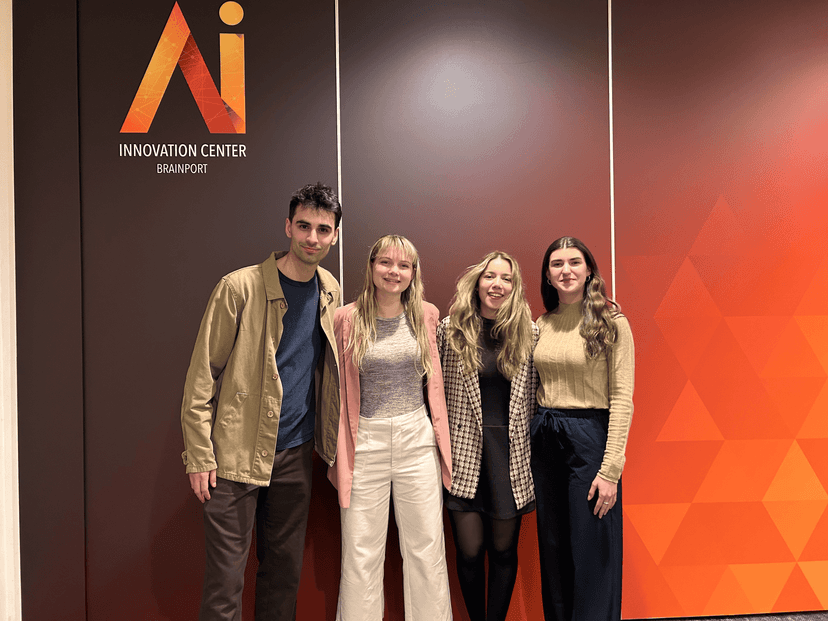
AI Pitch Competition Sneak Preview: What Aevai Health has for the World
AI pitch competition brings the spotlight on the most innovative AI solutions, presents ideas to startups and offers opportunities to accelerate growth.