
A report by UN Women and its partners highlights how, in the age of artificial intelligence (AI), online violence targeting women in public has become increasingly technologically sophisticated, invasive and harmful.
”AI is making abuse easier and more harmful, accelerating the erosion of hard-won rights. “In a context marked by democratic backsliding and networked misogyny,” said Kalliopi Mingelow, who heads a team of government agencies working to end violence against women.
Intimate photos leaked
Tipping Point: The Impact, Manifestations, and Remedies of Online Violence in the Age of AI is based on a 2025 survey, with 641 participants from 119 countries responding.
The survey results revealed that 12 percent of women’s human rights defenders, activists, journalists and other media workers have had intimate or sexually explicit images shared without their consent.
6% are victims of “deepfakes” – AI-generated images that look real – Meanwhile, 1 in 3 people have received an unsolicited sexual advance online.
some 41% of respondents said they self-censor social media To avoid abuse, 19% self-censor in their professional work For the same reason.
“I was forced into silence.”
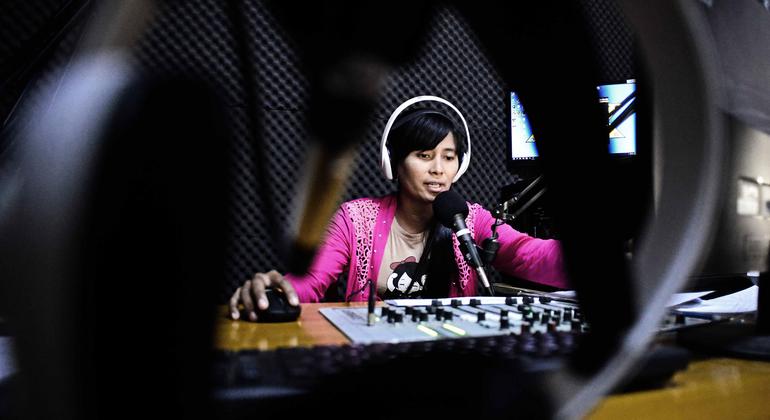
The situation is even more alarming for female journalists and media workers, as 45% are forced to self-censor on social media due to harassment, a 50% increase compared to 2020. Additionally, almost 22% self-censor at work.
“Just living in my own country is scary when right-wing groups online label me a ‘traitor’ and thousands of WhatsApp forwards spread these false claims,” said an environmental journalist from India.
“We started self-censorship and retreated from investigative reporting because local right-wing operatives were provoked by these posts to confront my relatives and make disrespectful comments.” Living freely is not easy. we are forced into silence. ”
Female journalists and media personnel Twice as likely to report incidents of online violence to police compared to 2020 – 22 percent vs. 11 percent.
They are also now more likely to take legal action against perpetrators, enablers (such as technology companies), or their employers, up from 8% in 2020 to 14% in 2025.
Impact on mental health
The report documents the serious toll online violence takes on women’s mental health.
almost quarter 24.7% of female journalists and media workers Diagnosed with or treated for anxiety or depression.
Almost 13% have been diagnosed with PTSD (post-traumatic stress disorder).
One respondent, a journalist and community organizer, shared how these mental health impacts are linked to self-censorship, debates around the democratic process, and economic hardship.
“When we talk loudly about democracy, there is no ‘atmosphere’ of democracy, only ‘crazy demonstrations,'” she told researchers.
“I resigned in December 2023 because I could not bear the relentless pressure. I’m sitting at home now and just focusing on restoring my mental health. ”
This situation has caused serious financial problems and she is “currently living on porridge, a direct result of being forced into silence and unemployment.”
lack of law
Despite the crisis, significant gaps in legal protection against online violence remain, as World Bank data shows. Less than 40% of countries have laws protecting women from cyberharassment and cyberstalking.
“Our responsibility is to ensure that our systems, laws and platforms are able to respond with the urgency this crisis requires,” Mingelow said.
This report is the second in a series based on global research.
The next edition will cover a wide range of issues related to online violence against women in public life, including an analysis of the characteristics and behaviors of perpetrators and the role of “big tech” companies.
For more on this and other important updates on press freedom, and the growing total number of journalists under fire around the world, watch Monday’s live coverage of the United Nations commemorating International Day.


