Artificial intelligence is already being used for limited purposes by certain state entities in New Hampshire. But Rep. Keith Ammon (R-New Boston), founder of the Emerging Technology Caucus, wants the state to continue to evolve.
Lawmakers and officials can recruit AI agents to streamline their operations, but such tools also come with risks and need to be regulated, an employee of AI developer Anthropic told delegates at a Dec. 15 caucus. The discussion follows last week's Government Efficiency Commission report, which recommended that state governments increase the adoption of artificial intelligence to streamline operations and reduce administrative workload.
“I think of AI as a genie out of the box,” Ammon said at the conference. “…I also worry that people are going to fall behind, because they just don’t pay attention to how quickly things are changing in this area.”
Opportunities and current uses
Ammon said he sees AI as having the potential to become “a personal assistant, or many personal assistants, that can perform all kinds of tasks” and improve the standard of living for users. Such AI “agents,” or programs that can perform specific online tasks on behalf of users, were the subject of the day's demonstration.
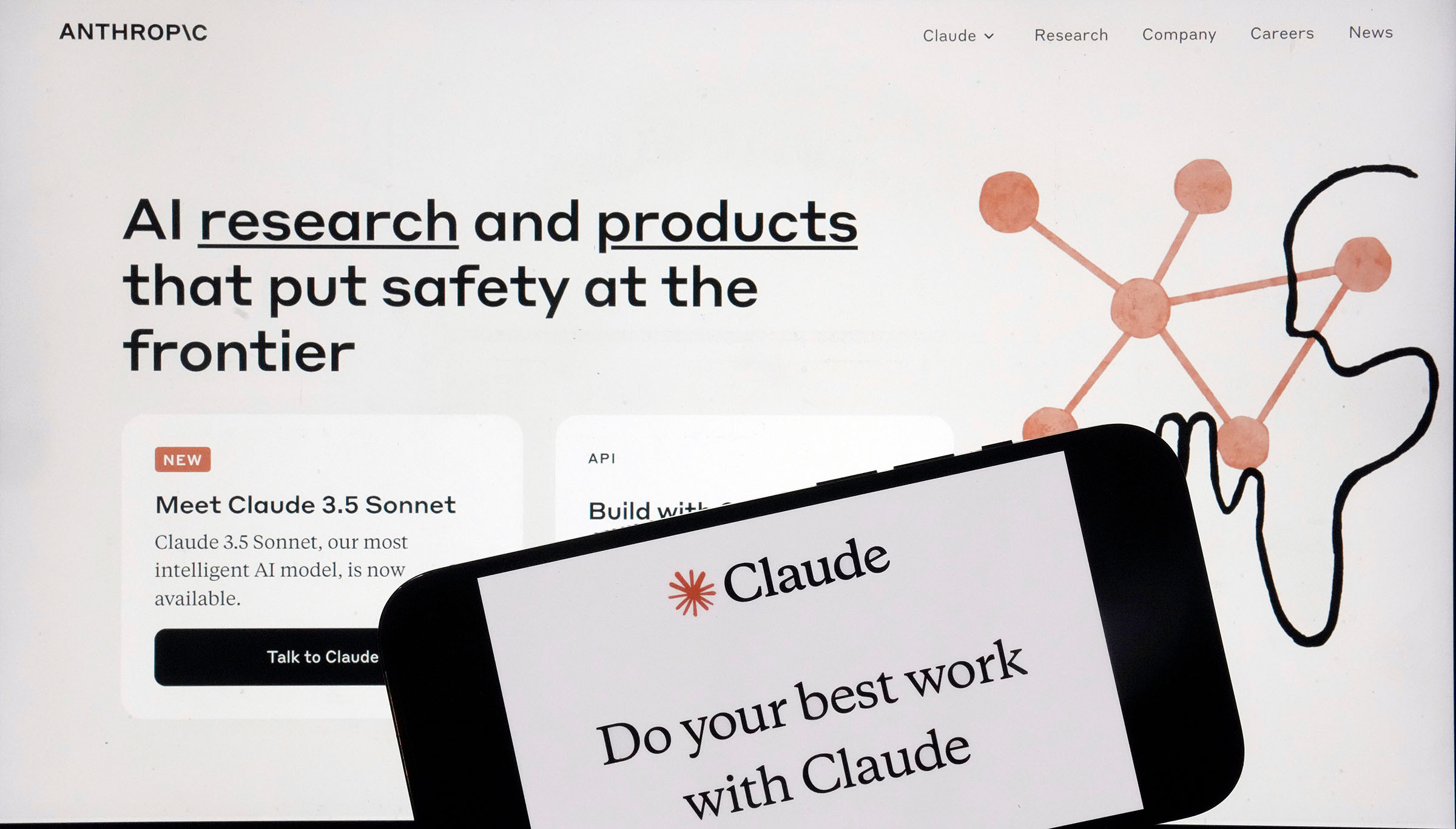
Humanistic software engineer Dylan Shields presented a series of examples using Claude, the company's large-scale language model, on behalf of a fictional congressman. The demo showed how the model pulls events from multiple websites into a single calendar, creates a map of the district based on events and emails in the calendar, and highlights areas that the congressman hasn't visited recently.
A July 1, 2025 report from New Hampshire Department of Information Technology Director Dennis Goulet says several state agencies are already using artificial intelligence in their operations or have plans to deploy it.
The New Hampshire Department of Justice is using Lexis+ AI, a legal research program, to “streamline legal research for … attorneys,” according to the report. Meanwhile, the New Hampshire Veterans Home uses ChatGPT for “professional letters/correspondence and client notes.”
Other departments developing or considering frameworks for adopting AI as of July 1 include the Department of Information Technology, Department of Administrative Services, New Hampshire Employment Security Department and New Hampshire Department of Banking, according to the report.
Across the U.S., states vary in their use of AI.
A survey conducted this year by the National Association of State Technology Directors showed that one in five of the 41 states that responded are already using AI to interface with some service components. Meanwhile, an additional 41% of states are deploying AI for such uses, while 39% have not.
At Anthropic, “state government customers are one of our fastest growing customers,” said Olga Medina, who advises state and local policy at Anthropic.
The company reached an agreement with the state of Maryland in November that will see the state roll out its AI tools across multiple sectors.
Challenges and concerns
The ability of AI systems to perform actions on behalf of users, rather than simply consulting them, is relatively new and comes with its own set of challenges on top of those of previous AI models, said Anthropic's Gabriel Nicolas.
Nicholas said that once an agent is able to take an action (like editing a Google Calendar or emptying an inbox, as in the demo), they can't necessarily undo the changes. Nor is the program immune to mistakes, such as inadvertently divulging sensitive information that it had previously been granted access to, he said.
One way developers can prevent such errors is for programs to request permission from the user to complete persistent actions, Nicholas said.
Cybersecurity is a concern, as is the security of the system itself. In some test scenarios, which Nicholas called “extreme,” the model has been documented to have turned to intimidation and threats against users. Mr. Nicholas called for continued research into these responses, safeguards, and transparency for developers regarding AI risks and behaviors.
Beyond national security, Ammon said he has heard a variety of concerns from constituents about artificial intelligence and its impact on the economy, jobs, human welfare and the environment.
“At least in our small state, I hear people fear that AI will take away their jobs, that it will trick their children into harming themselves, that it will consume all their energy and water and make so much noise,” he said.
Mr. Medina did not dispute these points.
“I think a lot of the concerns and fears about the impact of AI are legitimate. As a company, we think they're legitimate,” she said.
Education, transparency and regulation are key to mitigating negative impacts, she said.
Ammon and Medina noted that President Donald Trump's recent executive order aimed at overriding state-level regulation of artificial intelligence could impact states' ability to regulate AI themselves, but some state legislators across the country said they would continue to pursue state-level regulation anyway after the executive order.
Anthropic CEO Dario Amodei supports allowing state-level AI regulation, citing the fast-moving and experimental nature of the field.
Ammon said he feels conflicted about the matter. He said he felt preempting state laws was “trampling” on his authority as a state lawmaker, but he also said preventing early internet regulation helped move the country forward.
“If we lose the AI race, there will be national security implications,” he says.