Harnessing the power of AI to rapidly eliminate photography bottlenecks and bring greater coordination and computing power to efforts to save Australia’s animals from extinction.
Developed by researchers at the University of Queensland, the Australian Wildlife Observatory (WildObs) can rapidly analyze millions of images captured by hidden wildlife cameras. This means faster, more accurate data to guide conservation efforts.
Associate Professor Matthew Raskin from UQ’s School of Environment said the new imaging platform, which is cloud-based, easy to use and powered by artificial intelligence, is revolutionary.
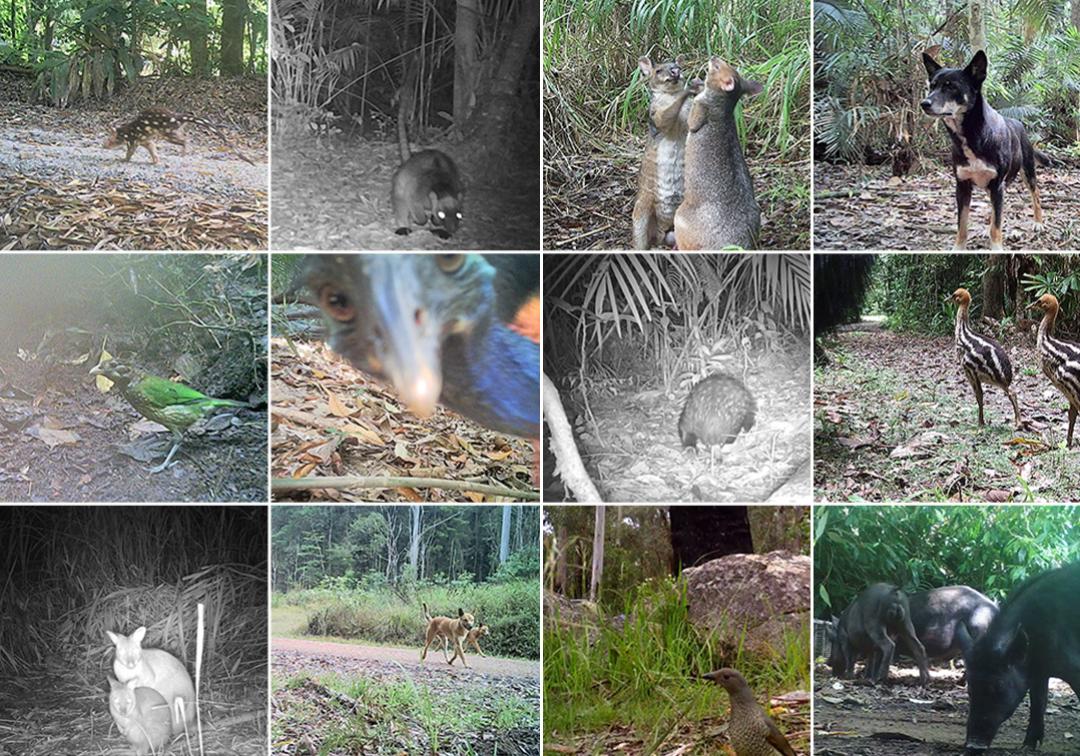
“Affordable cameras allow us to discreetly photograph wild animals tied to trees and left unattended for months on end, and thousands of projects are currently underway across Australia, collecting millions of images and videos,” Dr Ruskin said.
“We have unprecedented visibility into the natural world, but we have struggled to translate that information into timely, actionable data and make decisions that help stem Australia’s biodiversity crisis.
“The WildObs platform now hosts AI computer vision models trained for Australia’s animals and environment in one collaborative space.
“They can identify hundreds of species from camera trap images 10 times faster than humans.
“Timing is critical in conservation, and catching problems early can be the difference between recovery and extinction.”
WildObs uses AI species classifiers to:
- Detect rare and elusive species quickly and inexpensively
- Identify if native species are in early decline
- Evaluate whether invasive species management is effective
- Track biodiversity changes across landscapes and continents
- Helping conservationists prioritize where limited resources should go
Dr Raskin said WildObs was established to strengthen national cooperation between scientists, governments and environmental groups working on wildlife monitoring.
“The WildObs platform is an easy end-to-end solution for all researchers,” he said.
“Users simply upload images, and WildObs stores and processes them in the cloud. Results can be downloaded or viewed on an interactive dashboard.
“We asked our Australian users what they wanted, and our ecologists worked with an international team of computer scientists to build this platform specifically for them.”
The imaging platform was built in collaboration with QCIF Digital Research, Agouti, Wageningen University and INBO.
It hosts an image classifier developed by the WildObs-QCIF team with Google’s SpeciesNet, Australian Wildlife Conservancy’s AWC135, the University of Tasmania’s Tasmanian Species Recognition Model, and AddaxAI’s Victoria Species Recognition Model.
“People in Australia were training AI models, but there was no easy way to use them,” Dr Raskin said.
“Now anyone can host an AI species classifier on WildObs, making it easy for new users to access and run it and take advantage of our large storage and powerful computers.
“Improving the use of data can directly improve conservation outcomes: more effective protection of endangered species, smarter investments in conservation, and stronger environmental reporting.”
cooperation and gratitude
WildObs was launched with seed funding from UQ’s Biodiversity Conservation Science Center and School of Environment. The project is a co-investment partnership between UQ, Australian Research Data Commons (ARDC), QCIF Digital Research and Terrestrial Ecosystem Research Network (TERN). The WildObs image platform is a joint project between Agouti, Wageningen University, and INBO Europe, and we are grateful to them for providing fundamental support. WildObs is hosted by the ARDC Nectar Research Cloud. ARDC and TERN are made possible through the Australian Government’s National Collaborative Research Infrastructure Strategy (NCRIS). WildObs has been formed by scientists from all state and territory universities, national and state governments, and NGOs such as Bush Heritage.