

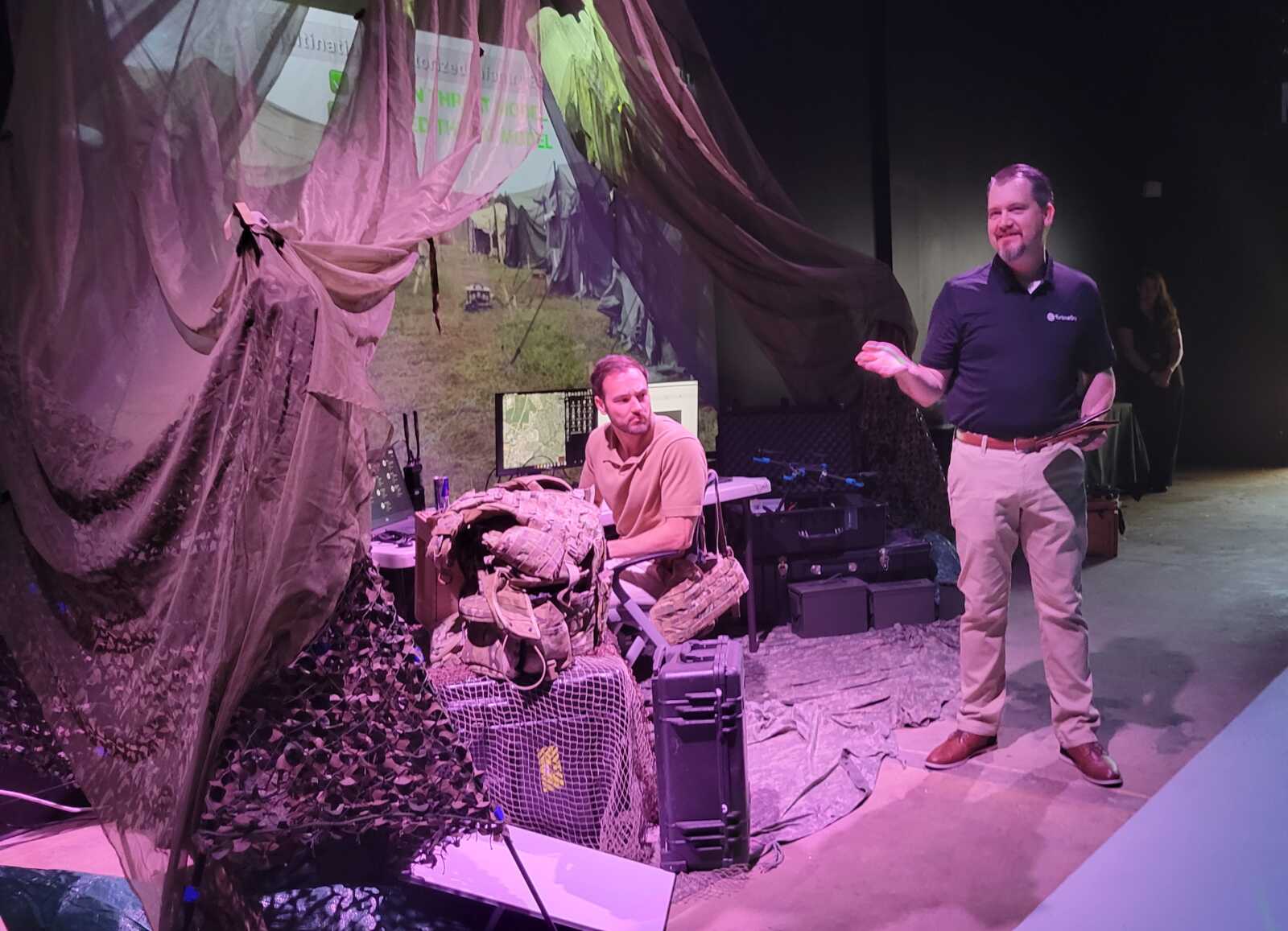
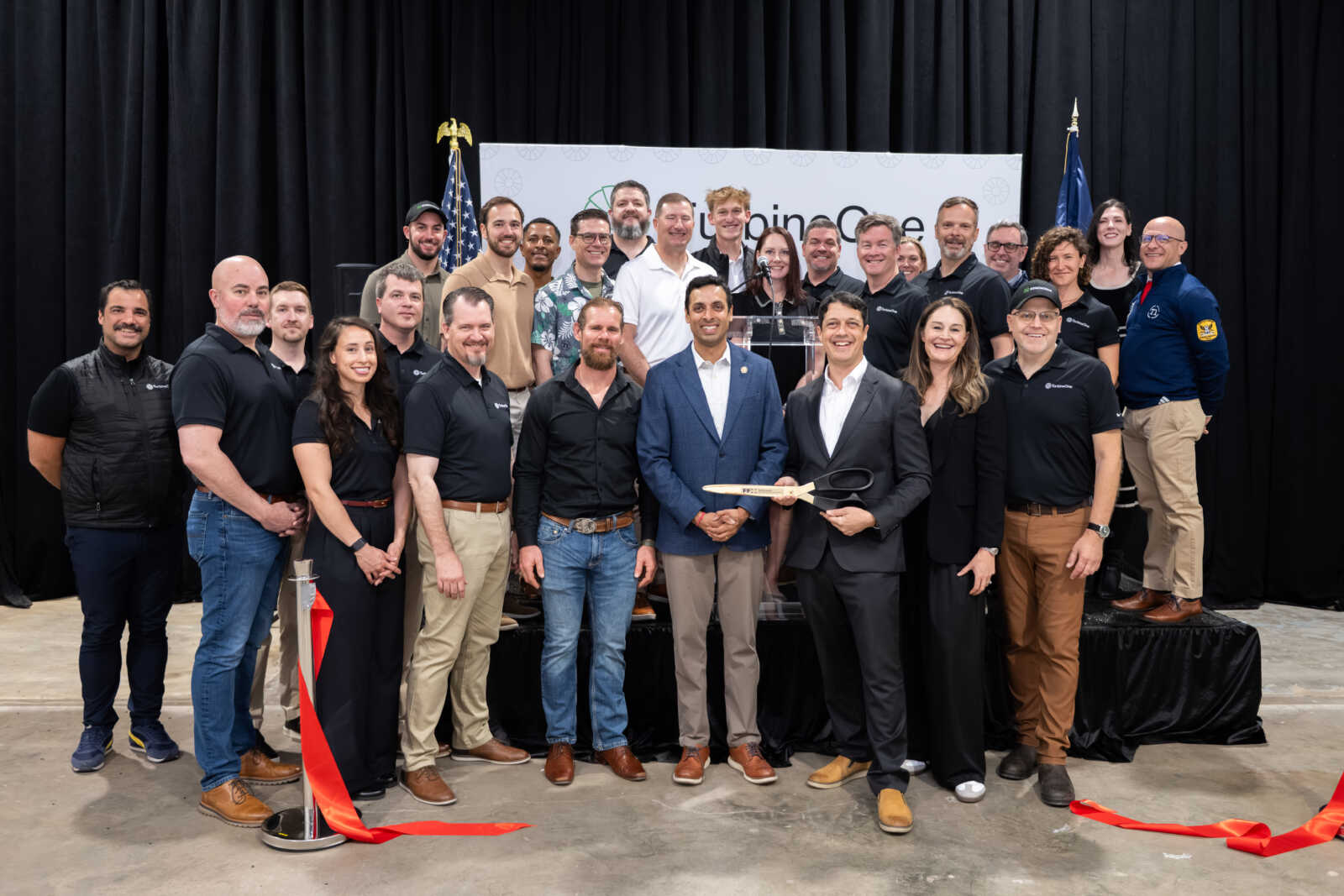
A company specializing in artificial intelligence-powered software for the military will move its headquarters from San Francisco to Chantilly, where it will give defense customers a place to preview its technology.
Ahead of yesterday’s (Wednesday) ribbon-cutting ceremony, Turbine One said the move reflected the company’s growth in support of national security missions.
The company’s move is expected to create 22 new jobs through a $424,000 investment, as touted by the Fairfax County Economic Development Authority (FCEDA) and Virginia Governor Abigail Spanberger’s office.
“I am excited to welcome Turbine One to Virginia and look forward to watching their continued progress as they work to strengthen our national security,” Spanberger said in a press release. “With its strategic location, stable business environment, and access to world-class talent, Virginia is a natural destination for companies looking to expand and take their operations to the next level.”
The preview space inside the new headquarters in Surreyfield Circle is called “T1 EdgeWorks,” which stands for “edge” computing, or processing data closer to the source rather than in the cloud.
CEO and co-founder Ian Currin said this is one of the key features of TurbineOne’s software, which is designed to help front-line military personnel use AI to find targets without going online.
“The military calls it intelligence, surveillance and reconnaissance, but it’s basically targeting, it’s basically exploration, helping the good guys find the bad guys,” said Karin, a former Navy lieutenant and first chief data officer at the U.S. Department of Commerce. “It’s that type of work and the reason we launched this space here is to really try out this experience.”
TurbineOne, which was valued at $300 million last year, created the software, which it calls the “Frontline Perception System,” with the goal of bringing AI directly to the battlefield.
“Typically, the way models are built now or before the Frontline Perception System, you have to somehow get data from the battlefield, get it to the cloud, and then send it to a machine learning team somewhere,” explained Matt Amakar, chief technology officer and co-founder of TurbineOne.
“They’re trying to build that model, and then somehow they have to get it back to the battlefield and back to a place where they can use it,” he continued. “The process can take anywhere from two weeks to six months. The fight is over and we’ve all moved on.”
TurbineOne’s efforts have attracted the attention of the U.S. Army, which awarded the startup a $98.9 million contract last summer, The Wall Street Journal reported in September.
The military’s push for technology that can detect drones and other potential threats without an online connection stems from Russia’s war in Ukraine, according to the Wall Street Journal.
“In choosing the software that processes all the data on the devices, the Army is heeding the lessons from Ukraine. The war is fought in a communications blackout, with radio links and GPS disabled by widespread jamming.”
TurbineOne’s move to Chantilly comes at a time when the Pentagon says it wants to make the military an “AI-first combat force.”
Last week, the Department of Defense announced that it had contracted with eight AI companies — SpaceX, OpenAI, Google, NVIDIA, Reflection, Microsoft, Amazon Web Services, and Oracle — to “deploy advanced AI capabilities to the Department’s sensitive networks for lawful operational purposes.”


