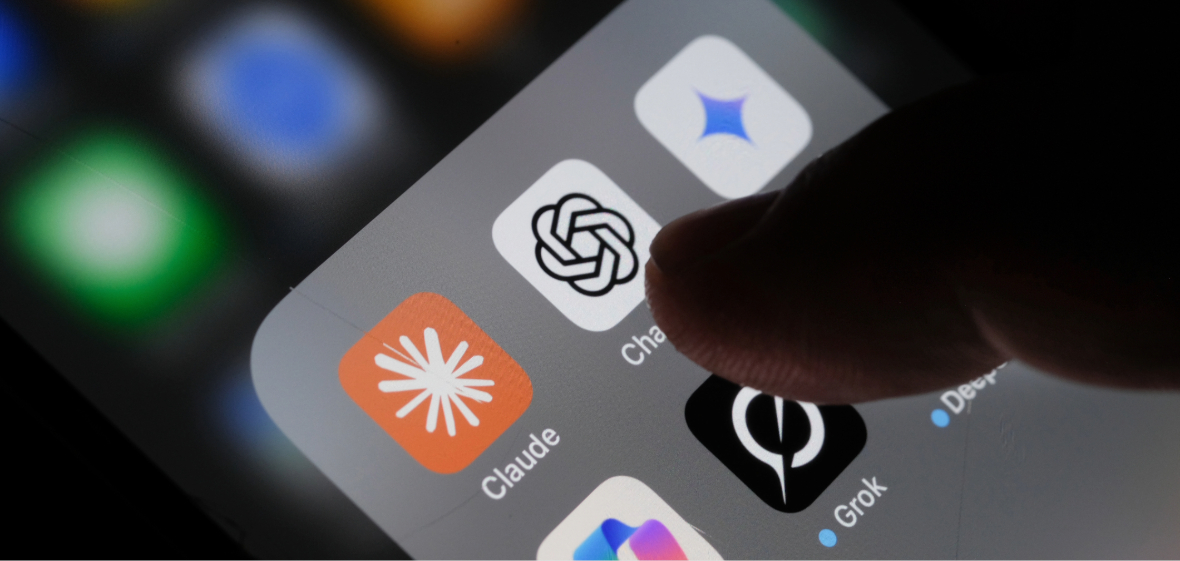
In the case of Elon Musk et al. v. Samuel Altman et al., Mr. Musk is essentially requiring Mr. Altman and his company to compensate Mr. Musk for the funds invested in the company in 2015. The trial is expected to reveal the intentions of the leading AI architects behind the hardware and software that is becoming an integral part of the daily lives of international businesses and individuals. There are also questions about the ability of investors to retroactively claim profits based on their initial investment in a nonprofit organization.
Musk is seeking $150 billion in damages and the removal of Altman and Brockman from their leadership roles. He also wants OpenAI to become a nonprofit organization again. On April 24, a judge dismissed Musk’s fraud claims against Altman and OpenAI, but allowed the charges of breach of charitable trust and unjust enrichment to proceed to trial.
The results of this trial, which begins in 2024, could have a significant impact on investors and other AI companies, as an initial public offering (IPO) is imminent. OpenAI, valued at about $1 trillion, aims to list on the U.S. stock market in the second half of 2026. Any changes to the company’s corporate structure or management would threaten the IPO and the company’s reputation.
If the nine-member jury finds OpenAI liable, Judge Yvonne Gonzalez Rogers will have the final say on remedies. The trial is expected to last about three weeks.
Thousands of pages of internal documents have been revealed in court since Elon Musk sued OpenAI, its CEO Sam Altman, and co-founder and OpenAI president Greg Brockman in March 2024. The tech giants have been at loggerheads over the nature of the company and the basis of Musk’s original investment in OpenAI.
Judge Yvonne Gonzalez Rogers is overseeing the proceedings in California federal court. Musk claims that OpenAI, Altman, and Brockman presented OpenAI to investors as a nonprofit. He is seeking up to $134 billion in damages, but has since stopped seeking this as a personal benefit and wants “all ill-gotten gains” to be donated to OpenAI charities.
In March 2024, Musk’s lawyers filed a lawsuit alleging that Musk was approached by Altman and Brockman in 2015, resulting in an agreement as co-founders to create a nonprofit technology institute to develop artificial general intelligence for the “benefit of humanity.”
Musk resigned from OpenAI’s board in 2018 and filed a lawsuit against his former allies six years later. The lawsuit, reported by CNBC in 2024, alleges that OpenAI has lost its original purpose of benefiting humanity and instead operates as a “closed-source de facto subsidiary of Microsoft, the world’s largest technology company.”
Microsoft reportedly invested $13 billion in OpenAI in April 2023, making it the only AI company Microsoft has invested in or partnered with.
Microsoft is accused by Musk of aiding and abetting the fraud of OpenAI, Altman, and Brockman, among others.
“Under our new board of directors, we are not only developing AGI, but actually improving it, to maximize Microsoft’s profits, not humanity’s,” the filing said.
As CNBC reported at the time, Musk told the court in March that his motivation for starting OpenAI was to provide a counterbalance to rival tech company Google.
“We could have started it for profit, but we chose not to,” Musk told the court.
In 2024, Musk’s lead trial attorney, Stephen Moro, proposed key questions for the jury to resolve during the trial (as shared by a court reporter via CNBC).
- “Did OpenAI have a philanthropic mission to operate as a nonprofit and open source develop secure AI for the benefit of humanity?”
- “Did Altman and Brockman violate that mission by what they did in their commercial ventures?”
- “Did Microsoft know about the philanthropic mission and materially assist Altman and Brockman in defeating that mission?”
The same court reporters reported that William Savitt, OpenAI’s lead attorney, countered that Musk “has never expressed the view that OpenAI needs to remain purely nonprofit, or even that it should be.”
Savitt added that Musk “will only support the profit motive as long as he is in control.”
“While this lawsuit is ostensibly about the governance and management of OpenAI as an organization, it speaks to something broader: AI,” said Lesley Sutton, partner at Gilbert + Tobin. How are decisions made that shape the direction of development itself? At the heart of this is a tension: how developers balance public interest obligations such as safety, transparency, accountability, and fairness with commercial pressures that drive innovation.” Through human judgment, trade-offs, and values. ”
From Sutton’s perspective, Musk claims he funded the early development of OpenAI with the idea that AI should be developed securely and shared widely.
“However, as OpenAI evolved, particularly as it moved towards a profit-limiting model and closer partnerships with commercial companies, Mr. Musk became a vocal critic, arguing that OpenAI had strayed from its original mission and concentrated too much power. On the other hand, OpenAI has argued that scaling AI safely requires vast resources, and that partnerships and commercialization are needed to compete and fund collaborative research.”
This tension highlights something inevitable for developers and organizations. Sutton opines that there is no “neutral” path to AI development. “Every important decision has consequences: open vs. closed models, speed vs. security, centralization vs. decentralization.”
She said the key takeaways from the trial so far are:
- Trade-offs are inevitable and not a coincidence.
You cannot maximize openness, security, speed, and competitiveness all at once. Choosing one direction means compromising another. - Intentions do not fix outcomes.
Even if a project begins with a clear mission (e.g. “to benefit humanity”), changing technological realities or competitive pressures can force changes. Developers need to take the time to revisit and possibly redefine their principles. - Governance is just as important as code.
This lawsuit is not about specific algorithms, but about who controls powerful systems and how decisions are made. - Personal philosophies shape technology ecosystems.
While Musk tends to emphasize existential risk and decentralization, OpenAI emphasizes controlled deployment and iterative safety. Adopting either of these positions will influence what is actually built and released. - “Doing nothing” is also a decision.
Delaying development to reduce risk may mean falling behind actors who do not share those concerns. Moving fast can increase risk. Developers are always choosing directions, even if they think they are being prudent.
“In short, this conflict shows that AI developers and leaders are not just engineers, but decision-makers who shape how AI systems are introduced into the world,” Sutton said.
both sides have a discussion
The first day of the trial on April 28 this year heard dramatic opening statements that reflected the allegations and accusations of 2024. According to reports, the day after the trial, Musk told the court: Guardian is Altman claimed that it would “steal charity” and pose a danger to humanity through the application of AI. Musk was reprimanded by judges multiple times, including for his long answers to yes-or-no questions and for accusing OpenAI’s lawyers of trying to mislead him on the stand.
Savitt also suggested that Musk’s strictly non-commercial stance on AI businesses is disingenuous. A year after OpenAI released ChatGPT, Musk launched the for-profit xAI, a competing AI company that developed the chatbot Grok.
OpenAI’s Altman and Brockman argued that what Musk described as a $38 million investment in the nonprofit was actually a tax-deductible donation. Therefore, Mr. Musk has no say in OpenAI’s operations or motives, and Mr. Altman and Mr. Brockman maintain that OpenAI is still overseen by the original nonprofit organization.
Microsoft, which owns a 27.5% stake in OpenAI, will receive a portion of OpenAI’s revenues through 2030, but the recent corporate restructuring will give OpenAI greater autonomy, reduce Microsoft’s IP monopoly over OpenAI products, and pave the way for OpenAI to partner with other technology companies, such as Amazon and Google.
Barron’s reported that Nvidia plans to invest $100 billion in OpenAI. Similarly, Amazon plans to invest $50 billion in OpenAI, of which $15 billion is expected to be paid upfront and $35 billion in the coming months.
Among the thousands of internal documents released are emails between Musk and his co-founders that show OpenAI’s status as a nonprofit charity was not fully agreed upon. Musk was also accused of poaching staff from OpenAI for the fast-growing electric car company Tesla.
OpenAI’s attorney Savitt told the court on April 30 that Musk had a legal obligation to act in the company’s best interests in his role on the OpenAI board until the end of February 2018. Despite this, Musk is said to have been poaching employees for Tesla. As reported in guardiana June 2017 email from Musk to Jim Keller, Tesla’s vice president of Autopilot, related to the hiring of a lead engineer from OpenAI to Tesla. “The OpenAI guys are going to try to kill me,” Musk told Keller.
In 2019, a year after Musk left office, OpenAI established a for-profit subsidiary. In 2025, the company transitioned to a for-profit public interest corporation under the OpenAI Foundation.
Musk’s repeated statements about the nature of AI that endangers humanity have been dramatic, including comparing AI to the Terminator.
“I have extreme concerns about AI,” Musk told the court.
On April 29, the families of the victims of Canada’s deadliest mass shooting, which left nine children dead, sued OpenAI and CEO Sam Altman in federal court in California. The seven lawsuits allege that OpenAI knew eight months before the attack that the shooter was planning on ChatGPT, but failed to notify police. Additionally, there are claims that the company did not alert authorities because drawing attention to the prevalence of violence-related conversations on ChatGPT posed a threat to the company’s impending IPO.
at the same time, wall street journal OpenAI has not met its revenue goals, and finance director Sarah Friar reported that she is worried about being able to meet future spending commitments if revenue does not improve.
The newspaper reported that Mr. Friar had expressed reservations about OpenAI’s plans to go public later this year, telling the company’s senior board members that the group might not be ready to meet the reporting standards required of publicly traded companies.
On May 1, Mr. Savitt asked Mr. Musk whether he had read the term sheet that Mr. Altman forwarded to him on August 31, 2017, related to OpenAI’s transition from a nonprofit organization to a for-profit organization overseen by a nonprofit organization.
“My testimony is that I didn’t read the fine print, I just read the headlines,” Musk replied.