
Dubai’s approach to AI is by design, not an afterthought. While Silicon Valley may have set the pace of global innovation, the United Arab Emirates (UAE) has treated AI as a national policy, embedding strategy not only in the technology sector but also in governance.
Omar Sultan Al Olama, UAE Minister of State for Artificial Intelligence, Digital Economy and Remote Work Applications, traced the country’s journey back to 2008, when Abu Dhabi first started investing in technology.
“In the UAE, we are certainly in the desert, but we believe it is a blank canvas that we can transform into whatever we want,” he said during a fireside conversation at Expand North Star in Dubai. “Fifty years ago, the people here lived in very modest homes, but they were not lacking in ambition. They drew people from east to west to try to shape a future from here that most people thought was bold.”
He pointed out that 20 years ago, few would have imagined that the UAE would produce a unicorn. There are now more than 10 companies, including AI company AI.TECH, which achieved that milestone in September 2025.
innovation policy
Al Olama said one of the UAE’s key policy decisions is to direct innovation efforts to areas that have the most impact on people.
“What’s really important to people, founders, investors and everyone else, is safety and security. We wanted to ensure that quality of life and that sense of safety and security was the foundation of everything that happens here. That’s why we were able to attract the best talent,” he said.
He added that the government is also committed to providing equal opportunities for businesses and innovators.
“Regardless of where you come from, your background or your social status, when you come to the UAE and Dubai, you will find a level playing field where you can succeed,” Al Olama said.
He added that the UAE continues to assess what more it can achieve across various sectors.
“We don’t plan in quarterly or four-year cycles like other countries do. Our approach looks decades ahead, 10 years, 50 years, even 100 years, and takes into account not only the people who live here now, but also the generations to come,” he added.
According to Al Olama, the UAE developed a national AI policy in 2017. To ensure collaboration among all government officials, senior officials were sent for training at institutions such as the University of Oxford to understand the capabilities and limitations of AI.
“In a desire to eliminate ignorance, government officials have attended universities such as Oxford University as students to deepen their understanding,” he said.
He also said that every government agency now has a chief AI officer.
“Every government agency, both at local and federal level, has a chief AI officer. This role is essential to ensure accountability and transparency. While I cannot personally oversee every department, these heads are responsible for delivering on the AI strategy, which has been in place since 2017, before I became minister,” he said.
AI in action
Al-Olama said the government is taking a multifaceted approach to AI, applying it not only to improving the economy and productivity, but also to improving quality of life.

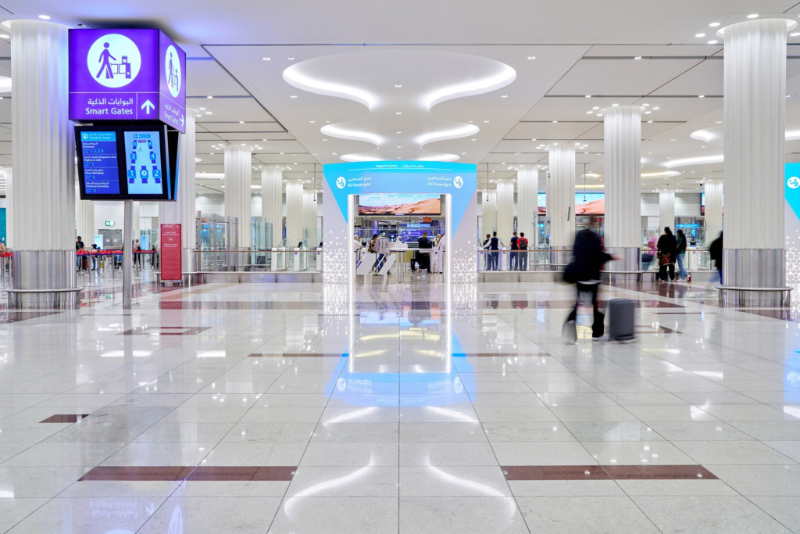
“A simple example is the experience at Dubai Airport. Residents and nationals can pass through smart gates without presenting their passport or interacting with staff. They simply look at the camera and walk through. This is a positive use of AI to improve convenience and quality of life,” he said.
He contrasted this with the introduction of robots that only interact with travelers for novelty purposes.
On responsible use, Al-Olama stressed that AI applications in the UAE must be safe and non-controversial, given the potential for abuse.
“All uses of AI here are designed to work reliably, remain discreet and secure. The UAE Cyber Security Council will ensure these systems are protected and AI is deployed responsibly,” he said.
incentive system
To prevent regulation from restricting innovation, Dubai introduced the AI Seal Program. The program validates and ranks AI companies based on their regional presence and contribution.
“A lot of companies are pitching to governments, but they should get the AI seal to show their trustworthiness, because there’s a clear incentive to do that,” Al-Olama said. “Holders of the AI seal, unlike those without, are eligible for government contracts. To qualify, companies must demonstrate how their models work.”
He explained that the program uses a gradation system from D to S.
“Standard AI companies are given an AD rating, but if a company has representation in the UAE, a C rating is given,” he said. “If you do R&D in the UAE, you’ll probably get a B.”
The highest certification, S, is awarded to AI companies headquartered in the UAE or meeting other specified criteria.
“If two companies make similar pitches, and one gets an S rating and the other a C, the agency should choose the company with the S rating because it contributes more to the UAE and is more transparent,” Al Olama said.
AI first
In addition to certifying AI companies, the government is encouraging the integration of AI into established industries, building on the UAE’s strong position in sectors such as logistics, tourism and aviation.
“We are world leaders in the logistics, tourism and aviation sectors. To remain competitive, we need to introduce AI into these industries,” Al-Olama said.
He said the next 50 years will be decisive in determining whether the UAE strengthens its position as a global player through AI or becomes one of many countries competing for a smaller market share.
“Our goal is to ensure that every industry becomes AI-first and AI-native,” he said.
Editor’s note: This interview was originally published. Frontier AI 2026.