Natsuwa Publishing Co., Ltd.
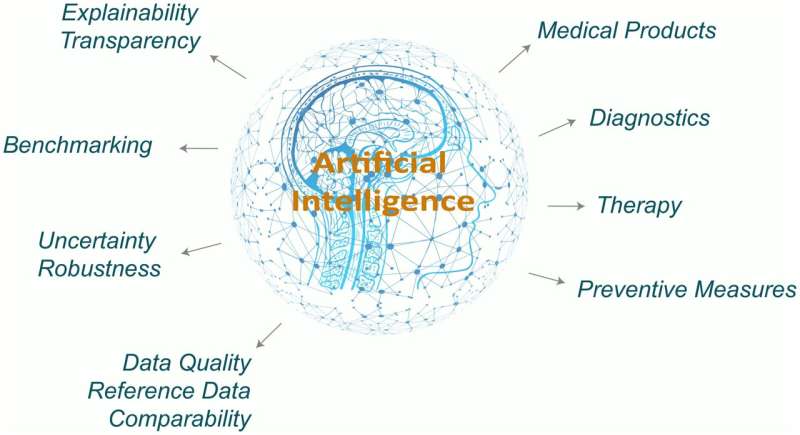
Overview of artificial intelligence applications in healthcare. Credit: Exploratory research and hypotheses in medicine (2023). DOI: 10.14218/ERHM.2023.00048
Artificial Intelligence (AI), Machine Learning (ML) and Deep Learning (DL) are increasingly transforming the healthcare sector by improving diagnostic accuracy, prognostic prediction, precision treatment and operational efficiency of healthcare systems. These advanced technologies enable the analysis of vast datasets, providing previously unavailable insights and decision support. Integrating AI into healthcare creates new opportunities to improve patient outcomes and optimize healthcare processes.
AI's role in diagnostic and clinical decision support systems is one of its most impactful applications. Clinical decision support systems (CDSS) leverage AI algorithms to help healthcare professionals make informed decisions by providing evidence-based recommendations. For example, AI tools analyze electronic health records (EHRs) to identify patterns and correlations to aid in the diagnosis and treatment of various conditions.
In radiology, AI algorithms are employed to analyze medical images such as CT scans, X-rays, and MRIs with great accuracy. These algorithms detect abnormalities such as tumors and fractures, and provide radiologists with accurate measurements and classifications. AI-powered image analysis reduces diagnostic errors, facilitates early detection of diseases, and improves patient outcomes.
Chronic diseases such as diabetes, cardiovascular disease, and kidney disease require continuous monitoring and management. AI systems analyze large datasets from various sources, including wearable devices, EHRs, and genetic data, to provide personalized treatment plans and predictive insights. For example, AI models analyze patient data to predict the progression of chronic kidney disease, enabling timely intervention and personalized care.
In the field of nephrology, AI has been used to predict glomerular filtration rate in patients with polycystic kidney disease, providing clinicians with an early warning of disease progression. Similarly, AI systems can analyze data from patients with IgA nephropathy to identify risk factors, predict disease outcomes, and facilitate targeted treatment strategies.
AI applications in gastroenterology are revolutionizing the diagnosis and management of gastrointestinal diseases. Convolutional neural networks (CNNs) are employed to analyze endoscopic and ultrasound images and identify abnormalities such as polyps, ulcers, and tumors with high accuracy. AI-powered tools assist gastroenterologists in diagnosing diseases such as gastroesophageal reflux disease (GERD), atrophic gastritis, gastrointestinal bleeding, esophageal cancer, and colon cancer metastasis.
In oncology, AI algorithms support the automated assessment of biomarkers in tumor images, helping in the diagnosis and classification of various cancers. For example, AI tools can analyze mammography images to detect breast cancer early and increase the success rate of treatment. Moreover, AI systems can link mammographic abnormalities with histopathological manifestations to provide a comprehensive understanding of the disease.
The advent of AI-powered wearable devices has brought about major advances in the continuous monitoring of patients with chronic and neurological diseases. Equipped with sensors and AI algorithms, these devices track vital signs, behavior, and other health indicators in real time. For example, the FDA-approved “Embrace” device detects generalized epileptic seizures and alerts caregivers and physicians, ensuring timely intervention.
Wearable sensors also play a key role in managing neurological disorders such as multiple sclerosis, Parkinson's disease, and Huntington's disease. These devices assess gait, posture, and tremors, providing valuable data that helps in personalized treatment plans and monitoring disease progression. The continuous monitoring capabilities of AI-powered wearables enhance care and improve quality of life for patients with chronic conditions.
While the benefits of AI in healthcare are numerous, several challenges and ethical considerations must be addressed to safely and effectively deploy these technologies. One of the main challenges is that significant human oversight is required, especially in complex medical diagnostics and robotic surgery. Ensuring that AI systems are trustworthy and transparent is essential to maintaining trust in healthcare.
The use of AI in healthcare also raises privacy concerns as patient data must be handled securely and ethically. Developing robust data protection measures and adhering to regulatory standards are essential to safeguard patient information. Furthermore, integrating AI into healthcare systems requires clearly defined guidelines and standards to ensure consistency and reliability across different applications.
AI is revolutionizing healthcare by improving diagnostic accuracy, treatment precision, and operational efficiency. Applications of AI in diagnostic and clinical decision support, chronic disease management, gastroenterology, oncology, and wearable devices have demonstrated its potential to transform patient care.
However, to fully realize the benefits of AI in healthcare, it is essential to address challenges related to human oversight, privacy, and ethical considerations. AI technologies continue to advance and are expected to usher in a new era of precision medicine that improves patient outcomes and optimizes healthcare delivery.
The study has been published in the journal Exploratory research and hypotheses in medicine.
For more information:
Ruby Srivastava, Application of Artificial Intelligence in Healthcare, Exploratory research and hypotheses in medicine (2023). DOI: 10.14218/ERHM.2023.00048
Provided by: Xia & He Publishing Inc.
Quote: Applications of AI in Medicine (July 2, 2024) Retrieved July 2, 2024 from https://medicalxpress.com/news/2024-07-applications-ai-medicine.html
This document is subject to copyright. It may not be reproduced without written permission, except for fair dealing for the purposes of personal study or research. The content is provided for informational purposes only.