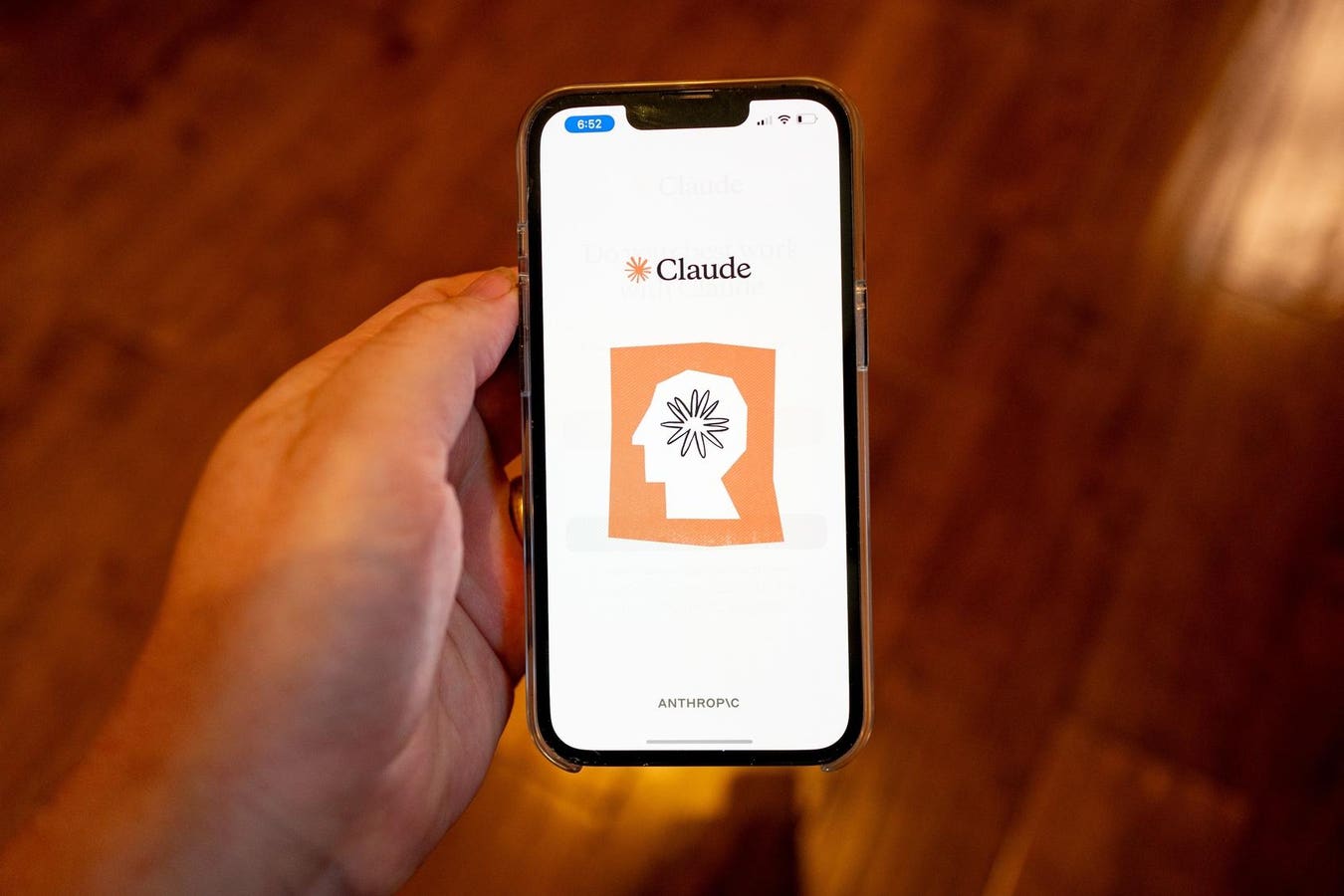

Claude For Small Business was launched in May. (Photo courtesy of The Smith Collection/Gado/Getty Images)
Gad (via Getty Images)
It’s Claude, Claude, Claude wherever I go. Since Anthropic released Claude Cowork earlier this year, the AI platform has taken off, and the company’s revenue and valuation forecasts have both skyrocketed. In the field, more and more small and medium-sized business customers are using Claude to connect their data and analyze that data to provide insights into their operations.
Anthropic is capitalizing on this opportunity.
Claude for small businesses
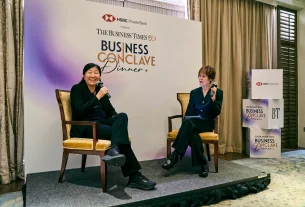
Lina Ochmann, head of the U.S. Small Business Division, is leading a tour of U.S. cities to help train small businesses in the use of AI tools. And, naturally, it will also promote the company’s recently launched Claude products for small businesses. This is Claude bundled with out-of-the-box integrations to many popular small business applications such as QuickBooks, HubSpot, PayPal, Docusign, and more.
Many of these connectors already existed, but Claude for Small Business has packaged them together and, more importantly, to help customers really start using AI with the information they have accumulated in these systems to perform tasks such as tracking invoices, prioritizing leads, creating follow-up emails, preparing tax/accounting packages, checking payroll readiness, and creating marketing campaigns. Contains a set of pre-built skills.
“Claude for Small Business is an AI workflow assistant for small businesses,” she said. “It’s designed to help you connect your tools, understand your business, and execute back-office, customer, finance, and marketing tasks with built-in human approval.”
Small businesses need more AI
Why are big and small businesses pushing? The obvious answer is that 34 million potential Claude customers are hungry for AI, and most are still figuring out how to use it.
According to a recent report from Goldman Sachs, more than three-quarters (76%) of small and medium-sized businesses report that they are currently using AI, and the majority say they are seeing overwhelmingly positive results. However, only 14% have fully integrated AI into their core operations.
“Most software is made for enterprises, for venture capital-backed startups, for consumers, not for a 15-employee HVAC company or a 50% real estate brokerage firm or a manufacturer that handles all of these back-office operations,” Ochman said. “They don’t have the time. They don’t have access to the resources or funding to take training courses or hire implementation consultants. Our goal is to provide templates to business owners without the need for consultants or extensive training.”
AI as an employee
Anthropic’s Small Business AI Training Tour is designed as a starting point to help owners get started with AI. To do this, start by becoming fluent with your content. Anthropic also offers additional courses through the Anthropic Academy. Ockman emphasizes that the lessons are “model agnostic” and are designed to teach AI concepts in general, not just Claude.
It also takes time to craft effective prompts (queries) so that Claude and other AI chatbots can provide the best response or take the most effective action. Most of us have learned how the right prompt can produce the most useful answers. But we often struggle with our approach. Ockman says the best approach is to think about the chatbot as if it were a new employee.
“Treat the AI as a new employee and treat it as a really good, skilled worker who doesn’t know anything about your business,” she said. “The most effective way to prompt is to provide context by describing your business, the tools being used, the challenges of the task, and the desired outcome. AI may be skilled, but it doesn’t automatically understand your company.”
Skills and workflow
If you’re just using AI as a glorified internet search engine, you’ve only scratched the surface. Claude for Small Business (and its competitors) are also making it easier to find their data by using out-of-the-box connectors and leveraging tools like MCP (Model Context Protocol) that can be set up by almost anyone with a technical background (or interest).
But for me, it’s about using AI, and actually using AI. Most of my clients are now using AI tools, also in the much-hyped natural language reporting, to extract data from their systems and online. That’s great. But the real power of these systems is in getting them to do real work. To do that, you need to learn skills and workflows. To her, that’s what sets Claude for Small Business apart.
“We don’t just connect business owners to their data, we use that data,” she said.
Ockman uses marketing as an example. Claude allows business owners to better predict business downturns, create marketing campaigns to pick up the slack, and push these campaigns to email or customer relationship management systems like HubSpot.
Privacy concerns
What about corporate data privacy? Ockman says that’s the No. 1 hesitation she hears. Business owners are concerned about how AI platforms like Claude use their customers’ data to train their models, whether the data is still their own, and whether it’s secure. Anthropic’s response hasn’t changed. What is her answer?
“No, we don’t train you on business content, and what you input doesn’t become part of the next model. And you own what goes in and what comes out. We don’t own the data. It’s your data.”
Impact on employees
What about their staff? Ockman emphasizes that tools like Claude won’t replace people anytime soon, if ever, especially for small and medium-sized businesses. Companies that create workflows to perform tasks also rely on Claude’s skills to ensure that chatbots ask for approval before performing key steps, especially those involving financial or customer data, and do nothing without it. Ockmann emphasizes that this is a tool that keeps employees in the loop while increasing their productivity. She believes business owners who rely on AI tools like Claude for Small Business will soon feel more caught up.
“Small businesses typically have too much work, too few people, and too much work and to-do lists,” Ockman says. “They don’t want to reduce headcount or become more efficient. In fact, they just want to get back their time to grow their business, be more creative, or spend more time with their families.”