Innovation improves quality and enables clearer, evidence-based customer decision-making.
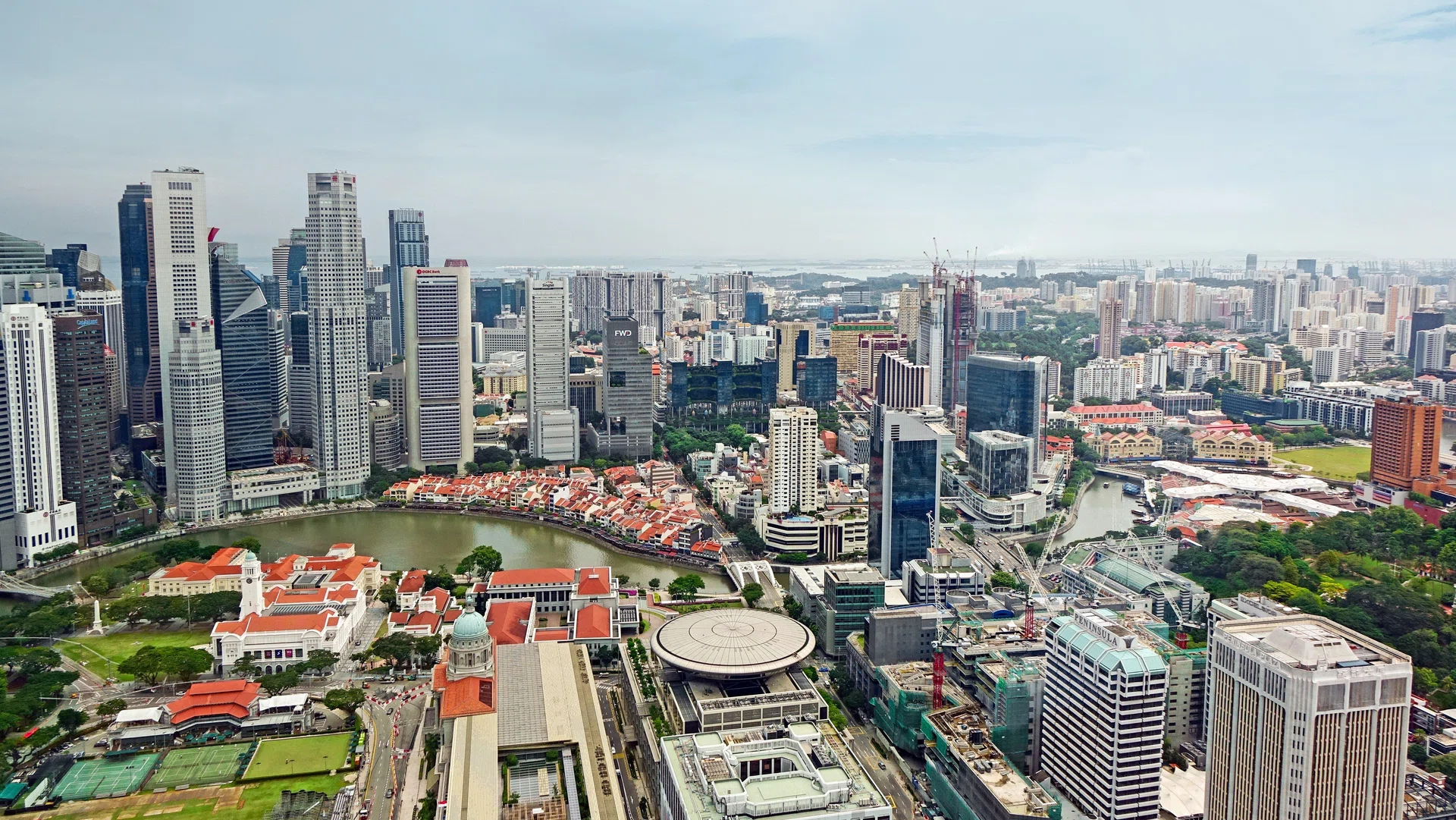
[SINGAPORE] In infrastructure projects, the most important decisions are often made long before construction begins. This is typically done at the design stage, where trade-offs between cost, carbon, and performance are determined.
This early stage is what multinational infrastructure consulting firm Aecom is targeting. The company’s artificial intelligence (AI)-enabled Sustainable Design Options Ecosystem is a set of tools and workflows aimed at reshaping the way design decisions are made.
At its core are two proprietary internal tools and frameworks. ScopeX provides a framework for lifelong carbon management. AEcomZero is a parametric design tool that allows engineers and architects to test multiple design scenarios in real time.
Rather than treating sustainability as a downstream check, ScopeX and AEcomZero’s proposal is to bring carbon, cost and performance considerations into the early stages of design.
Using AEcomZero, teams can generate hundreds of design combinations, from facade composition to material selection, and generate and compare live feedback on key metrics such as embodied carbon, sunlight, and cost.
In one example cited, the system evaluated more than 600 design combinations for a transit station entrance and narrowed it down to a set of optimal solutions tailored to the project’s goals.
navigating asia
new world order
Get insights delivered to your inbox.
This approach is characterized by its focus on multi-objective optimization.
Rather than focusing on a single metric, the platform forces trade-offs out into the open and presents them through dashboards and scorecards designed to be understood by both technical teams and clients. The aim is to make complex decisions more transparent and reduce the risk of late-stage redesigns and superficial “green” add-ons.
Project-ready solutions
Singapore’s Underground Infrastructure AI Innovation Center is demonstrating the ecosystem’s ability to support client delivery and tackle the equally complex challenges of planning and managing underground spaces in dense urban environments.
Here, AI is used to improve the accuracy of utility mapping, automate design checks, and identify spatial conflicts early to avoid delays and work stoppages.
Although the tool itself is highly technical, its impact is framed from a practical perspective. Aecom said it has seen examples where carbon reductions of up to 45% can be achieved by enabling better design choices upfront, while also improving coordination between multidisciplinary teams.
By incorporating these tools into daily workflows rather than treating them as standalone innovations, the company is also driving greater digital adoption across its global operations.
There is a clear sustainability perspective focused on transparency, accountability and more defensible decision-making. The platform is designed to counter greenwashing and support more defensible outcomes by anchoring decisions to quantifiable data and clarifying trade-offs.
AecomZero and ScopeX are already deployed across Aecom’s global operations, and the Singapore AI Innovation Center is extending this approach to underground infrastructure.
Ecosystems reflect a shift in the way infrastructure is conceived not as a linear process, but as a continuous loop of simulation, evaluation, and improvement.
Decoding Asia Newsletter: A guide to navigating Asia in the new world order. Sign up here to get the Decoding Asia newsletter. Delivered to your inbox. free.