
I just spent the morning creating AI images for my online newsletter. Despite my lack of artistic skills, they were eye-catching. I turned my laptop screen toward my daughter.
“What do you think?” I asked.
She is a 16-year-old art student considering a career in the arts. I thought she would be impressed by the quirky watercolors. Instead, she scrolled through them in silence, her usual smile gone, before turning to me.
“AI art is terrible,” she said.
Until then, I thought I understood how she thought about AI. We talked about it and shared many of the same opinions, but I didn’t know that she was completely against it.
My surprise turned into weeks of talking to her and realizing why I didn’t know. I was busy trying to figure out my stance while trying to get her to understand the pros and cons.
Once I calmed down and listened to her concerns, I had to agree.
AI problems are much more complex than initially thought
When my daughter commented on the AI art, my first thought was that the images looked pretty good. Thankfully, I kept it to myself. Instead I asked what she meant.
She pointed out flaws such as blurriness. She also said she had trouble connecting with the images because they felt “empty.” The way she described it resonated. I used similar language to describe AI writing after quality checking AI content in a previous job.
At the time, I had no experience with AI, so I was curious about what it could do. But soon after working on it, I started hating the writing pattern and the hours of editing time. Despite my frustration, I kept experimenting and found it useful for working at home.
I shared many of these experiences openly with my daughter as she and I developed our opinions about AI. I guess I talked too much about my thoughts. I wasn’t completely listening to her.
After realizing this, I vowed to do better.
I started listening more and my daughter shared the concerns she felt from the media and our lives.
One day after school, she shared how AI is being used in ways that feel wrong. Children used it to do their homework. A teacher used it to create a test, but the wording confused students. She wondered about its environmental impact. When she was worried that artists would lose commissions because of AI art, I felt guilty about creating the art myself.
Most of the concerns she mentioned were not new to me, but seeing them through her lens broadened my perspective and inspired me to dig deeper and learn more. Our conversation stayed with me.
Soon, every time she used an AI, she started thinking about how that use would affect her and her future. I admired her commitment to her values and wondered if I could do the same.
Over the course of our conversations, I decided to stop using AI to create art, and then stop using AI altogether.
Replaced AI with new skills and built stronger relationships with teens
Since AI art is no longer an option, I sat down with my daughter to discuss the best ways to find and create images. I have always admired watercolor painting and was wondering if I could learn how to do it myself.
“You should definitely do that,” she said, and offered to help me learn.
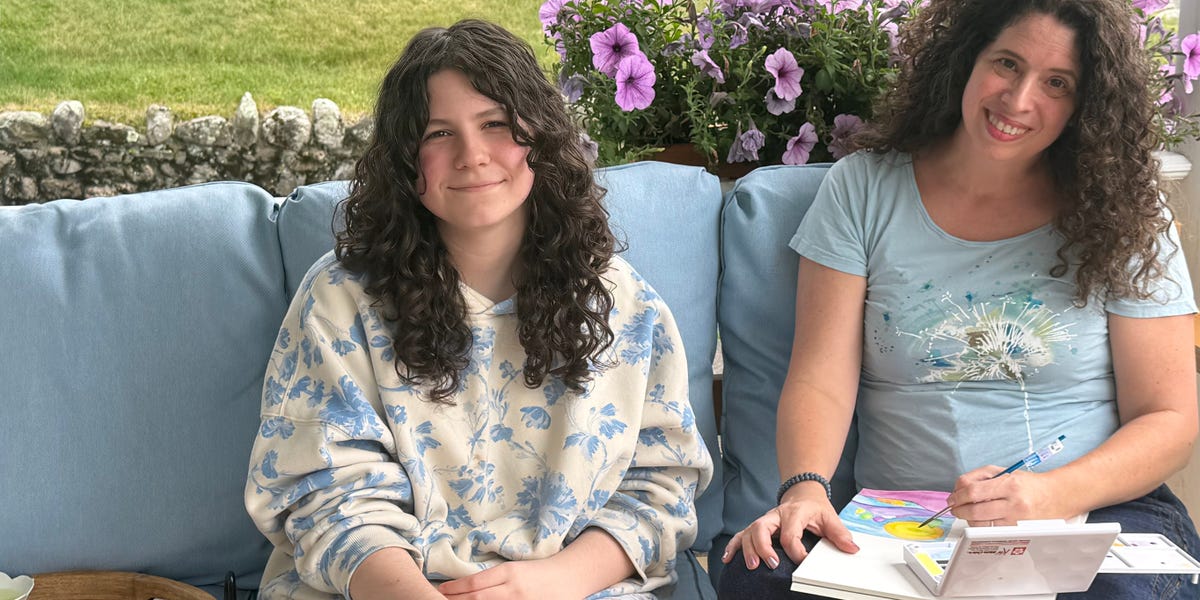
Now, when I feel like it, we share the couch and draw together. Sometimes I’ll stream a show in the background, but usually I’ll just chat about what’s on my mind. It’s a wonderful and natural way to connect while doing something we both enjoy.
As her mother, I’m used to giving guidance and answering questions, but the drawings, like the difficult conversations about AI, reflect that dynamic changing now that she’s older.
Whether you’re having trouble creating a particular paint shade or drawing an object, she can help you figure it out. It feels weird asking my daughter for advice. I try not to bother her with too many questions, and she enjoys teasing me about my endless mistakes. It also strengthens our relationship and reminds us that our roles are changing.
We keep talking about AI, but we know it’s not going anywhere. We’ve talked about how this is built into so many workplaces and online spaces and is already difficult to avoid. Still, seeing her beliefs and the principles of many kids her age gives me hope that we can find it together.