

Artificial intelligence engineers are in high demand and typically earn six-figure salaries. If you're technically inclined and have experience in software programming, you might want to learn how to become an artificial intelligence engineer and kickstart a lucrative career in AI engineering.
What is Artificial Intelligence?
AI helps create smart machines that simulate human intelligence, learn from experience, and adapt to new inputs. It has the potential to simplify and augment business tasks commonly performed by humans, such as business process management, voice recognition, and image processing.
The majority of today's AI applications, from self-driving cars to chess-playing computers, rely heavily on natural language processing and deep learning. These technologies process vast amounts of data and identify patterns within it to train computers to perform specific tasks.
Not only can AI analyze information faster, it can also provide answers that humans may not have thought of, encouraging more creative thinking about how to use data.
What are AI engineers and what do they do?
AI engineers develop, program, and train the complex algorithmic networks that encompass AI, enabling those algorithms to function like the human brain. AI engineers must be experts in software development, data science, data engineering, and programming. They mine and acquire data from various sources; create, develop, and test machine learning models; and build and implement AI applications using embedded code or application program interface (API) calls.
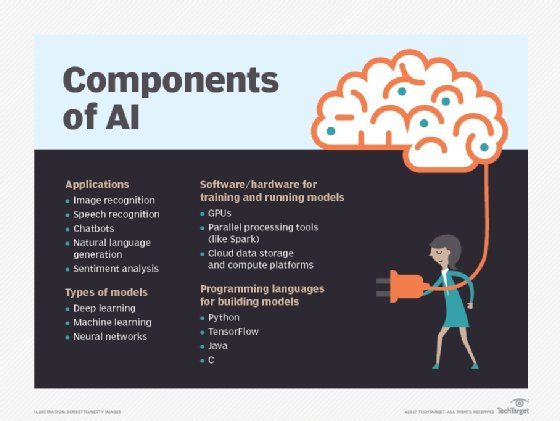
What are the responsibilities of an AI engineer?
An artificial intelligence engineer is primarily responsible for building AI models and extracting business insights using machine learning algorithms and deep learning neural networks. Responsibilities of an AI engineer include:
- Build AI models from the ground up and enable business users, product managers, and other stakeholders in your organization to understand what outcomes the models produce.
- They perform statistical analysis and interpret the results to help companies make better business decisions.
- Create and manage AI product development and infrastructure.
- Create a data transformation and data ingestion infrastructure.
- Automate the infrastructure used by your data science teams.
- Develop machine learning applications as per your requirements.
- Conduct AI and machine learning experiments and testing.
- Train and retrain the system as needed.
- It converts machine learning models into APIs so that other applications can interact with them.
- Coordinate tasks with other members of the AI team.
- We will collaborate with the Electronics and Robotics departments.
What skills and education do AI engineers need?
AI engineers need both technical and non-technical business skills.
Technical skills
- Extensive knowledge of statistics, calculus and algebra to work with algorithms and an understanding of probability to work with some of the most popular machine learning models in AI such as Naive Bayes, Hidden Markov and Gaussian Mixture Models.
- Proficient in common programming languages such as Python, C++, Java, and R required for developing and deploying AI models.
- A solid understanding of algorithms and applied mathematics to build, modify, and use AI models.
- A strong knowledge of natural language processing that integrates computer science, information engineering, linguistics, and AI into one system, and the ability to program the system to process and analyze large data sets.
Non-technical business skills
- Ability to clearly communicate project goals, timelines, and expectations to stakeholders including data scientists, data analysts, research analysts, software engineers, marketing managers, and product teams.
- Ability to think critically, creatively and analytically, solve problems in real time, evaluate numbers, trends and data, draw conclusions based on findings, question established business practices and propose new approaches to AI processes.
- Ability to work in a collaborative and supportive work environment.
- Possesses business acumen and industry knowledge.
education
- A bachelor's degree in an AI-related field, such as data science, computer science, IT, or statistics.
- A master's degree in a field such as data science, mathematics, cognitive science, or computer science (usually not required).
- Enrolling in additional AI-related courses and certification programs.
How much does an AI engineer make?
According to ZipRecruiter, the average annual salary for an AI engineer in the United States was $164,769 as of July 2021. While the minimum salary for an AI engineer in the United States can range from $90,000 to $304,500, most AI engineers currently earn between $142,500 and $173,000, with the highest earners in the United States making $216,500 per year.
What careers are available for AI engineers?
IT professionals who pursue a career as an artificial intelligence engineer can provide their organizations with valuable insights into future problems and key business decisions. Many industries use AI technology in a variety of applications, including:
- Financial services companies determine user habits to better identify fraudulent or suspicious activity.
- Manufacturers will reevaluate their supply chains and schedule predictive maintenance to ensure products are produced safely, efficiently, and at low cost.
- Healthcare organizations automate processes to improve patient engagement and reduce the time and costs associated with drug development.
- Businesses uncover key insights into customer behavior, sentiment, and purchasing patterns to improve customer engagement.
What courses and certifications are available for AI engineers?
Below are some of the courses and certifications that AI engineers can take to stay on the cutting edge of technology:
- Stanford University Graduate School of Engineering Artificial Intelligence Graduate Program
- AI for Everyone by Andrew Ng (Coursera)
- IBM Applied AI Professional Certification (Coursera)
- Introduction to TensorFlow for Artificial Intelligence, Machine Learning, and Deep Learning (Coursera)
- Artificial Intelligence AZ: Learn How to Build AI (Udemy)
- Artificial Intelligence Course: Reinforcement Learning in Python (Udemy)
- Mastering the Fundamentals of AI and Machine Learning (LinkedIn Learning)


