Engineers at the University of Maryland (UMD) have developed a model that combines machine learning and collaborative robotics to overcome challenges in designing materials for wearable technology.
A rapid method for creating aerogel materials for use in wearable technology could potentially automate the process of designing new materials.
Despite its simple nature, the aerogel assembly line is complex: Researchers rely on extensive, time-consuming experimentation and an empirical approach to explore the vast design space and engineer the materials.
How robotics and machine learning can help overcome barriers
To overcome these challenges, the research team combined robotics, machine learning algorithms and materials science expertise to enable the rapid design of aerogels with programmable mechanical and electrical properties.
Their predictive models are built to generate sustainable products with 95% accuracy.
“Materials engineers often struggle to implement machine learning designs due to a lack of high-quality experimental data,” explained Po-Yen Chen, who led the research.
“Our workflow, combining robotics and machine learning, not only improves data quality and collection rates, but also helps researchers navigate the complex design space of wearable technology.”
Accelerating Aerogel Design in Wearable Technology
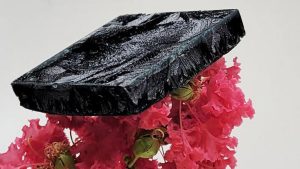
The team's strong, flexible aerogel was made using conductive titanium nanosheets as well as natural ingredients such as cellulose (an organic compound found in plant cells) and gelatin (a collagen-derived protein found in animal tissue and bones).
The researchers say the tool could also be extended to other applications for aerogel design, including oil spill cleanup, sustainable energy storage and green technologies used in thermal energy products such as insulating windows.
“Combining these approaches puts us at the forefront of designing materials with tunable, complex properties,” said Eleonora Tubaldi, a collaborator on the study.
“We hope to leverage this new scale-up production platform to design aerogels with unique mechanical, thermal and electrical properties for harsh working environments.”