

Thanks to blockchain and AI, the entire financial sector has undergone dramatic changes.
What do you think would happen if you combined the best features of each?
The convergence of AI and blockchain is changing the face of the financial services industry and isn't just a fad. Learning about this convergence is beneficial for expatriates around the world for the same reasons it is beneficial for locals.
Read: AI in cryptocurrency
introduction
AI is changing entire markets by making machines smarter than humans. The use of AI is changing the way businesses operate, especially in the areas of machine learning and natural language processing. As more businesses adopt AI solutions for automation, predictive analytics, and customized customer experiences, the market for AI-based solutions is predicted to witness significant growth in the coming years.
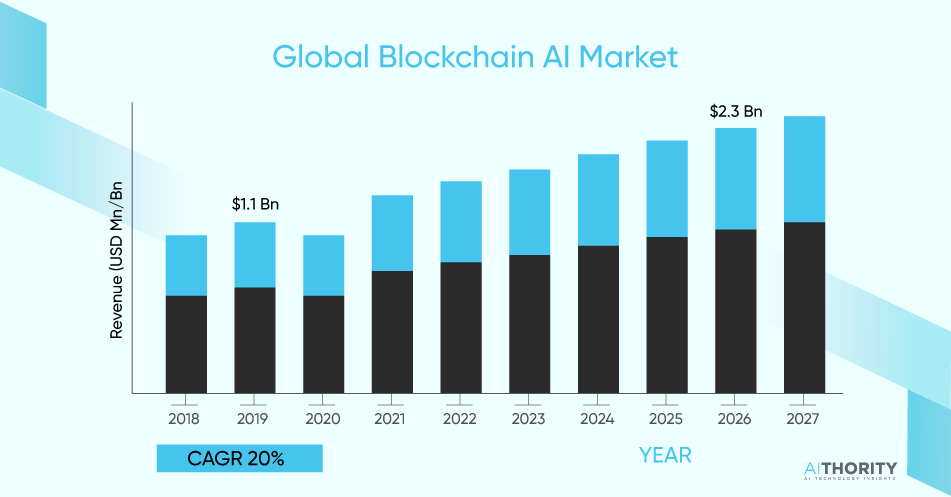 Data security and transparency have been transformed by blockchain technology, an immutable distributed ledger. While its initial design was focused on cryptocurrency, it has since been adopted in a wide range of sectors, including healthcare, supply chain management, and banking. The adoption of blockchain in these sectors is boosting its market size as it offers secure, transparent, and traceable transactions. Blockchain technology has emerged as an integral part of the digital revolution. Artificial Intelligence (AI) and blockchain technology work together to solve problems related to data security, transparency, and efficiency.
The combined market value of AI and blockchain technologies is expected to grow at a CAGR of 25.3% from 2020 to 2025, reaching over $703 million by 2025.
The power of blockchain: How does it work with AI?
PwC predicts that AI will contribute $15.7 trillion to the global economy and increase global GDP by 14% by 2030. By the same year, Gartner predicts that the value that blockchain technology will bring to enterprises will increase to $3.1 trillion.
What is Blockchain? Distributed Ledgers Or a database stored in multiple locations across a large network of computers. It plays a key role in cryptocurrency systems as a decentralized and secure record of transactions. But it can also be used for more than just cryptocurrency. Any field can use a blockchain to create an unalterable record. In this sense, “immutable” refers to something that cannot be changed or modified.
Expats who live abroad and send money back to their families would benefit greatly from training in blockchain and AI. The information provided in this blog will make it easier for you to understand when and how to use blockchain and AI. Digital CurrencyHowever, its applications extend far beyond the realm of cryptocurrencies and related data: since its introduction, blockchain has been used to store and verify data in non-financial fields, notably human resources, property registration and supply chain.
Satoshi Nakamoto is widely known for conceptualizing and developing blockchain technology, the foundation of the first modern cryptocurrency. In 2009, blockchain was released to the public. Financial transactions on the blockchain, such as invoicing and payment processing, can be automated by AI, reducing the role of intermediaries and improving productivity. Since all participants in the network have access to the same information, blockchain can also be used to monitor items and ensure their legitimacy and transparency.
AI and blockchain projects are scarce
Exclusive commentary
One of AiThority's guests shared an exclusive comment signed by Evan Vandenberg, co-founder and CEO of Dibbs.
So why is blockchain technology necessary for future progress? Blockchain technology offers many benefits to businesses, including:
- Increased security and transparency: Because blockchain is secure and tamper-proof, businesses can use it to track and verify transactions more accurately. Additionally, because blockchain is decentralized, businesses can avoid fraud. No one can make changes or withdrawals without the other person knowing.
- Cost reduction: Blockchain can help businesses reduce costs in a variety of ways. For example, blockchain can be used to automate payments and settlements, which helps businesses save time and money on processing fees. Additionally, blockchain can be used to create new revenue streams, allowing businesses to offset costs.
- New sources of income: Whether you're delivering products, services, or experiences to your customers, blockchain can open up new business opportunities. Learn more below.
Application of artificial intelligence through blockchain technology
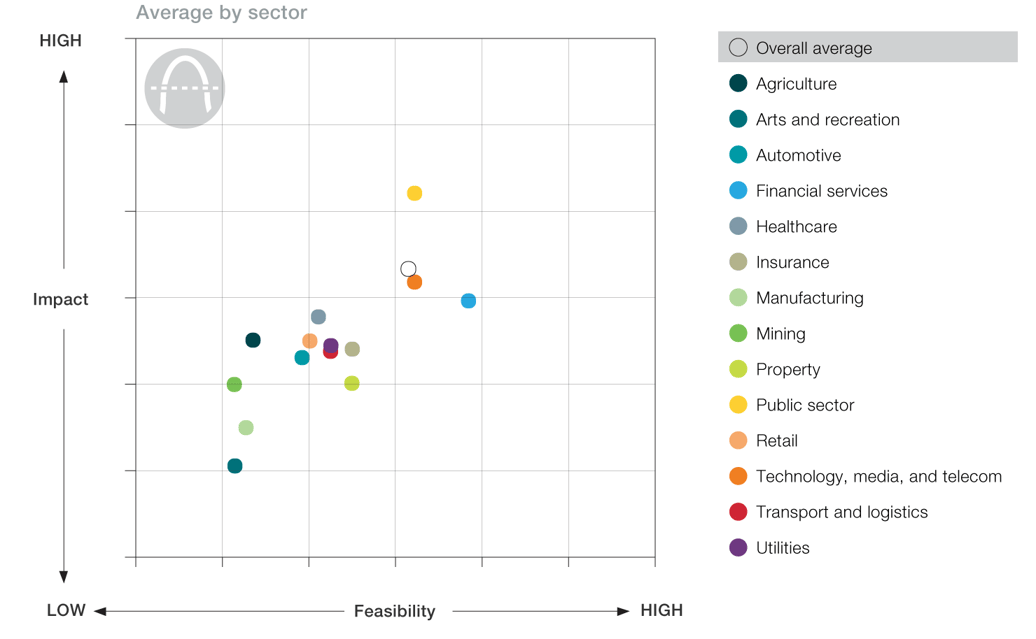
This graphic representation is taken from McKinsey.
Artificial intelligence (AI) has the potential to improve nearly every aspect of healthcare, from providing treatment insights and fulfilling user requests to identifying insights and discovering patterns in patient data. Blockchain technology allows sensitive patient information, such as electronic medical records, to be securely shared between healthcare providers.
Leveraging blockchain and AI in the pharmaceutical industry can significantly improve the success rate of clinical trials and increase transparency and traceability across the pharmaceutical supply chain. In clinical trials, modern data analytics combined with decentralized architectures can improve data integrity, transparency, patient monitoring, consent management, and automation of study enrollment and data collection.
Blockchain and AI are revolutionizing the financial services sector by promoting trust, reducing friction in multi-party transactions, and shortening transaction times. Candidates agree to allow access to data stored on a distributed ledger.
Blockchain technology improves transparency and efficiency in supply chain financing. By recording every step of the supply chain on the blockchain, parties can verify the authenticity, quality, and provenance of products. This allows lenders to lend based on verifiable data, reducing fraud and increasing the availability of credit for small businesses. By analyzing shipping records and market patterns, AI can forecast demand, optimize inventory management, and reduce supply chain risks.
AI-powered chatbots and virtual assistants improve customer service in banks. These intelligent systems answer questions, offer suggestions, and provide 24/7 support. AI chatbots use natural language processing and machine learning to understand customer preferences, predict requirements, and provide customized answers.
- Smart Contract Optimization
AI-powered tools continuously monitor smart contracts and closely monitor transactions. They instantly detect fraudulent or anomalous activity and trigger alerts so you can address it right away. This real-time monitoring ensures that contracts work as intended. AI uses predictive analytics to forecast potential issues before they become problems. By analyzing historical data, AI can foresee challenges in contract execution and take preventative measures.
Traditional methods of identity verification often rely on cumbersome processes, from presenting physical identification to answering personal questions. However, with the emergence of blockchain technology and the introduction of AI, this paradigm is changing dramatically.
The Benefits of AI in Blockchain
- Enhanced Data Management
- Global Verification System
- Optimized Energy Consumption
- Innovative Audit and Compliance System
- Increased scalability
- Smarter Finance
- Transparent Governance
- Enhanced security measures
- Intelligent Retail
- Intelligent predictive analytics
- Digital Intellectual Property Rights
- Innovative Data Management
assignment
- Technical challenges
- Scalability
- Regulation
- Data Privacy
- Interoperability
- Passed
trend
- Decentralized AI
- Federated Learning
- AI-powered blockchain network
- AI-based smart contracts
- AI-based Digital Twin
future
- Strengthening the Convergence of AI, Blockchain and Virtual Reality
- Interoperability and Efficiency
- The Growth of Decentralized Finance (DeFi)
- Enterprise blockchain adoption
- The Rise of Central Bank Digital Currencies (CBDCs)
- Enhanced Blockchain Education
- AI-enabled blockchain
- Evolving regulations and laws
FAQ: AI and Blockchain
What is BaaS?
Blockchain as a service, or Bath Abbreviated as “Blockchain-as-a-Service”, Blockchain-as-a-Service allows companies to rent blockchain infrastructure in the cloud, setting in motion a trend where the technology can be used on a subscription basis.
Specifically, the service provider provides, maintains, and hosts all the software and hardware required for a blockchain application. Ethereum, Hyperledger Fabric, Corda, Bitcoin, Chain Core, BlockApps, Quorum, etc. Baas partners can use it to build blockchain networks.
Can AI build a blockchain?
Examples of areas that could be enhanced through the use of artificial intelligence software include blockchain's scalability, efficiency, and security. The development of smart contracts and improved accuracy of transactions could lead to safer and faster automation of procedures.
Will Blockchain Technology Replace AI?
The only constant here is time: blockchain technology is still evolving so rapidly that automating its development is not possible at this time.
Can AI be used to mine Bitcoin?
By refining algorithmAI offers ways to enhance mining operations by providing in-the-moment data insights and recommending cutting-edge equipment. Because AI has the potential to improve energy efficiency, strategic planning, and sustainability in cryptocurrency mining, it could play a key role in the future of the industry.
Conclusion
The integrity of data sets is achieved through the combination of AI and blockchain. As the data is unbreakable, it can be used to enhance security and predict intrusions in record time. Two of the most talked-about developments in IT these days are blockchain and AI. Researchers have been discussing and studying the convergence of the two technologies, despite them being very different areas of development and applications.
While AI has many advantages, such as its ability to process large amounts of data quickly and mimic human reasoning, it also has some drawbacks, such as the fact that AI choices are not always easy to understand. Immutable, public digital records and distributed ledger technology are two of the most striking features of blockchain, which could shed light on otherwise artificial intelligence systems. Centralized It's hard to understand. To the extent that these properties are practical and desirable in the current context, blockchain has the power to provide privacy, accountability, and trust for AI.
Augmentation, automationProcessing power are three more sectors where blockchain can enhance AI: The healthcare, life sciences, financial services, and supply chain sectors are just a few that have already started to explore the potential integration of blockchain technology with artificial intelligence.
[To share your insights with us, please write to sghosh@martechseries.com]


