

Race, gender, disability, and other biases can be erroneously embedded in artificial intelligence systems, forcing computational systems to recreate historical problems. The explosion of new AI technologies requires a call to action from regulators and organizations to mitigate risk through best practices for AI applications.
Examples of this include testing algorithms for discriminatory results, leveraging the NIST Voluntary Framework to examine AI systems (for issues of fairness and impartiality), testing algorithms and their model study.
There is currently no federal law governing inspections and audits of AI systems. But such biases have proven so pervasive that the Federal Trade Commission has urged companies to test their algorithms for discriminatory results in 2021. This means that organizations need to create democratic machine learning toolsets that embody the ethics and morals of biological and social existence rather than flawed sociotechnical models.
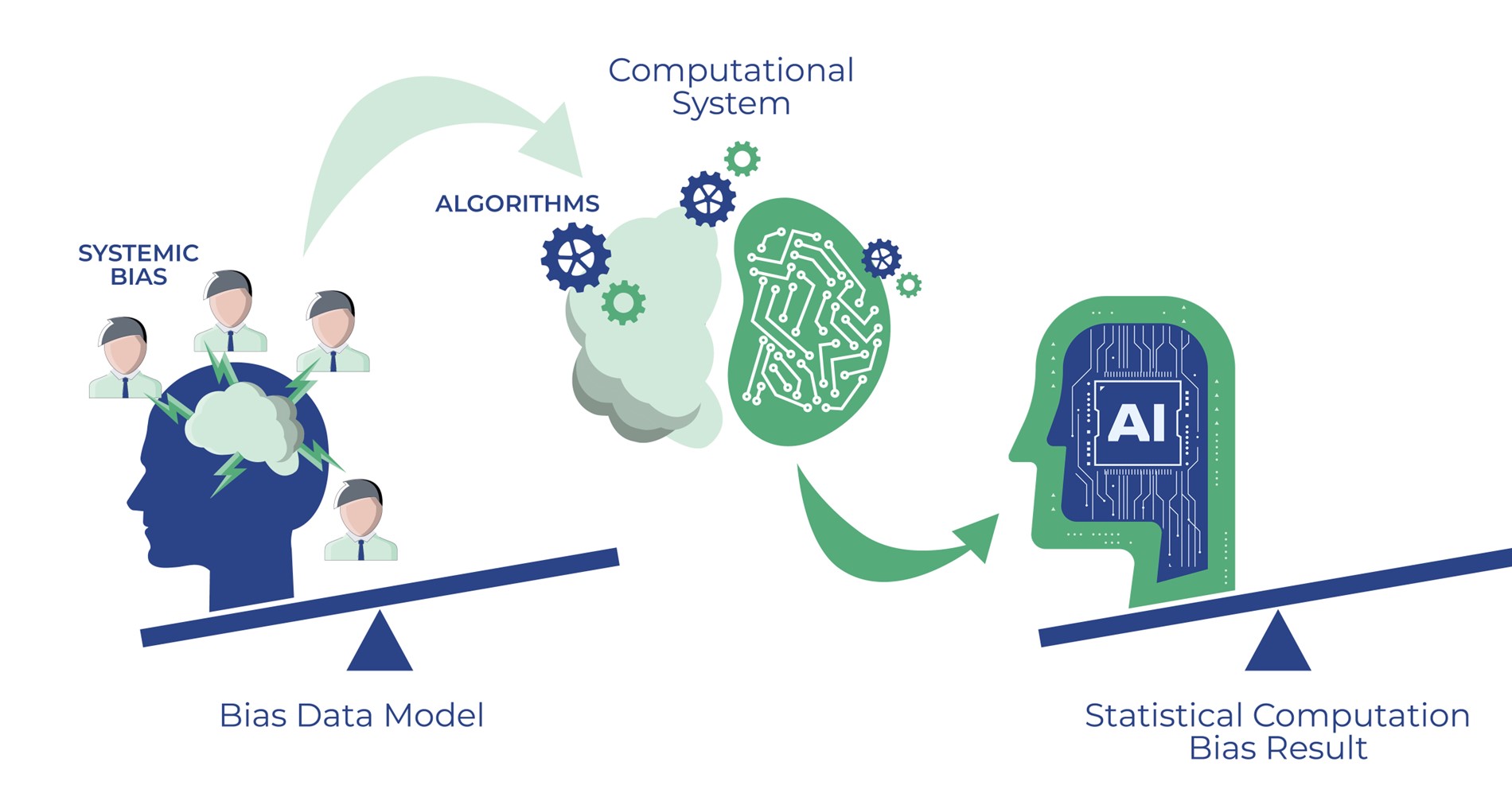
For example, some predictive police software has been found to disproportionately target African-American and Latino-American communities. This proves that a socioeconomic ‘mindset’ is baked into the system, and that the model inherits the ‘brains’ and behaviors of the humans who edited it. This is how the bias is encoded into the technology system.
Public interest in fair outcomes is so high that these generative AI systems and algorithms must be curbed with sound policies that eliminate practices of discrimination and exclusion. The industry has proven that calculation engines cannot be consistently accurate. But this emerging technology has so much potential that it needs to earn the trust of society.
The U.S. government is taking the lead to ensure fair and accurate AI with the Bias Toolkit, a toolkit that helps government teams understand and mitigate bias in data and algorithms. . This column describes the Bias Toolkit and its impact on eliminating bias in AI.
bias toolkit
At the forefront of algorithmic accountability, many leading organizations have provided customers with solutions to investigate, monitor, and audit complex AI systems to ensure fair and accurate AI outcomes.
The Bias Toolkit is a collection of tools designed to help reduce bias in federal data by addressing issues in data planning, curation, analysis, and distribution. These tools are:
- Algorithm auditing prevents algorithm damage
model card generator – Model cards are documentation tools that increase transparency and share information about the intent, data, architecture, and performance of your machine language (ML), AI, or automation models with a wider audience. Reduce bias in government machine learning workflows by investigating the ability of models to perform across sensitive classes and gathering this information in a format readable by a wider audience. This audit-type capability provides context and transparency into model development and performance for effective public oversight and accountability.
- Natural language processing to ensure empathy
Ableist language detector – Abelian language is offensive to people with disabilities and can make people with disabilities feel excluded from eligible jobs. His web application was developed using natural language processing. It identifies disabled languages and recommends alternative languages to make posts more inclusive for people with disabilities.
- Algorithm Responsibility Survey
Data generation tool – A suite of Jupyter (Python) notebooks that generate synthetic datasets comparing the expected behavior with the actual output of a given ML model. Each notebook serves a different practical application that may be relevant to the “customer” model. This human intervention can detect potential biases that occur when two data observations with the same characteristics are treated differently by the model.
Here are just a few of the positive impacts of the Bias Toolkit.
- Responsible AI – As biases are no longer reflected in computational systems, organizations experience more trustworthy, fair, and transparent AI outcomes.
- Build trust – Help accelerate the adoption of AI within government agencies, help modernize operations, and build trust among users. It also highlights the adoption of trustworthy AI by federal agency leaders, with a similar trend in the commercial sector.
- Show Empathy – Create a framework that encourages more empathic thinking, reducing potential harm when exploring population datasets.
- Risk Mitigation – Break boundaries and hold systems accountable with advanced risk management techniques. It also fosters a collective enthusiasm for AI technology.
AI and related technologies are reducing federal data bias in more effective and responsible ways.
Annette Hagood is Director of Marketing and Strategy for Whirlwind Technologies, LLC. She has extensive industry expertise in government, education and healthcare for companies such as Ricoh, Deloitte and AT&T. Annette has a master’s degree in computer science from Howard University. You can contact her at ahagood@wwindtech.com.


