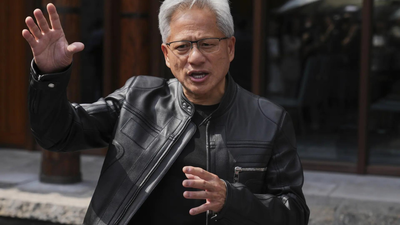
Nvidia CEO Jensen Huang is pushing for the next generation of “Made in Japan” robots. The AI company recently partnered with Japan’s top technology companies and industry powerhouses to drive “physical AI” at scale. Physical AI is a smart, futuristic robot that can think independently rather than just following strict pre-programmed instructions. The partnership brings together Nvidia’s AI computing capabilities and Japanese manufacturing powerhouse Fujitsu. Joining Huang in announcing the deal in Tokyo were Fujitsu CEO Takahito Tokita and the CEOs of Japan’s leading industrial robot manufacturers: Fanuc Corporation, Yaskawa Electric Corporation, and Kawasaki Heavy Industries. This effort aims to build highly autonomous machines that can safely work alongside humans in everyday environments such as factories, commercial warehouses, and hospitals.
Achieving safe AI using precision made in Japan
Speaking at the launch event, Huang emphasized that physical AI requires the absolute highest standards of manufacturing precision to avoid potential safety issues. Huang pointed out that Japan’s cultural commitment to craftsmanship makes it the perfect birthplace for this technique.“Japanese excellence is a philosophy and a way of life. ‘Made in Japan’ means the highest quality, the highest precision. Japan sets the cutting-edge standards in modern manufacturing,” said Huang. Huang praised traditional Japanese manufacturing philosophies like kaizen (the concept of continuous, incremental improvement) as ideal foundations for training the neural networks that must safely navigate human space.The first practical phase of this new collaboration is expected to be rolled out later this year. Executives said the creation of a formal joint venture could occur in the future, but no specific timeline was given for when these independent robots would become standard equipment in daily civilian life.
Solving the labor crisis in aging countries
The goals of this partnership go far beyond factory automation and aim to solve Japan’s severe and systemic labor shortage. As one of the fastest aging societies in the developed world, Japan faces a severe shortage of working-age people. The companies hope that physical AI will eventually be able to step in to handle heavy industrial labor, assist with medical care, and manage the daily care of the country’s growing number of elderly people living alone.The partnership comes at a pivotal time for Japan’s technology industry, which has openly admitted that it was lagging behind the United States and China in the nascent generative AI boom. To close this gap, Prime Minister Sanae Takaichi’s government recently announced a national strategy to attract more than 370 trillion yen ($2.3 trillion) in public and private technology investment by 2040.