SK Telecom (017670) and SK Biopharmaceutical (326030) have successfully used artificial intelligence (AI) to discover an initial hit compound that will be an important starting point for the development of targeted therapies for intractable cancers. They completed the initial study in about five months. This is a process that typically takes one to two years using traditional methods, reducing drug discovery timelines by more than 60%.
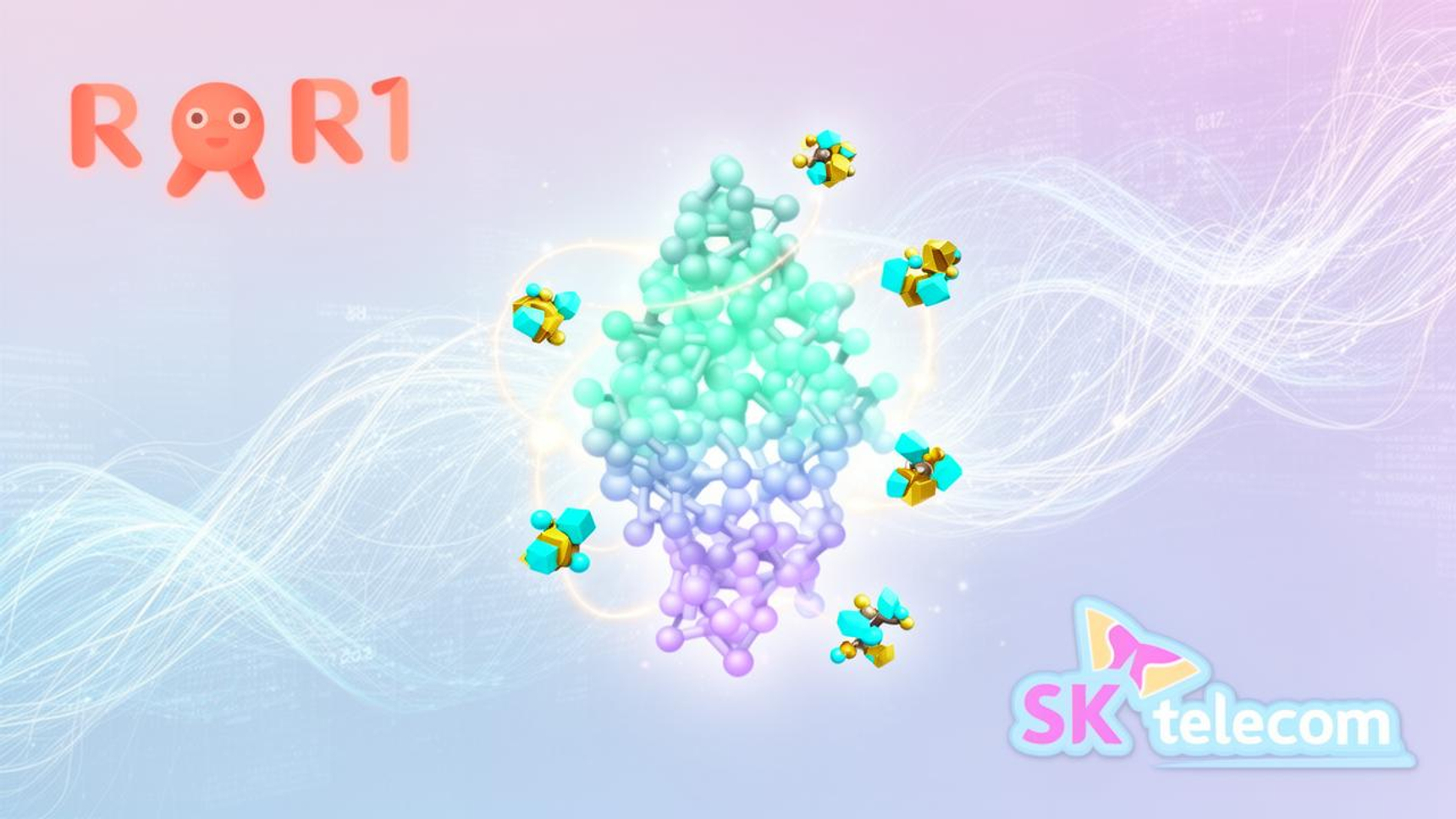
On the 15th, the two companies announced that they had used AI to generate and screen a large number of binder candidates that bind to the protein ROR1, which is overexpressed on the surface of cancer cells. Through laboratory validation, we confirmed that two of these candidates show potential as first hit compounds. Binders are substances designed to recognize and selectively bind to specific targets and serve as a starting point for drug development.
ROR1 is a tumor-associated cell surface protein that is expressed at high levels in various hematological cancers and solid tumors compared to normal cells. It is attracting attention as one of the main targets in the development of next-generation anti-cancer targeted therapies.
In this joint research project, SK Biopharmaceuticals has established a strategy to discover new binders based on its accumulated drug development experience. SK Telecom was responsible for utilizing AI technology to generate a huge number of new binding agent candidates, analyze their potential to bind with ROR1, and narrow down the targets for actual laboratory testing.
Specifically, to overcome the limitations of early-stage drug discovery processes that lack training data, SK Telecom applied proprietary machine learning techniques in exploring new molecular structures. The company introduced reinforcement learning (RL) in addition to machine learning techniques that combine protein fragments into structures in different ways. This was designed to guide the AI to find the optimal binder structure, giving higher rewards to structurally stable combinations.
During the screening stage, SK Telecom leveraged its graphics processing unit (GPU) infrastructure to process multiple new binder candidates in parallel. The AI model then rapidly predicted and analyzed how ROR1 and each candidate would structurally bind, as well as the likelihood that they would actually do so, efficiently narrowing down the targets for laboratory testing.
This AI-powered approach enabled the companies to secure two initial hit compounds approximately five months after research began. This means that the initial drug discovery research schedule has been shortened by more than 60% compared to the method previously used by SK Biopharmaceuticals.
Cho Dong-young, head of AI convergence at SK Telecom, said, “Based on this result, we are also considering plans to expand the scope of our technical cooperation to the entire bio-AI field, including the development of a bio-specific large language model (LLM) that utilizes our unique AI platform model.”
The results of this research are being evaluated as an example of how AI can significantly reduce the time and cost required to generate and screen candidate substances. In particular, we demonstrate the future scalability of AI-based drug discovery platforms by combining machine learning and reinforcement learning to generate meaningful results at early stages of drug discovery when data is scarce.
SK Telecom plans to collaborate with SK Biopharmaceutical to conduct follow-up research in order to develop the discovered hit compound into a molecular target therapeutic drug candidate.