
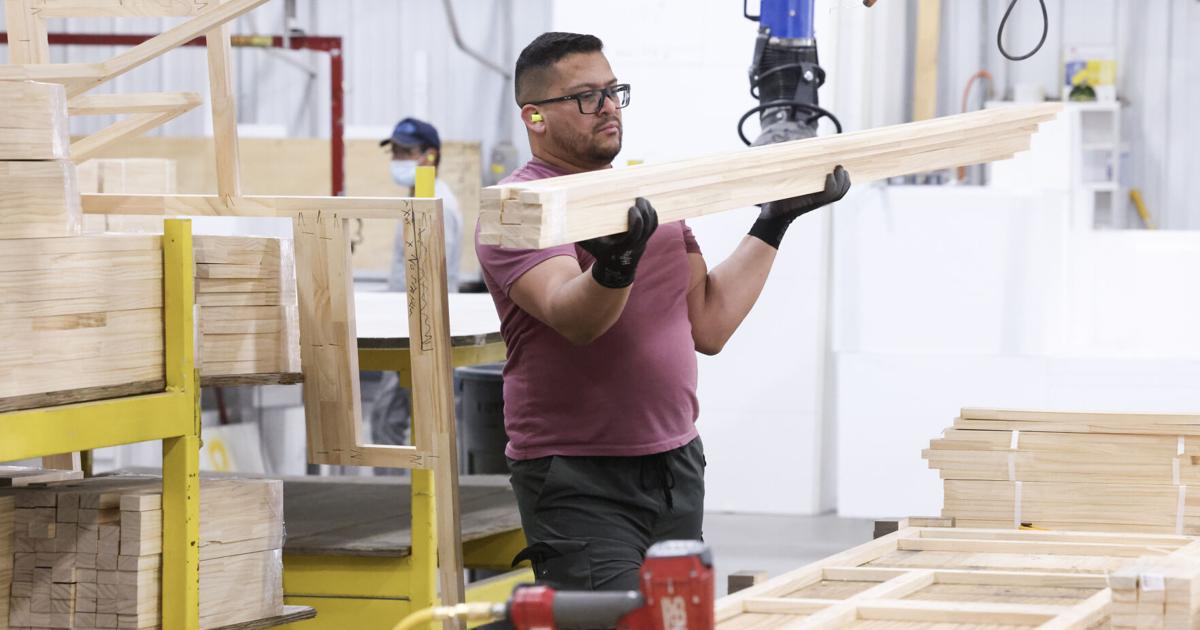
To begin efforts to strengthen and increase manufacturing in Central Washington, the Yakima County Development Association hosted a roundtable discussion to introduce new ways to make production more effective and efficient.
A big part of the June 30 event at the Perry Institute of Technology was a presentation by Simon Floyd, general manager of manufacturing and mobility at Microsoft, about practical applications of artificial intelligence in manufacturing.
Thanks to AI, today’s technology has progressed from relatively simple tasks such as machine learning and repetitive robotic operations to the use of AI agents and robots that can solve problems that arise during production.
While some may worry about human jobs being lost to automation, Floyd said what will change is the type of work humans have to do, and that jobs such as data scientists will be important.
“The results you get from AI are only as good as the data the AI is trained to find and use,” Floyd told the approximately 60 people who attended the YCDA event. “Today’s factory robots are completely obsolete. The good news is they can be upgraded.”

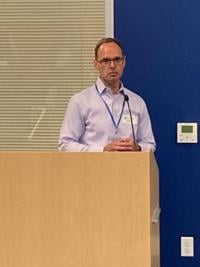
Microsoft’s Simon Floyd speaks about the use of AI in manufacturing during a roundtable discussion at Perry Institute of Technology in Yakima on June 30, 2026.
Other speakers at the roundtable event included Kirk Davis, executive director of the Puget Sound Advanced Manufacturing Center. Davis said the organization is expanding into the Yakima Valley to bring ideas and success to the manufacturing community here.
Programs offered by CAMPS include workforce and leadership development, access to capital through the Capital Accelerator program, and the CAMPS Health Trust, which enables companies to reduce costs and stabilize.
YCDA Executive Director Jonathan Smith said local manufacturers have expressed a need for opportunities to collaborate and share best practices, and the partnership with CAMPS will meet that need and provide additional benefits.
Smith added that, like agriculture, manufactured products are also sold outside of Yakima Valley communities, bringing in dollars.
“Of all the businesses in a community, manufacturing has the greatest impact on economic development,” he said.
Utilizing AI in manufacturing
Mr. Floyd, the keynote speaker at the June 30 roundtable, said he was originally from Australia and had lived and worked in the United States for 30 years.
“I worked in a country that lost its manufacturing industry and focused on tourism and other sectors of the economy,” Floyd said of Australia. “You don’t want that to happen here.”
Between the cost and the constant innovation introduced in AI almost every month, manufacturers tend to be cautious and hesitant to adopt new technology, Floyd says. That’s a mistake, he said.
Floyd said there are several reasons to start using practical everyday tools of AI in your existing production and software.
• Aging and strained workforce
• Margin and cost pressures
• A difficult role to play.
• Unstable demand and quality expectations
“When it comes to AI, over the past 12 months we have moved from dealing with issues of fear and uncertainty to acceptance and discussion about how to target AI technologies,” Floyd said of his clients.
He mentioned three types of AI: machine learning, AI agents, and physical AI, all of which bring value to manufacturing processes.
“Physical AI will be the new technology battleground… but these three work better together,” Floyd said.
Machine learning can predict what will happen, an AI agent can decide what to do, and a physical AI can carry out that decision, he added.
For example, fruit production facilities already use an array of cameras, scanners, and other equipment to detect deformities in individual apples and other fruits to determine quality.
Now, the robot can be trained to act on that data, wrapping some fruit and rejecting others, all the while learning how to solve problems it encounters during the process, Floyd said.
A variety of models are available, including OpenAI, Anthropic, Meta, Mistral, xAI Grok, and DeepSeek, and each model has strengths in different areas and tasks.
Despite all the new technology available, manufacturers need to decide whether the cost is worth it in the short and long term, Floyd said.
“Are you using AI in a high-value way, or are you duplicating the efforts of others?” he asked. “We can get a little bit addicted to technology. When can we be more productive and how much should we use it?”

An Adventurer Manufacturing employee carries a camper side panel to a table so it can be laminated on Tuesday, June 30, 2026 in Union Gap, Washington.
Yakima Manufacturing Initiative
Floyd’s presentation, along with other discussions and a tour of the Adventurer RV manufacturing facility in Union Gap, was part of YCDA’s Yakima Manufacturing Initiative.
The event brought together manufacturers, industry partners, workforce organizations, educators and economic development leaders to discuss the opportunities, challenges and future of manufacturing in Yakima County and the Central Washington region, said YCDA’s Smith.
He said the initiative is designed to be more than a single event.
Upcoming programs will include CEO forums, manufacturing mixers, factory tours, more educational roundtables, and leadership development opportunities tailored to the needs of Central Washington manufacturers.
“Manufacturing remains a key driver of the Central Washington economy,” Smith added. “By bringing manufacturers together and fostering collaboration across the region, this initiative aims to support long-term competitiveness, innovation and growth.”
For more information, visit the YCDA website and select yakimavalley.com or contact Smith at 509-575-1140 or jon@ycda.com.


