image:
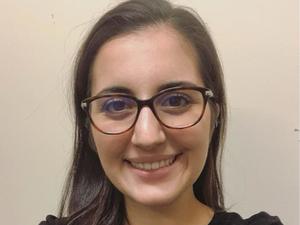
Benedetto Cufari, M.S.
view more
Credit: Image provided by author
(Toronto, July 10, 2026) JMIR Publications featured news and perspective articles on technological advances in oncology. “AI-Designed Radiopharmaceuticals: How Machine Learning is Redefining Precision Cancer Treatment,” written by JMIR correspondent Benedette Cuffari, reports on the integration of deep learning and generative AI in radiopharmaceuticals, its impact on accelerating drug design, and how personalized dosimetry can improve patient outcomes.
Drug discovery using AI
Although radiopharmaceutical treatments are highly effective against some types of cancer, their development remains time-consuming and resource-intensive. Deep learning and generative AI models can rapidly identify new targets, predict chemical interactions, and design stable drug candidates. Dr. Kufari spoke to Dr. Sofia Michopoulou, a medical physicist and head of nuclear medicine physics at Southampton University Hospital, who said AI-driven computer simulations could “identify the most promising drug candidates early, reduce the amount of current preclinical work, and make early-stage assessments more focused and efficient.”
Personal dosimetry and digital twin
The AI model also optimizes dosimetry, the calculation of radiation absorbed by tissues to maximize tumor damage while sparing healthy organs. 3D convolutional neural networks can analyze medical images to predict biodistribution, while machine learning can also generate patient-specific digital twins to develop highly personalized treatment plans, Cuffari wrote.
Barriers to clinical implementation
Despite these advances, clinical translation is hampered by the lack of standardized, high-quality datasets to train AI models. Although techniques like federated learning can protect patient confidentiality across hospitals, extensive basic experimental research is still required before the model can be adequately generalized.
Please cite as follows:
Cuffari B. AI-designed radiopharmaceuticals: how machine learning is redefining precision cancer therapy
J Med Internet Res 2026;28:e106201
URL: https://www.jmir.org/2026/1/e106201
doi: 10.2196/106201
About JMIR Publications News and Perspectives
JMIR Publications is a leading open access publisher of digital health research. The News and Perspectives section is a new addition to its portfolio, established to bring the rigor and integrity of academic publishing to science journalism. This section features well-researched, expert-led content from Science News Editor Dr. Kayley Anne Clegg and the network of JMIR publishing specialist correspondents to inform, inspire and keep the digital health community ahead of the curve.
About JMIR publications
JMIR Publications is a leading open access publisher of digital health research and a champion of open science. With a focus on author advocacy and research expansion, JMIR Publications partners with researchers to advance their careers and maximize the impact of their research. As a technology organization with publishing at its core, we provide innovative tools and resources that go beyond traditional publishing to support researchers at every stage of the dissemination process. Our portfolio includes a variety of peer-reviewed journals, including the renowned Journal of Medical Internet Research.
For more information about JMIR Publications, visit jmirpublications.com or connect with us on Bluesky, X, LinkedIn, YouTube, Facebook, and Instagram.
Media contact:
Dennis O’Brien, Vice President of Communications and Partnerships
JMIR Publications
communication@jmir.org
+1 416-583-2040
The content of this communication is licensed under the terms of the Creative Commons Attribution License (https://creativecommons.org/licenses/by/4.0/), which permits unrestricted use, distribution, and reproduction in any medium, provided the original work as published by JMIR Publications is properly cited.
journal
Medical Internet Research Journal
Research method
Commentary/Editorial
Research theme
people
Article title
AI-designed radiopharmaceuticals: How machine learning is redefining precision cancer treatment
Article publication date
July 9, 2026
Disclaimer: AAAS and EurekAlert! We are not responsible for the accuracy of news releases posted on EurekAlert! Use of Information by Contributing Institutions or via the EurekAlert System.