Law firms are not typically the first to adopt innovative technologies, but in an industry where protecting sensitive data is paramount, they are using AI to summarize and draft large amounts of information, support legal research, and analyze documents.
However, there have been more than 1,700 reported cases in which lawyers submitted briefs containing AI-generated errors. As fines and penalties increase, lawyers across the board stress the need for human oversight.
“All of the fake citations go back to two things that people misunderstand about these tools: First, these AI systems are predictive engines, not answer engines,” said James Rubinowitz, managing partner at the Rubinowitz Law Firm and adjunct professor at Cardozo School of Law. Second, lawyers assume that legal citations are legitimate because they look legitimate, and they don’t go back and check. … [A]This one [AI] Although the system is more sophisticated and real cases are cited, the results are illusory. ”
The American Bar Association’s official opinion on the use of generative AI (GenAI) states that lawyers should have some understanding of the tools they use.[L]Management should either reasonably understand the benefits and risks of the GenAI tools they use in their operations or draw on the expertise of others who can provide guidance on the capabilities and limitations of relevant GenAI tools. … Given the rapid evolution of GenAI tools, technical competency presupposes that lawyers remain vigilant about the benefits and risks of the tools. ”
Several lawyers and their law firms are leading the way in maximizing the benefits of AI while proceeding with caution. They use AI and automation in practical and innovative ways, including patent filing, drafting, focus groups, and client interactions.
Patents and intellectual property protection
Traditional partnership structures “tend to be very fragile, very difficult to change, and very slow-moving,” said Michael Drapkin, managing partner at patent law firm Landfall IP, who has founded an “AI-native” IP firm with partners and practitioners from his previous practice.
What used to take weeks and cost thousands of dollars now takes less time with deep knowledge of your inventory.
michael drapkinManaging Partner, Landfall IP
Before implementing AI, Drapkin said, the typical patent application process, which involves multiple phone calls and conversations between inventors and drafting artists, can take up to six months. He explained that Landfall uses a proprietary discovery AI agent on calls that evaluates every conversation, asks questions, and extracts relevant information in about 25 minutes. The agent will then conduct a search and provide patent availability. Humans are also involved in this process, Drapkin added.
“What used to take us weeks and cost thousands of dollars now takes less time with our deep inventory knowledge and our ability to drill down to the most strategic points to get patent applications the right way,” Drapkin said, adding that customers “can’t believe the speed and quality we’re going with,” adding, “So in a way, they’re very welcoming.”
Drapkin said there were initial doubts about AI’s reliability, but that AI can be beneficial “as long as you optimize what AI is good at and match that with what lawyers are good at” and “as long as you examine, expand, and consider what AI can’t do.” The company has also put in place some structure to have the AI review itself, “and we get better results that way,” he said.
Focus group preparation
Daniel Cote, a trial strategist and focus group moderator at legal consultancy Total Trial Solutions, was using ChatGPT for personal matters when he decided to apply AI to his work. Cote said he uses ChatGPT, Perplexity, and Copilot to run queries to gather information during focus group sessions and glean potential strengths and weaknesses that may help defense teams better prepare their cases. “I’m not sitting there typing word for word,” he said.
The AI also recommends documents for Cote to review when preparing for a session. “Once I have the document, I can read it and use AI to start a simulation to understand how the focus group will go,” he said.
AI has become “a way to better understand what’s coming out of a focus group,” Cote explained, explaining that while “you might come up with two good questions to begin with and branch out from there,” AI “will come up with three more topics…different ways of thinking about something.”
Cote cautioned against relying too heavily on AI. He suggested compiling and cross-referencing AI findings to prevent hallucinations. “Many times [the result] It sounds really nice and promising, but then you realize it comes out of nowhere. ”
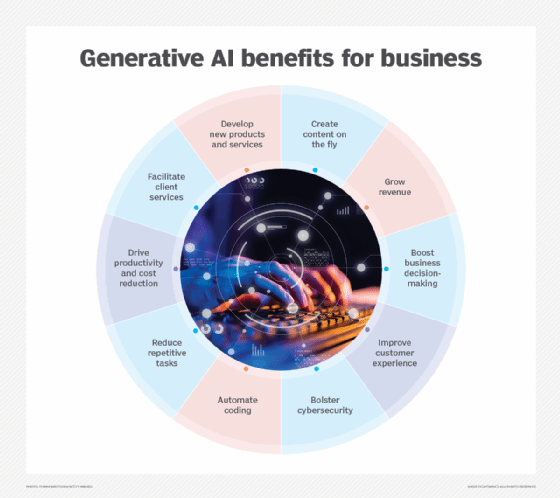
One of the benefits of AI in law firms is drafting motions, expediting client service, and saving money.
Drafting requests and motions
According to Danny Avir, founding partner at ACTS Law, AI has revolutionized the way demand letters are written, motions are drafted, and information search is done in numerous cases.
“Case managers now use tools like ChatGPT, Claude, and EvenUp to draft their own dunning letters and spot inaccuracies right away, rather than waiting for someone else to do so,” Abir said, adding that in drafting motions, AI is helping to surface counter-arguments and adjust legal arguments by ignoring previous rulings by certain judges.
“The biggest change is in large-scale tort litigation. In these cases, where many plaintiffs are suing the same defendant, AI speeds up the fact-finding process by connecting to various databases and documents, and completing a plaintiff’s fact sheet, which used to take months, now takes a fraction of the time,” Abir said.
Document discovery and review
“One of the most time-consuming tasks that AI is currently tackling in large federal criminal cases is document review,” said Robert Ziegler, president of the Robert Ziegler Law Offices. “Discovery packages in federal wire fraud and drug conspiracy cases have historically been hundreds of thousands of pages long, and lawyers have spent countless hours sorting and tagging them.”
at least, [AI] is a research multiplier, allowing the lawyer to appear more knowledgeable than the other party.
robert ziglerDirector of Robert Ziegler Law Office
Ziegler said the company’s AI document review tools can not only review large amounts of documents in just a few hours, but also identify patterns that human reviewers might miss even after hours of doing the same review. He added that law firms with smaller litigation support budgets can now competently litigate complex federal cases that were previously handled by large firms with larger budgets.
The AI system collects and reviews hearing transcripts and court findings, “giving lawyers an accurate idea of what the judge will value before entering the courtroom,” Ziegler said. “In removal hearings, where a person’s fate in this country can depend on how a single discretionary element is defined, that preparedness advantage is very real. …At least… [AI] has a high degree of research and can make it appear that the lawyer knows more than the other party. ”
Traffic ticket classification and patterns
Ron Harper, a licensed paralegal and founder of OTD Ticket Defenders Legal Services in Ontario, Canada, said that starting in 2024, the company has been using AI to categorize incoming ticket files by claim type and expected outcome, which has reduced admission processing times by about 60%. “We ran a test where we fed 200 speeding ticket disclosures into an AI review tool to flag low-radar evidence before the file even reached a paralegal. It caught patterns that our staff had missed for years,” Harper recalls.
On the other hand, Harper said, “I have sat across from a defendant in court who filed an AI-generated motion that could not be defended orally.” Even though AI’s motions look sophisticated and the citations seem authentic, “the moment the judge asked for a follow-up; [such as] ‘Why this discussion and not that one?’ That person’s mind goes blank,” Harper said. “The reason is simple: AI builds arguments by drawing on what has worked well in past cases…So even when pressed, there is nothing behind the words.…Judges can tell the difference in about 30 seconds.”
Gathering information for customers
One of McCreadyLaw Injury Attorneys’ main goals was to integrate “Judith,” an AI intake agent, into their workflow a few months ago. Founder and Managing Partner Michael McCready said Judith responds to customers who contact the office, gathers basic information, and bridges the gap between the first point of contact and the first human interaction.
McCready said Judith will be judged on its ability to handle the intake from first contact to first call with a real person, while successfully recording all the necessary information. “This is a win for us in terms of time savings.”
Although AI doesn’t have vacations, lunch breaks, or bad days, McCready said, “AI should be a decision support tool, not a decision maker. … I’m never saying humans are out of the equation. But for certain repeatable parts of the intake process, AI can be more consistent than a human team member who might be tired, distracted, or overpowered.”
The law firm also uses AI to summarize depositions, organize medical records, draft client communications, identify bottlenecks in cases, and build custom pre-trained transformer models. “AI can help process large amounts of information quickly, but it cannot replace legal judgment. We rely on AI to build a bridge between automation and providing a personal touch,” McCready cautioned.
Esther Shein is a veteran freelance writer specializing in technology and business. Former senior writer e weekwrites news, features, case studies, and custom content.