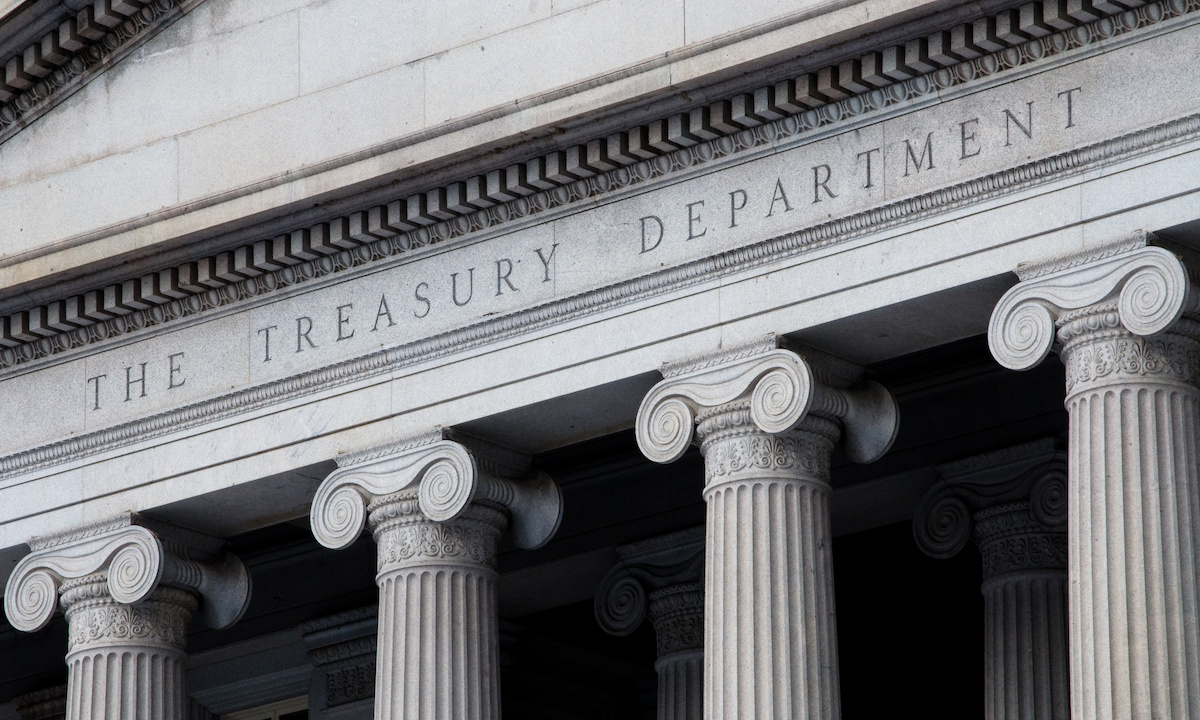
The US Treasury has drafted a report warning of broader risks to the economy if the artificial intelligence market repeats what happened during the dot-com bubble burst 25 years ago, according to NOTUS, which obtained a copy of the document.
NOTUS reports that Treasury analysts have found that AI companies are more deeply entrenched in the overall U.S. economy than their dot-com predecessors. Analysts say the economic downturn will send shock waves across stock markets, private credit markets, companies that finance data center construction, cloud providers, chip makers and utilities.
The report stopped short of predicting an immediate collapse comparable to the collapse of the early 2000s. Analysts predicted that an industry downturn would cause companies to cut investment, investors to lose confidence and economic growth to slow. The AI sector has been found to be particularly vulnerable to continued growth expectations not being met as funding for data centers and other infrastructure projects dries up, analysts said, a move reminiscent of the dot-com bust.
According to NOTUS, the industry is increasingly concentrated within a small number of companies, relies heavily on private market financing, and has invested heavily in data center infrastructure. Analysts found that supply chain issues, geopolitical tensions, power bottlenecks, and utility shortages could hinder AI momentum. The report points out that because there are fewer individual investors supporting AI than dot-com ventures, if AI continues to slump, institutional investors, who support economic stability, will be hit harder.
Analysts acknowledged key differences between the current AI boom and the dot-com era. NOTUS reports that many large AI companies are more mature, more profitable, and have stronger balance sheets than the speculative ventures that characterized the late 1990s. Still, the report concludes that much of the financial system now relies on AI to meet stated expectations for productivity gains and profitability, as investors are taking on significant risks, Seeking Alpha noted.
NOTUS said the document was prepared for Treasury Secretary Scott Bessent, Federal Reserve Chairman Kevin Warsh and other federal financial regulators. It is awaiting final approval before it is finally released to the public.
According to NOTUS, a Treasury spokesperson dismissed the report’s findings as not having been vetted and not representative of Treasury policy or views.
According to NOTUS, concerns about AI overvaluation have been raised by the Bank of England, the International Monetary Fund, and many Wall Street players. A Federal Reserve study published in May found that financial market participants increasingly pointed to AI-related equity valuations and debt-financed data center spending as risks to destabilizing the broader financial system, PYMNTS reported.
For all of our coverage of PYMNTS AI, subscribe to our daily subscription AI Newsletter.