Important points
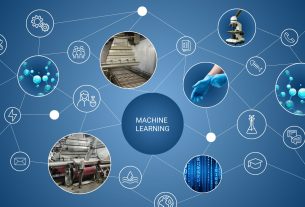
Machine learning is a subset of AI with applications such as recommendation engines, fraud detection, and translation software.
-
Many industries, including finance, technology, media, and healthcare, use machine learning algorithms in their operations.
-
Other technologies that use machine learning include image recognition, chatbots, self-driving cars, and AI personal assistants.
Learn more about machine learning and how to use it. Then, if you want to learn more about machine learning, consider enrolling in the Machine Learning Specialization at Stanford University and DeepLearning.AI. Start building machine learning models in just two months using scikit-learn, TensorFlow, and unsupervised learning techniques.
What is machine learning and its applications?
Machine learning is a subfield of artificial intelligence (AI) that uses models created from algorithms trained on datasets to perform relatively complex tasks that traditionally only humans could perform, such as making predictions or classifying information. As a result, machine learning is one of the most widespread forms of AI in use today and accounts for many of the recent advances in the products and services people use every day.
Machine learning is impacting nearly every industry, and its adoption is expected to increase exponentially in the coming years. According to a study published by Grand View Research, the global market size for machine learning is expected to reach approximately $282.13 billion by 2030. [1].
The growing influence of AI and machine learning means there is a growing demand for professionals who can effectively leverage them. This includes jobs such as data scientist, machine learning engineer, AI engineer, data engineer, and more.
read more: Machine learning and AI: differences, uses, and benefits
10 real-world machine learning applications
Machine learning is everywhere. But you may not even realize it, even though you probably operate it on a daily basis. To help you better understand how machine learning is used, here are 10 real-world applications of machine learning.
1. Image recognition
One of the most common uses of machine learning is image recognition. To do this, data experts train machine learning algorithms on datasets to produce models that can recognize and classify specific images. These models are used for a wide range of purposes, such as identifying specific plants, landmarks, and even individuals from photographs.
Popular applications that use machine learning for image recognition purposes include Instagram, Facebook, and TikTok.
2. Translation
Translation is a natural fit for machine learning. The large amount of documents available in digital format effectively becomes a huge dataset that can be used to create machine learning models that can translate text from one language to another. Known as machine translation, AI experts create models that can translate in a variety of ways, including rule-based, statistical-based, syntax-based models, neural networks, and hybrid approaches.
Common applications for machine translation include Google Translate, Amazon Translate, and Microsoft Translator.
3. Fraud Detection
Financial institutions process millions of transactions every day. This may seem obvious, but it can be difficult to determine which are legitimate and which are scams.
As more people use online banking services and cashless payment methods, the number of fraudulent transactions is increasing as well. However, TransUnion’s 2026 report found that despite a 23% decline in the number of frauds from 2024 to 2025, one in six Americans still claim to have been a victim of fraud, indicating a shift towards more sophisticated, AI-driven fraud with higher return on investment (ROI). [2].
AI can help financial institutions detect potentially fraudulent transactions and protect consumers from false accusations by flagging suspicious or unusual transactions. For example, Mastercard uses AI to flag potential fraud in real time and even predict fraud before it happens, protecting consumers from theft in certain situations.
4. Chatbot
Effective communication is key to almost every business operating today. Whether it’s helping customers troubleshoot problems or identifying the best product for a customer’s unique needs, many organizations rely on customer support to ensure their customers get the support they need.
The cost of supporting a well-trained workforce of customer support specialists can make it difficult for many organizations to provide their customers with the resources they need. As a result, many customer support specialists may find their schedules inefficiently packed with customers who face a wide range of needs, from those that can be easily addressed in minutes to those that require additional time.
AI-powered chatbots can provide your organization with the extra support it needs by helping customers with their most basic needs. These chatbots use natural language processing to respond to consumers’ unique questions and can direct them to the right resources so that customer support specialists can address their most difficult needs.
read more: What is a chatbot? Definition, types, and examples
5. Generate text, images, and videos
Generative AI can quickly create original content such as text, images, and videos with simple prompts. Many organizations and individuals are using generative AI like ChatGPT and DALL-E for a variety of purposes, including writing web copy, designing visuals, and even producing promotional videos.
But while generative AI can produce many impressive results, it can also produce material containing false or misleading claims. Therefore, if you are using generative AI in your work, we recommend that you conduct an appropriate level of scrutiny before making it available to the public.
Is ChatGPT AI or ML?
ChatGPT is a large-scale language model built from machine learning and AI technologies, but it is not the only application of machine learning. Many applications of machine learning come from data science, which focuses on analysis and prediction.

6. Voice recognition
Whether you’re driving a car, kneading dough, or going on a long run, controlling your smart device with your voice may be easier than stopping and using your hands to enter commands. Machine learning is enabling many smart devices to recognize voice, allowing users to complete tasks without touching the device, such as calling a friend, setting a timer, or searching for a specific show on a streaming service.
Voice recognition is now a relatively common feature in many popular smart devices, such as Google’s Nest speaker and Amazon’s Blink home security system.
7. Self-driving cars
Perhaps one of the more “futuristic” technological advances in recent years has been the development of self-driving cars. While such a concept was once considered science fiction, there are now several commercially available cars with semi-autonomous driving capabilities, including Tesla’s Model S and BMW’s X5. Manufacturers are working hard to make fully self-driving cars a reality for commuters over the next decade.
The dynamics of creating self-driving cars are complex and are indeed still being developed, but self-driving cars rely primarily on machine learning and computer vision to function. As the car moves from one location to another, it uses computer vision to examine its environment and uses machine learning algorithms to make decisions along the way.
8. AI personal assistant
Everyone could use a little extra support. That’s why many smart devices are equipped with AI personal assistants that help users with common tasks like scheduling appointments, calling contacts, and writing notes. Whether people realize it or not, whenever they use Siri, Alexa, or Google Assistant to complete these types of tasks, they are using machine learning-powered software.
9. Recommendations
Companies and marketers spend significant resources trying to connect consumers with the right product at the right time. After all, if you can show your customers the kind of products and content that meet their needs, at the exact moment they need them, they’re more likely to buy or simply stay on your platform.
Previously, brick-and-mortar salespeople matched consumers with the types of products they were interested in. But as online and digital shopping becomes the norm, organizations need to provide the same level of guidance to Internet users.
To that end, modern online retailers and streaming platforms use recommendation engines that generate personalized results for consumers based on information such as geographic location and previous purchases. Common platforms that use machine learning-based recommendation engines include Amazon, Netflix, and Instagram.
10. Detection of medical conditions
The healthcare industry is full of big data. From electronic medical records to diagnostic images, healthcare facilities are repositories of valuable medical data that can be used to train machine learning algorithms to diagnose medical conditions. In fact, some researchers are already using machine learning to identify cancerous growths in medical scans, while others are using machine learning to create software that helps medical professionals make more accurate diagnoses.
Explore free resources for machine learning
Explore career paths, assess skills, and connect with resume guidance while browsing our career resource hub. If you want to learn more about machine learning, check out these free resources:
Whether you want to develop new skills, become familiar with in-demand technology, or improve your abilities, keep growing with a Coursera Plus subscription. Access over 10,000 flexible courses.