

Text-to-video AI generators have become practical tools for creators, marketers, educators, and businesses. In addition to producing short clips, many platforms include image animation, editing features, style controls, and export options for social media and commercial projects.
Each tool has its own strengths. Some are focused on cinematic quality, while others are built for speed, ease of use, or short-form content. Below are five of the best text-to-video AI generators, chosen based on functionality, creative flexibility, and overall user experience.
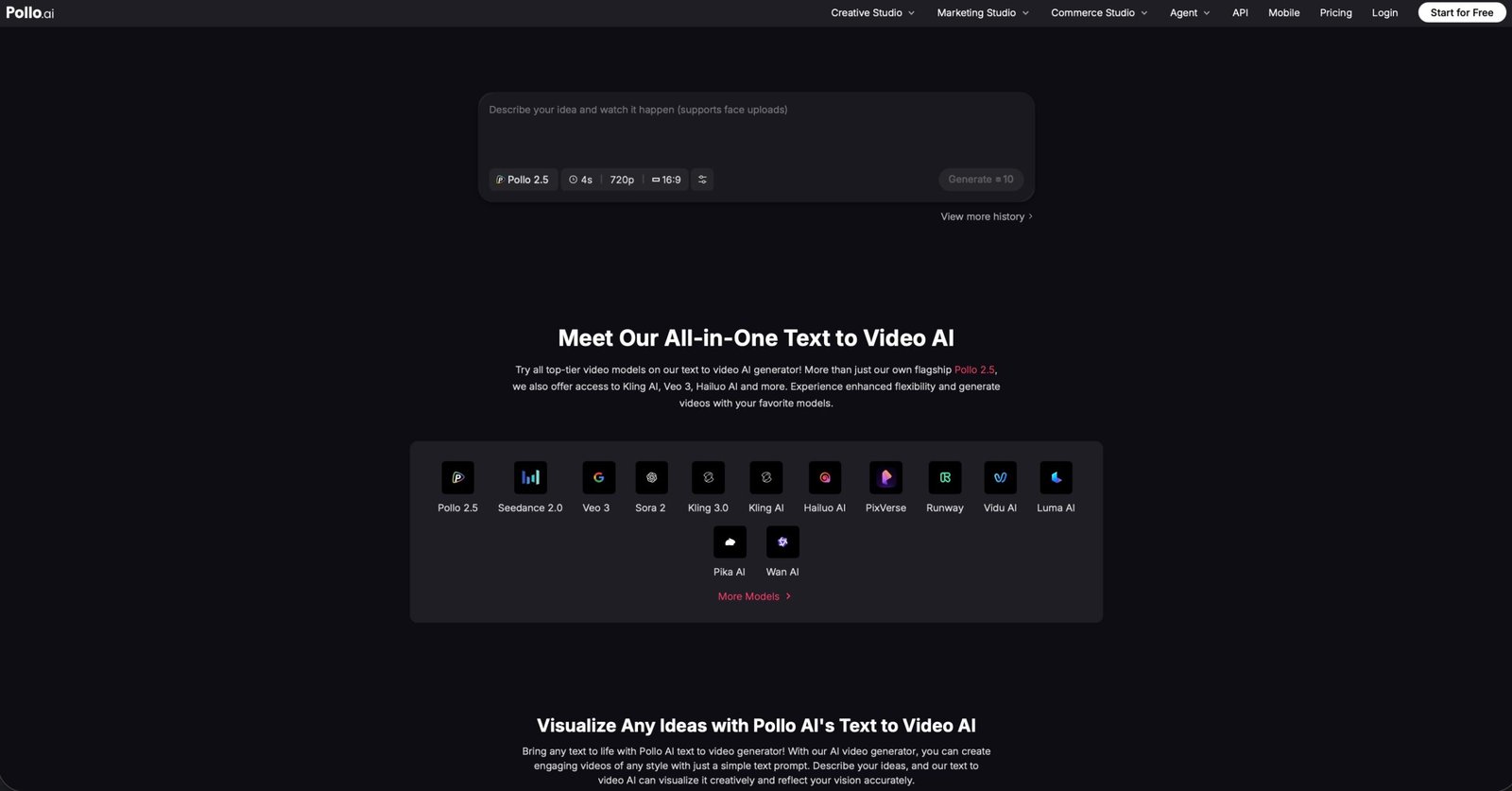
Polo AI is an all-in-one platform in the growing market of text-to-video AI generators. Rather than relying on a single AI model, bring together multiple leading video models in one place. In addition to the unique Polo 2.5 model, users have access to Veo 3, Sora 2, Kling AI, Runway, Luma AI, Pika AI, Hailuo AI, Vidu AI, PixVerse, and more. This gives creators more flexibility to compare different visual styles and motion quality without having to switch platforms.
One of the biggest advantages of Polo AI is its simple workflow and wide set of creation tools. The text-to-video AI generator turns your prompt into a video with synchronized audio, music, motion effects, and animated scenes. Users can also upload their faces and customize generation settings for more personalized results. In addition to video generation, the platform offers over 100 AI tools for social media, advertising, business presentations, storytelling, music videos, and product marketing, making it a practical choice for creators, marketers, and businesses.
Why Polo AI is worth considering
Polo AI integrates most AI video creation tools into a single platform. Instead of switching between separate video generators, editors, audio tools, export software, or YouTube outro makers, users can generate videos, add audio, adjust styles, and optimize content in one workflow. This saves creators time creating social media videos, promotional content, or ongoing marketing campaigns.
This platform is suitable for a wide range of users. Businesses can reduce production costs for advertising and branded videos, and agencies can create content at scale more efficiently. Influencers can quickly create videos for TikTok, Instagram Reels, and YouTube Shorts, and built-in branding tools reduce the need for separate editing software or external YouTube outro makers. It also provides filmmakers and creative teams an easy way to test visual ideas and film concepts without expensive equipment. Compared to many text-to-video AI generators that focus only on video generation, Pollo AI offers a more complete workflow for both creative projects and commercial content production.
Runway is one of the most well-known platforms in the AI video space, and Gen-3 Alpha is its latest text-to-video AI generator. Designed for filmmakers, digital artists, creative agencies, and other professionals who value cinematic quality and realistic movement. Unlike many AI tools built for quick social media clips, Runway focuses on visual consistency, camera movement, and polished results.
The platform produces videos with smooth movement and natural scene transitions while giving users control over style, pace, and visual tone through text prompts. It also includes editing tools such as motion tracking, background removal, timeline editing, and collaboration features. These features make Runway one of the most production-focused text-to-video AI generators.
Why Runway Gen-3 Alpha is worth considering
Runway Gen-3 Alpha is a powerful choice for creators looking for cinematic visuals and professional-quality output. Ideal for music videos, advertising, creative campaigns, concept videos, and experimental filmmaking where smooth movement and visual consistency are important.
Another benefit is the built-in editing workflow. Instead of relying on separate editing software, users can generate and adjust videos within the same platform, making it easier for creative teams to collaborate. Although quick testing may be required for best results, Runway Gen-3 Alpha remains one of the most powerful text-to-video AI generators for professional video production.
Luma AI introduced Dream Machine as a text-to-video AI generator with a focus on realistic movement and natural scene transitions. The platform quickly gained attention for creating videos with smooth camera movements, incredible lighting, and immersive visual flow. Luma Dream Machine is designed for creators who want more realistic, cinematic results rather than emphasizing stylized effects.
The platform transforms text prompts into dynamic video sequences while maintaining smooth object movement and consistent lighting. Videos are also generated relatively quickly, making it easy to test different ideas without long wait times. As competition among text-to-video AI generators intensifies, Luma Dream Machine continues to attract creators looking for realistic movement over stylized visuals.
Why Luma Dream Machine is worth considering
One of the Luma Dream Machine’s greatest strengths is its consistency of motion. The choppy motion and scene transitions seen in AI-generated videos are reduced, making the results feel more natural. This makes it suitable for fantasy scenes, sci-fi concepts, cinematic landscapes, and creative storytelling.
Another advantage is that it can be generated quickly. Users can quickly try different prompts, making it useful for social media creators, visual artists, and creative teams creating concept videos and moodboards. Although complex prompts may still need improvement, Luma Dream Machine offers a great balance of speed, realistic movement, and visual quality, making it one of the most capable text-to-video AI generators available today.
Kling AI has become one of the most popular text-to-video AI generators thanks to its realistic visuals and smooth movements. Designed for users who value cinematic quality over stylized animation, it allows you to create videos with detailed textures, convincing depth, and natural movement.
The platform performs particularly well in complex scenes that include people, landscapes, weather, and action. Maintain better consistency across frames and reduce visual instability commonly seen in AI-generated videos. With the increasing importance of realistic video generation, Kling AI is gaining acclaim among creators looking for high-quality AI content.
Why Kling AI is worth considering
Kling AI is perfect for creators who want realistic, cinematic results. Ideal for concept trailers, marketing videos, digital storytelling, and creative projects where natural movement and visual detail are important. This platform generates realistic lighting, textures, and object interactions to give your videos a more polished look.
Although users may need to adjust the prompts for best results, Kling AI is one of the most powerful text-to-video AI generators available today. It offers a powerful balance of visual quality and creative flexibility for creators who value realism over stylized short effects.
Pika is one of the most beginner-friendly text-to-video AI generators available today. Rather than focusing on cinematic production or ultra-realistic rendering, we value speed, simplicity, and short-form content creation. Pika 2.0 makes AI video generation accessible to users with little or no editing experience.
Users can create animated clips, stylized videos, visual effects, and social media content using simple text prompts. The lightweight interface is easy to learn, making it a good choice for new creators. Rather than aiming for strict realism, Pika focuses on expressive visuals and creative style suitable for entertainment and social sharing. As text-to-video AI generators become more widely used, Pika remains a popular option for creators who value speed and ease of use.
Why Pika 2.0 is worth considering
Pika 2.0 is suitable for short-form videos on TikTok, Instagram Reels, YouTube Shorts, and other social platforms. A simple workflow allows users to quickly create eye-catching AI videos without the need for advanced editing skills, making it a practical choice for influencers, marketers, and small creative teams.
The platform also encourages creative experimentation with stylized effects and flexible visual styles. Fast generation speeds make it easy to test different ideas and create content efficiently. While Pika 2.0 can’t match the cinematic realism of some high-end text-to-video AI generators, it offers a great balance of accessibility, creativity, and social media ease.
final thoughts
Modern text-to-video AI generators are much more than experimental tools. Many now support realistic motion, cinematic visuals, AI-assisted editing, and efficient production workflows for both individual creators and professional teams.
Polo AI offers an all-in-one workflow, while Runway Gen-3 Alpha focuses on cinematic quality. Luma Dream Machine is known for realistic motion, Kling AI focuses on visual realism, and Pika 2.0 is designed for accessible social media content creation.
As AI video technology continues to improve, each platform becomes more specialized. The right choice depends on your priorities, including visual quality, workflow efficiency, rapid content production, and creative flexibility.


