
Initially, Project Maven focused on analyzing full-motion video collected by military drones, applying machine learning algorithms to identify objects, recognize patterns, and assist intelligence analysts.
As the United States approaches its 250th anniversary, WTOP presents “250 Years of America,” a multi-part series examining the innovations, breakthroughs, and pivotal moments that have shaped this nation since 1776.
HII is proud to partner with WTOP to bring you this series.
Throughout military history, victory has often been won by the side that can gather information faster, understand it more clearly, and act more quickly than its adversary. In the digital age, that challenge has reached unprecedented levels.
Every day, the Department of Defense collects vast amounts of data from satellites, drones, reconnaissance aircraft, warships, cyber sensors, information networks, and battlefield systems. The amount of information is so huge that humans alone cannot process it all.
By the mid-2010s, military leaders recognized that the problem was growing. Although the United States had unparalleled intelligence gathering capabilities, analysts struggled to keep up with the influx of data.
The Department of Defense responded by launching Project Maven in 2017.
Initially, Project Maven focused on analyzing full-motion video collected by military drones, applying machine learning algorithms to identify objects, recognize patterns, and assist intelligence analysts. Tasks that previously required hours of human review can now be completed much more quickly with the help of artificial intelligence.
Project Maven represented more than just a new technology program. This marked the Department of Defense’s first large-scale effort to operationalize AI for military applications and demonstrated how machine learning can provide meaningful advantages in real-world operations.
Importantly, the goal was not to replace human decision makers.
Instead, AI was designed to act as a force multiplier. Algorithms can classify vast amounts of information, identify anomalies, flag potential threats, and present relevant findings to analysts and commanders. Humans were still responsible for interpretation, judgment, and decision-making.
Maven’s success has fueled broader efforts across the Department of Defense.
In 2018, the Department of Defense established the Joint Artificial Intelligence Center (JAIC) to coordinate the development and deployment of AI across the military. Four years later, JAIC became part of the newly created Digital and Artificial Intelligence Office, known as CDAO, and now serves as the Department of Defense’s central hub for AI, data management, and advanced analytics.
At the same time, individual military branches began their own initiatives. The Army has explored AI-powered battlefield awareness. The Air Force investigated autonomous systems and predictive maintenance. The Navy has explored AI applications for maritime surveillance and fleet operations.
Its goals increasingly focused on achieving what military planners called decision-making superiority.
In future conflicts, success may depend less on who has the most weapons and more on who can understand the rapidly changing battlefield and make informed decisions first. Artificial intelligence provides the ability to process sensor feeds, fuse information from multiple sources, identify emerging threats, recommend courses of action, and support commanders operating under extreme time pressure.
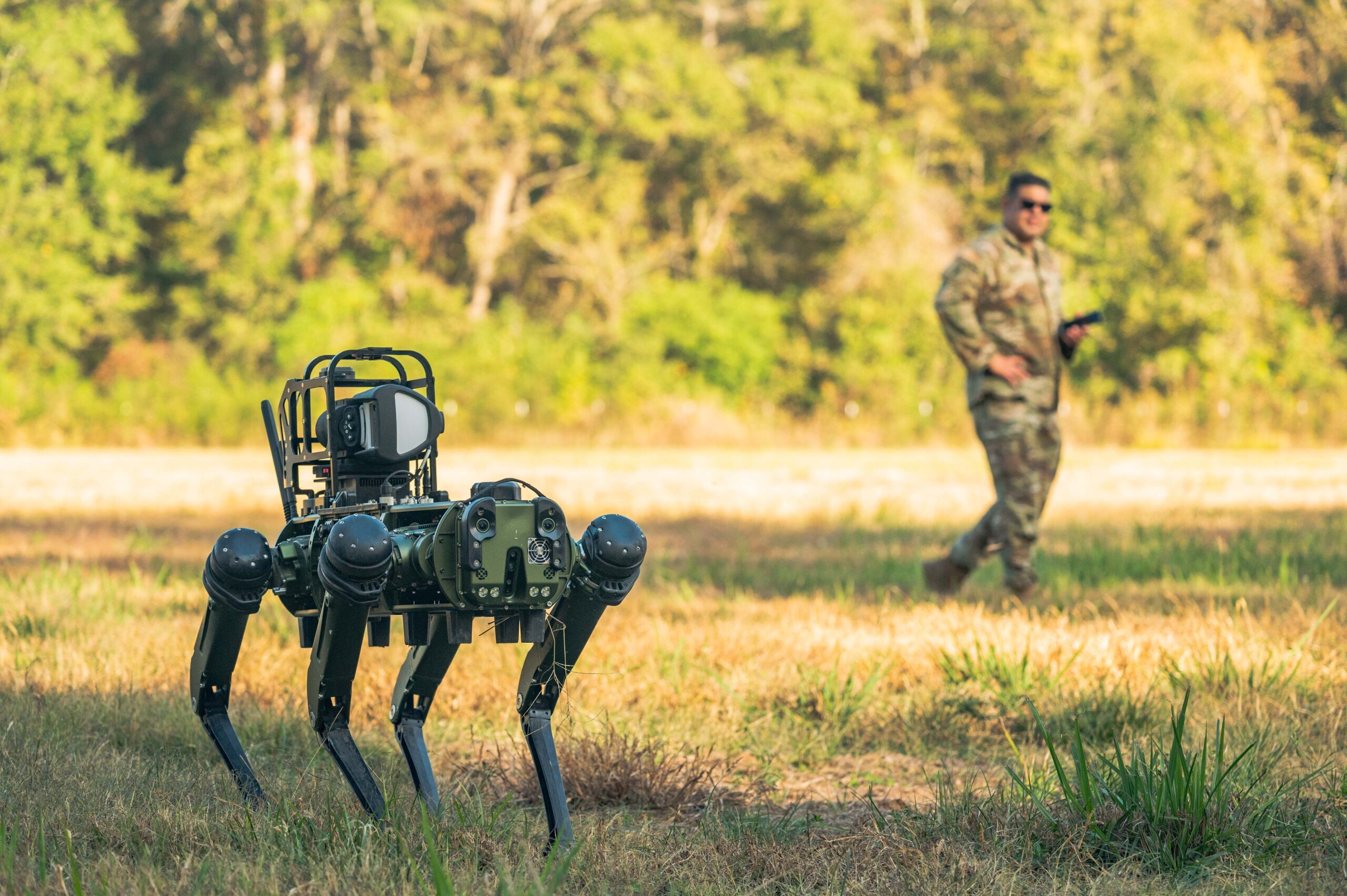
Autonomous driving technology is also advancing. Although fully autonomous weapons remain the subject of intense debate, autonomous and semi-autonomous systems are already supporting logistics, surveillance, navigation, cybersecurity, and data analysis.
The rise of military AI also raises important ethical questions. Defense leaders continue to emphasize the principles of responsible AI: transparency, accountability, reliability, and meaningful human oversight. Policymakers recognize that decisions involving the use of force must continue to be subject to human judgment and legal constraints.
Still, the trajectory is clear.
What began as an effort to help analysts review drone footage has evolved into one of the most significant technological changes in modern defense. Artificial intelligence is increasingly shaping intelligence gathering, military planning, logistics, cyber operations, and battlefield decision-making.
Just as radar transformed warfare in the 20th century and precision-guided weapons transformed combat at the end of the Cold War, AI is emerging as the defining military technology of the 21st century. Racing is no longer just about gathering information. It’s about turning information into decisions faster than any adversary.
Sign up here to get the latest news and daily headlines delivered to your email inbox.
© 2026 WTOP.Unauthorized reproduction prohibited. This website is not directed to users within the European Economic Area.


