

(CBS) – Google says a typical AI query uses five drops of water.
OpenAI’s Sam Altman describes a similar amount as about 1/15th of a teaspoon.
However, another viral estimate says that a short email written with the help of AI uses half a liter of bottled water.
The difference is huge: across these three widely shared claims, the maximum amount is approximately 2,000 times the minimum amount.
None of them are completely correct. They are not measuring the same thing. Some estimates only count water used to cool data centers. Others add water, which is used to generate electricity. Still others rely on outdated assumptions about rapidly changing technology.
Amid the numbers being thrown around on blogs, social media, protest signs and rallies, the nuance is getting lost.
So a basic question remains. How much water does AI use?
The answer depends on the combination of the AI model, data center location, and power sources within the local power grid. In some cases, the amounts can differ by hundreds of times.
To sort out the claims, we reviewed the scientific research behind some widely shared numbers about AI’s thirst for water.
We also included the viral statistic that making one hamburger uses more water than the AI prompts, and compared our estimates to the water used in other products and services that people eat, buy, and use every day. No matter how you count it, it’s true.
After all, data centers consume a lot of water, but data shows that the biggest demands on water in this country are the activities that make up our daily lives, from growing food to watering the lawn to bathing.
Here are five graphs that show AI water consumption in context.
Total water usage and future forecasts for US data centers
Although researchers cannot directly measure all of the water consumed by AI, they can estimate how much is used by the data centers powering the AI.
Scientists at Lawrence Berkeley National Laboratory estimate that U.S. data centers used approximately 228 billion gallons of water in 2023. Approximately 17 billion gallons were used to cool servers. Another 211 billion gallons were used to generate electricity.
Researchers predict that that total could rise to between 469 billion and 844 billion gallons by 2028, depending on a variety of factors, from data center technology to the mix of energy sources feeding the power grid.
But AI is only part of that demand. The International Energy Agency estimates that AI accounts for 15-20% of a data center’s electricity demand, and thus its water usage. The rest goes toward supporting other digital activities, from satellite data that helps predict the weather and protect the military, to streaming movies, TV, and TikTok videos for billions of people.
What other ways do we use similar or greater amounts of water in the United States?
For those seeking to understand the impact of AI on water supplies, scale matters.
Compared to many other demands on water across the country, today’s data centers consume relatively modest amounts of water. Americans use more water to irrigate lawns, flush toilets, and produce food, especially meat, than all data centers in the U.S. combined.
The comparison becomes even more striking when looking only at the percentage of data center water usage that comes from AI.
Based on government and industry estimates, the proportion of data center cooling water used solely for AI processing is less than a year’s worth of water used to irrigate golf courses, wash vehicles, wash residential pools, and wash restaurant dishes.
These comparisons do not include additional water associated with power generation. It also doesn’t mean that AI’s water usage isn’t important. They only help place data center water usage among the many ways Americans consume resources every day.
Large amounts of water are used to grow food for people and animals
Scientists estimate that U.S. crop production used approximately 183 trillion gallons of water in 2019.
Coffee is the most coveted crop grown in the United States, consuming more than 1,200 gallons of water per pound produced. However, most of it comes from rainwater.
Water taken from rivers or wells may be better compared to water-cooled data centers. Nut trees are among the least efficient users. Certain nuts in the United States, such as macadamias and pine nuts, can consume more than 300 gallons of irrigation water per pound.
Scale matters, as very little of either crop is grown in the United States compared to the industry as a whole.
In total, nuts account for less than 1% of the crops grown and less than 4% of the irrigation water used. But even adding that 4% would still require up to 538 billion gallons of water. This is more than twice the amount of water used by AI data centers.
Overall, the thirstiest foods grown in the United States are not directly consumed by humans.
As of 2024, grasses and grains used to feed livestock will account for an alarming amount of agricultural production in the United States, according to researchers at the University of Twente. The country grows 1.7 trillion pounds of feed crops and uses 5.5 trillion gallons of irrigation water annually.
Agriculture uses much more water than data centers
Even counting only the water consumed by irrigation, agriculture uses many times more water than data centers. Forage crops (food grown to feed animals) alone use 5.5 trillion gallons of irrigation water annually.
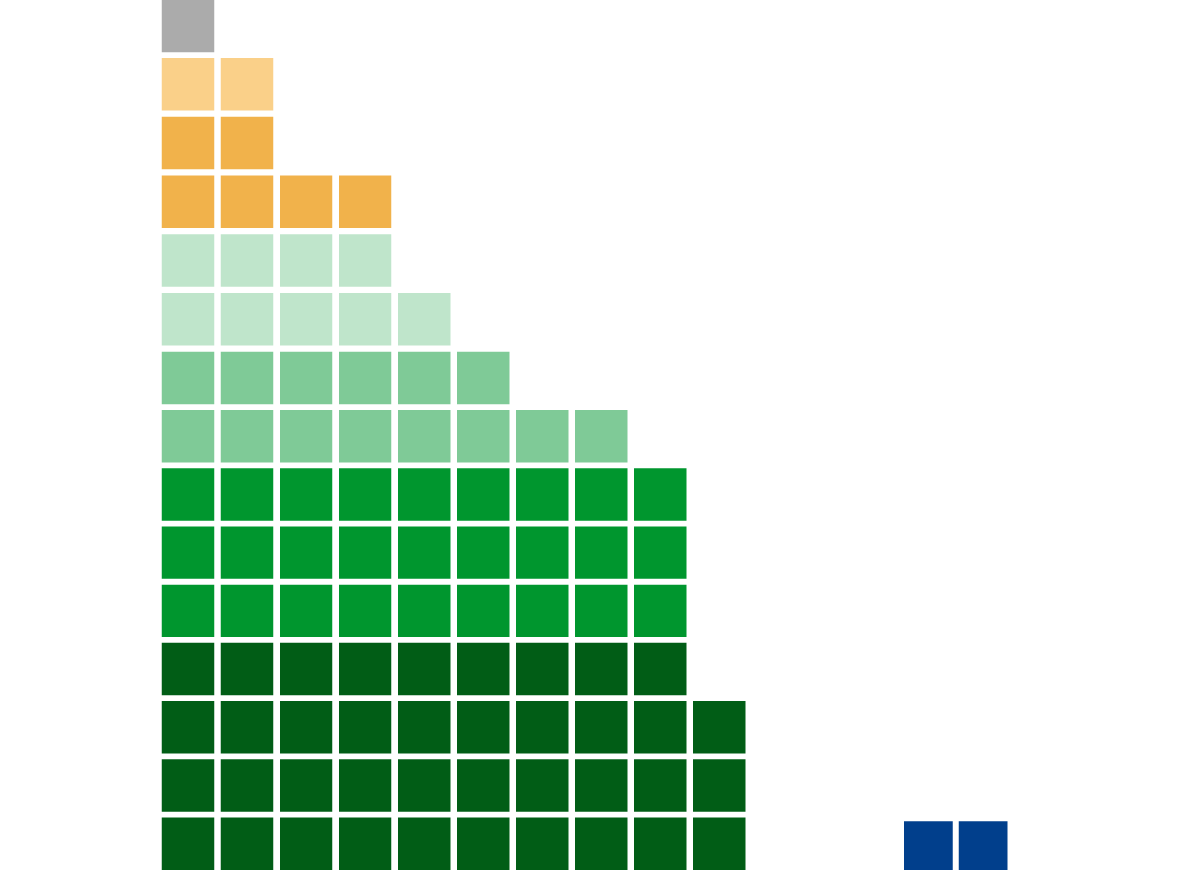
Data center:
228 billion gallons
Agricultural statistics are modeled estimates of green water consumption for irrigation in U.S. crop production in 2019. AI Data Center estimates include both direct and indirect water use related to electricity generation, based on 2024 data.
Grace Muncy, Scott Pham/CBS News. Sources: Lei et al., Lawrence Berkeley National Laboratory (2025), Mialyk et al., University of Twente (2024)
Does that mean we should be more concerned about water used in animal agriculture than we are about data centers and AI? Economist David Zetland said it was a bad idea to compare different water-intensive activities.
“It’s a close call. The only straw that breaks the camel’s back is the one that breaks the camel’s back, because all the other straws are on the back first,” he said.
He said people try to link water use to various consumer products because they want a villain, but the real problem is that water used for all purposes is so cheap, or free, that it doesn’t include the cost of sustainable management.
“The value of water is much higher than the price we pay for it,” Zetland says. “If you don’t put a price on it, any economist will tell you this problem will end quickly, and that’s what we’re seeing now.”
Where the data center is built matters
When it comes to water, where your AI data center is located will be very important.
Because data centers rely on local power grids, water resources, and climate conditions, the impact on water supplies varies widely by region.
Researchers identified several states as particularly favorable for data center development from a water perspective. However, many of the existing facilities are concentrated elsewhere. CBS News analyzed locations tracked by data center maps and found that data centers are concentrated in water-stressed states such as California, Arizona, and New Mexico.
In one recent study, researchers identified Texas, Nebraska, South Dakota, Louisiana and Idaho as the most favorable states for future development. The common factor was the large availability of wind and solar power, which require little water compared to many other sources of electricity.
But even the most advantageous locations come with trade-offs. Texas, Nebraska, and South Dakota all face challenges in expanding power grid capacity to support more data centers.
Water use is only part of AI’s environmental footprint
Some researchers argue that electricity may be a more important environmental issue when it comes to AI and data centers.
Data centers are estimated to account for an estimated 4% of U.S. electricity consumption in 2023. Research shows that it could reach 12% by 2028 as the demand for AI computing increases.
In many regions, utilities are already struggling to connect new data centers due to a lack of additional transmission lines and generation capacity.
This growth has implications beyond straining the power grid and increasing utility bills. Producing electricity releases particulate matter and other pollutants from power plants and backup generators.
Xiaolei Ren, a professor of electrical and computer engineering at the University of California, Riverside, said the increase in pollution is disproportionately affecting people living near power plants and data centers. Ren and colleagues estimate that AI’s increased computing workloads, driven by data centers, could contribute to hundreds of thousands of cases of asthma symptoms and more than 1,000 premature deaths per year by 2028.
Other concerns tend to be very localized. Northern Virginia, the nation’s largest data center hub, already has 6,200 acres of facilities occupied and an additional 21,000 acres of data centers planned. This is the equivalent of approximately 16,000 football fields, or 1.5 times the size of Manhattan.
Researchers have also raised questions about cooling water releases that cause pollution, but one recent study found that the impact is so far “limited to non-existent data.” Neighbors have expressed concerns ranging from impacts to wells to air, noise and light pollution.
Some engineers have suggested more drastic solutions. Elon Musk has floated the idea of setting up data centers in orbit, but experts say there are significant technical and economic hurdles. Another tech company is experimenting with floating data centers in the world’s oceans.
There’s no single number to understand AI’s water footprint
Many of the viral statistics about AI and water are rooted in real science. But as the research becomes fragmented into social media posts, billboards and political talking points, the complex findings become more than simplistic slogans.
The next time you see a claim about AI and water, the most important question may not be “Is it true?”
It may be about what is being counted and how it fits into the bigger picture of U.S. water use.
credit
Reporter john kelly, Scott Pham and steve riley. Design/Developer john kelly and Grace Munsey. editor paula coen.