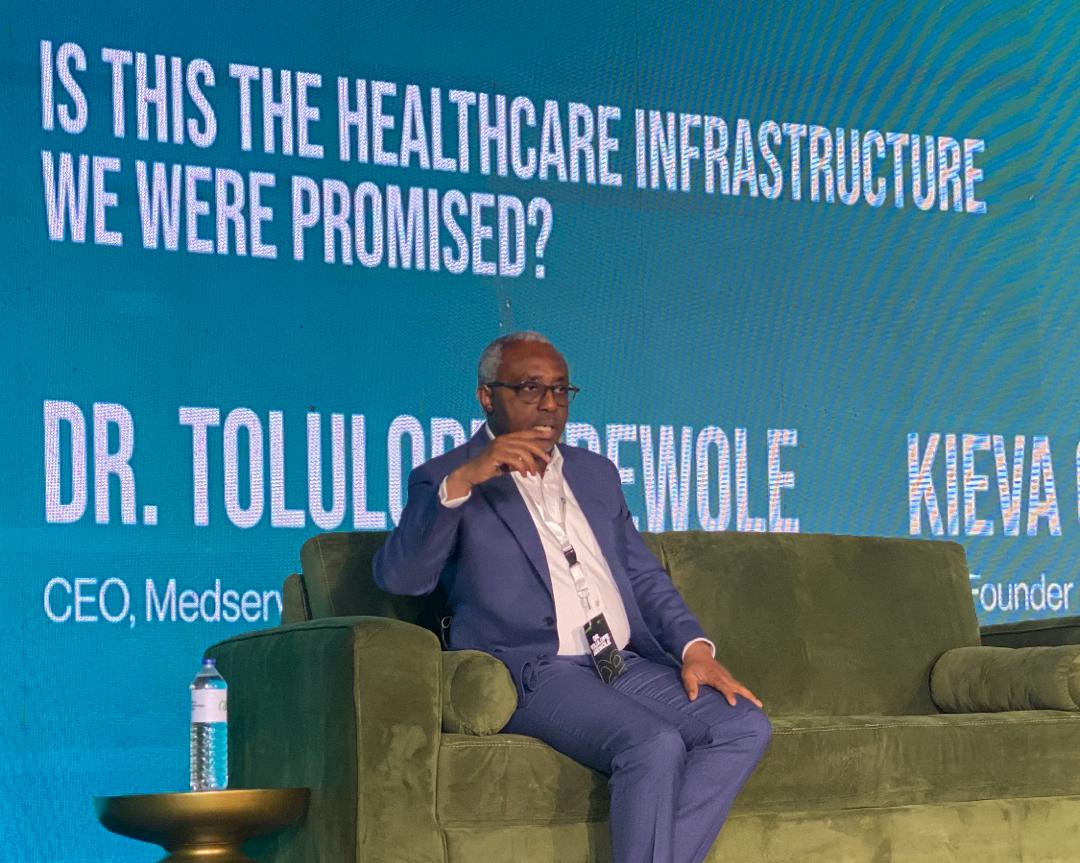
The Chief Executive Officer of MedServ, Dr. Tolulope Adewole, has warned Nigerians against relying on artificial intelligence tools for medical diagnosis, insisting that while artificial intelligence is transforming healthcare, it should not replace consultations by qualified medical professionals.
Speaking at the Africa Technology Expo in Lagos on Friday, Adewole said patients should utilize AI as a support tool but should continue to seek treatment from doctors, especially those who understand how to use emerging technologies.
On where to draw the line with artificial intelligence, Adewole argued that AI should be seen as an enabler of health workers rather than a threat to their jobs.
He likened concerns about doctors being replaced by AI to the fears that arose decades ago when computers arrived in offices.
“If you threaten a man’s job, but say it will make your life easier, when computers came out, secretaries’ jobs were threatened, but in the end they were not taken away. Doctors who are being threatened are doctors who don’t want to keep up with the times. Doctors need to think of it as enablers.”
He says doctors with AI will be more efficient, spend less time on paperwork, and ultimately see more patients.
“Doctors who are afraid will miss out on opportunities. Doctors who are bold, who are ready to embrace AI, who don’t have to create a lot of paperwork, who can save time, who do you think will see more patients?” he said.
He acknowledged that AI platforms themselves are not responsible for medical outcomes, so he argued that human doctors remain essential.
“Go to a doctor who is familiar with the tools. Go see a doctor and get a diagnosis. There’s a caveat that if you access these AI apps, you’re not responsible for anything that happens to you. So we still need doctors.”
Besides AI, Adewole identified poor infrastructure as the biggest barrier to healthcare delivery in Africa, saying unreliable electricity is the biggest challenge in the sector.
“The biggest challenge in the health sector in Africa is electricity,” he says.
He explained that three elements are essential for a functioning health system: infrastructure, technology and human capital, adding that the shortage of healthcare workers is a global problem, but technology can help fill the gap.
He said digital tools can be used to securely store patient data, improve efficiency and reduce the cost of healthcare delivery.
Adewole also lamented that many Africans are not diagnosed early enough and suggested that if properly implemented, AI could become a foundational layer of Africa’s healthcare infrastructure.
Despite the challenges, he expressed optimism that Africa can close the healthcare gap with the world’s leading innovation hubs over the next decade, saying, “In 10 years, you will see that there is no gap between what you can do here and what you can do in Silicon Valley.”