
Written by Levi King

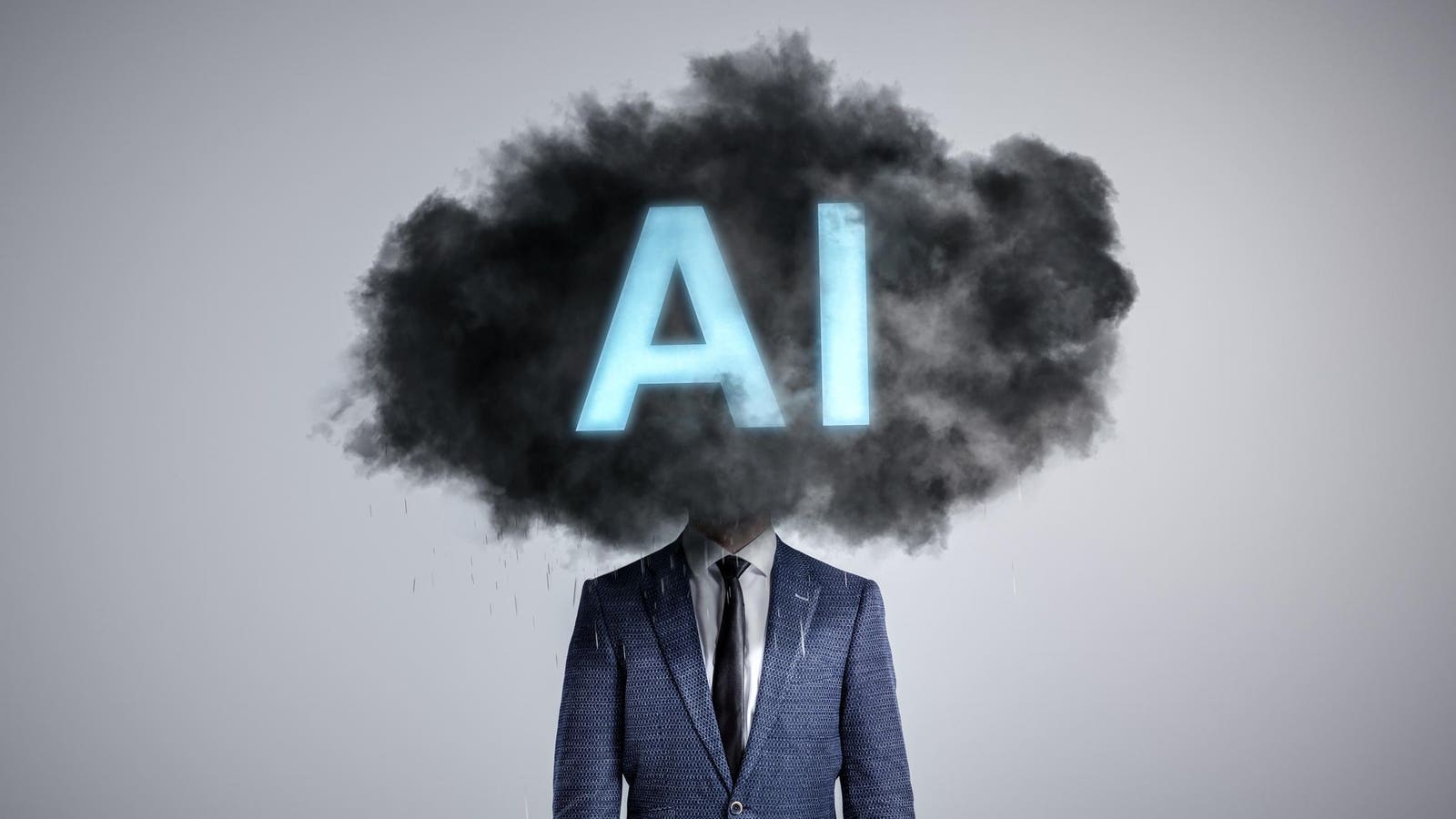
AI is exactly the kind of technology trend that makes your actions irrelevant if you fall asleep at the wheel.
getty
I make a claim that may sound a little crazy on the surface. “Paranoia is healthy in business.”
It’s not anxiety. It’s not ruin. It’s not like we’re going to sell everything and move to the beach and wait for the robots to finish us off. By paranoia I mean assuming that something out there could hurt you, and spending real time trying to figure out what it is, how it’s going to play out, and what you’re going to do about it.
That kind of paranoia has kept my company afloat. The other kind almost broke me.
When people ask me what I think about AI, that’s the first thing I answer. We should be paranoid about AI. Not because “humanity will be extinct in 3-5 years,” but because AI is exactly the kind of technology trend that can make your actions irrelevant if you’re drowsy at the wheel.
Paranoia looks at the headlines and asks, “What are the possible outcomes? What outcomes could harm us? How fast? And how can we influence those outcomes?” Anxiety is reading that same headline and immediately jumping to “it’s over, it doesn’t matter what I do” and letting that story dictate your life.
I have lived both.
Why is there a terminal tendency?
For years I have suffered from anxiety and panic attacks. Anxiety is the fear of the unknown, burning energy over something that may or may not happen. Intellectually, I knew how irrational that was. Emotionally, it didn’t matter. My body was determined to feel fear anyway. It took a lot of effort to get my life back.
This history makes me very sensitive to the difference between healthy paranoia and unhelpful anxiety when talking about AI.
If we take the loudest AI doomsday predictions at face value, the “rational” response seems to be to run out of money, move somewhere warmer, and spend our remaining years reading novels in the sand. To me, that’s not a clear warning. That’s what happens when talented people live in very small echo chambers.
We all live in echo chambers. The only question is how small. If everyone you talk to most days has similar training, incentives, and obsessions, there’s little fresh oxygen in the room. The story repeats itself until it feels doomed.
I grew up around apocalyptic religious language. Jesus is coming any moment. We think of it as a religious pattern, but I think it’s more universal. Every generation is tempted to believe, “The world cannot continue long after I die, because my life must be the climax of the story.” The urge to see the apocalypse with one’s own eyes will not go away even if people stop going to church. It just transitions.
Today, one of those costumes is “Scientific Doomsday.” We may be talking about parameter numbers and existential risks instead of apocalypse, but psychologically they push the same buttons. That is, everything will end in my lifetime. This story is compelling enough to make you want to write, share, and click. It’s great for attracting attention and can even inspire us to be more kind and responsible.
It’s also a terrible basis for making clear decisions.
How to stay apocalyptic about AI
Apocalyptic thinking doesn’t just focus on us. You might go crazy. Some bad guys profit from the chaos, while others just enjoy watching people panic. But most of those caught up in it are simply recording humanity’s oldest fear: the unknown future. Technology is accelerating so rapidly—nuclear weapons, space travel, the internet, smartphones, and now AI—that most of us don’t have time to keep up emotionally. Of course we are nervous.
The only thing that will definitely help you when you feel overwhelmed looking forward is to look back. Remembering Y2K, the certainty that everything will fall apart, and the high point when it didn’t, has a built-in reminder to seriously deal with fear without handing over the wheel.
So, when people ask me, “Aren’t you scared of AI?”, my honest answer is, “I’m not phobic, I’m paranoid.”
I’m paranoid enough to believe that AI will change everything. Just as e-commerce destroyed some retailers, it will destroy businesses that refuse to adapt. Some people have adapted and grown. Work has been shifted. My old job disappeared. A new job has appeared. Human behavior has revolved around companies that have stopped.
So will AI.
I can see how that threatens some of my business. You’ll also see how this enables new products, new distribution, and new ways to better serve small business owners than ever before. I don’t know exactly how it works, but I do know that handstand is the only strategy that is guaranteed to fail.
That’s healthy paranoia. Assume that the threat is real, assume that you are not special, and start working to be the one who adapts, not the one who is written as a warning.
The people who will be okay are those who are able to do the work they want, mainly using AI.
Don’t avoid AI, use it strategically
When you come out of school and go for an interview, the most employable version of you isn’t, “I’m the best copywriter, designer, or analyst.” It’s, “I’m the best copywriter, designer, or analyst you’ll ever meet who knows how to use AI to make this job faster, cheaper, and better.”
Psychology, art, law, whatever field you want to be in, AI is going to change it. So my advice is simple. See first-hand what’s happening on the AI front in your space. Find and research tools, research, and weird little apps. Most people avoid those things because they are scared of them. Your reaction should be exactly the opposite.
Cutting-edge research in your field won’t be published in textbooks right away. At the point when a university is teaching the current state-of-the-art technology, it is no longer cutting-edge. What you fear today is exactly what you need to study if you want to control it tomorrow.
The same logic applies to CEOs.
Bringing AI to your business
We cannot go into detail about all the AI tools we use. When we asked for a list of AI products in our stack, we were shocked at how long the list was and how many names we didn’t recognize. My job is to know a little about many of them, and a lot about how AI can increase my own impact. I don’t need to be the best prompt writer in the company, but I need to understand how AI can help me make smoother, smoother, and better decisions.
If I don’t understand that, I will become a dinosaur compared to my peers who do.
As a leader, your job at a time like this is not to tell people, “Don’t worry, nothing bad will happen.” That’s a lie, and everyone knows it. Your job is to say, “Yes, bad things happen. Good things also happen. Our job is to influence which side we land on.”
AI can paralyze you or help you.
When you’re consumed by anxiety, your imagination runs wild with all the things you can’t control. When you’re acting out of paranoia, your imagination runs wild with the levers you pull. The worst-case scenario is still in sight, but you just don’t let it paralyze you.
AI will hurt some people and some businesses. That’s true of every major technological change in human history. But I refuse to delegate the responsibility of being a founder and CEO to a few experts in a small echo chamber, no matter how many papers they publish. Technology will undoubtedly impact the world, but human actions will determine what sticks.
So if you’re a business owner and you’re worried about AI, I say: Be paranoid. Look directly at what scares you. Wrap the AI around you before the AI wraps around you. And whatever you do, don’t confuse passive, floating anxiety with the kind of concentrated paranoia that might actually save your company.
See more all business:
levi king CEO, co-founder, and chairman. navi.com. A lifelong entrepreneur and small business advocate, Mr. Levi has dedicated more than a decade of his professional career to improving business credit transparency for small businesses. After starting and selling several successful companies, I founded Nav with the goal of helping small business owners build credit health and providing powerful tools to make their financing dreams a reality.


