
Karachi:
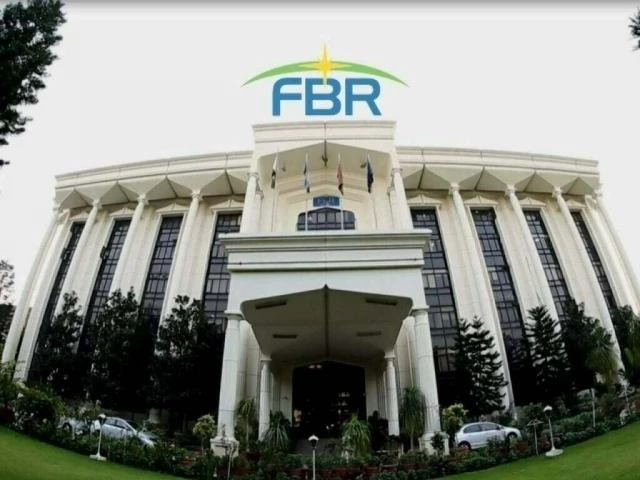
Two former chamber of commerce presidents are calling for the Federal Board of Revenue (FBR) to be outsourced and the tax system to be moved to artificial intelligence.
Speaking at a session organized by the Businessmen’s Panel, Nasir Hayat Magoon, former president of Federation of Pakistan Chambers of Commerce and Industry (FPCCI), said the FBR has 36,000 employees, of which 15,000 are engaged only in issuing notifications. “No investor has ever met a tax official in Dubai. In Pakistan, it is the system, not the people, that is flawed,” he said, calling on the government to fix the tax system and hand it over to AI.
He added that the finance minister, who is a banker, claims economic stability based on loans and Rs 853 billion under Benazir Income Support Program is turning people into beggars. He claimed that the International Monetary Fund (IMF) had pushed the poverty rate from 25% to 50% in three years. “It would have been better for the country to default on its debts. People would have been forced to work. This country cannot run like this,” he said.
Former FPCCI Chairman Zakaria Usman said the FBR is throwing corporate representatives in the trash. He pointed out that the textile industry relies on imports for 60% of its operations, and the trade deficit cannot be reduced without import substitution. He added that commercial banks prefer lending to the government rather than industry, and half of the budget goes towards interest payments.
He emphasized the need for a five-year policy framework to promote industrialization, security and import substitution. “If you don’t have industry, you don’t have jobs and you don’t reduce crime,” he says. Cotton production was reduced by 5 million bales due to premature fertilizer supply. He said high tax rates were hitting the productive sector hard.
He added that the government does not seem to want to leave the IMF program. “Pakistan’s global position is strong and it should be leveraged,” he said, adding that educated youth should be kept in the country rather than sent abroad to send remittances.
BMP think tank director and engineer MA Jabbar said the budget does not show any positive progress in industrial growth and the economy is not stable. He said the economy has become more dependent on consumption and imports, with a trade deficit of $35 billion. Although remittances are increasing, exports remain stagnant.
He called for an end to discriminatory tax policies, smuggling and tax exemptions. He added that the poverty rate is over 40% in Pakistan and 37% of Sindh’s population lives in poverty. He pointed out that the financial sector remitted $600 million from Pakistan and questioned how industrialization could occur if capital was not invested in the country.
Shariq Vohra, former president of Karachi Chamber of Commerce and Industry (KCCI), said that although macroeconomic indicators are improving, high tax rates are paralyzing the economy. He pointed out that businessmen can evade taxes, but office workers are powerless. In his view, the government has not taken meaningful steps to reduce poverty.
He added that foreign direct investment has declined due to weak business confidence, concerns about law and order, and high energy costs. But he expressed hope that a peace deal between Iran and the United States could improve business confidence. He pointed out that Pakistan’s population growth rate is 2.5%, while the GDP growth rate is below 4%. He said that given the changing geopolitical dynamics, there are huge opportunities for Pakistan to take advantage of.


