pch.vector via Freepik
Main points
- CSU surveyed more than 94,000 students, faculty, and staff, making it the largest survey of perceptions of AI in higher education.
- Almost all students have used AI, but most of them wonder if AI can be trusted.
- Faculty and students alike want more say in system-wide AI policy.
- Faculty members are divided about the impact of AI on teaching and research.
Although nearly every student in the California State University system uses artificial intelligence tools, most do not trust the results, are concerned about how AI will affect future job security, and want more say in system-wide AI policy.
That’s according to a 2025 survey of more than 80,000 students, faculty and staff across CSU’s 22 campuses. This is the largest and most comprehensive survey of how higher education students and instructors perceive artificial intelligence.
University faculty across the country are struggling to reconcile the learning benefits of AI, which has been hailed as a “transformational tool” for providing tutoring and personalized support to students, with the risks of students relying on AI agents to think for them and, in some cases, receiving incorrect information. Educators want a say in which AI tools are used and how. We want students across the CSU system to be included in these discussions.
Some professors are teaching students how to use AI and encouraging students to use it, while others are banning its use in the classroom, said Katie Culloum, systemwide vice president for the California Student Association, which represents more than 470,000 students.
“Right now, both of these are allowed to coexist without policy,” she said.
Culloum said teachers’ practices are too diverse and what students need are consistent and transparent rules developed in collaboration with students. “Some students will graduate with AI literacy, and others will graduate without AI literacy.”
In February 2025, the CSU system announced its efforts to adopt AI technology and an agreement with OpenAI to make ChatGPT available throughout the system. A system-wide study released Wednesday confirmed that ChatGPT is the most used AI tool across CSU. The system also works with Adobe, Google, IBM, Intel, LinkedIn, Microsoft, and NVIDIA.
Campus leaders say the survey and accompanying dashboard will provide much-needed data on how the system continues to integrate AI into instruction and assessment.
“We need data to make data-based decisions and not just rely on anecdotes,” said Elisa Sobo, an anthropology professor at San Diego State University who helped interpret the findings. “We have data that shows it’s being used frequently, but we also have a high level of concern, a very legitimate concern, to make sure people are responsible when they use it.”
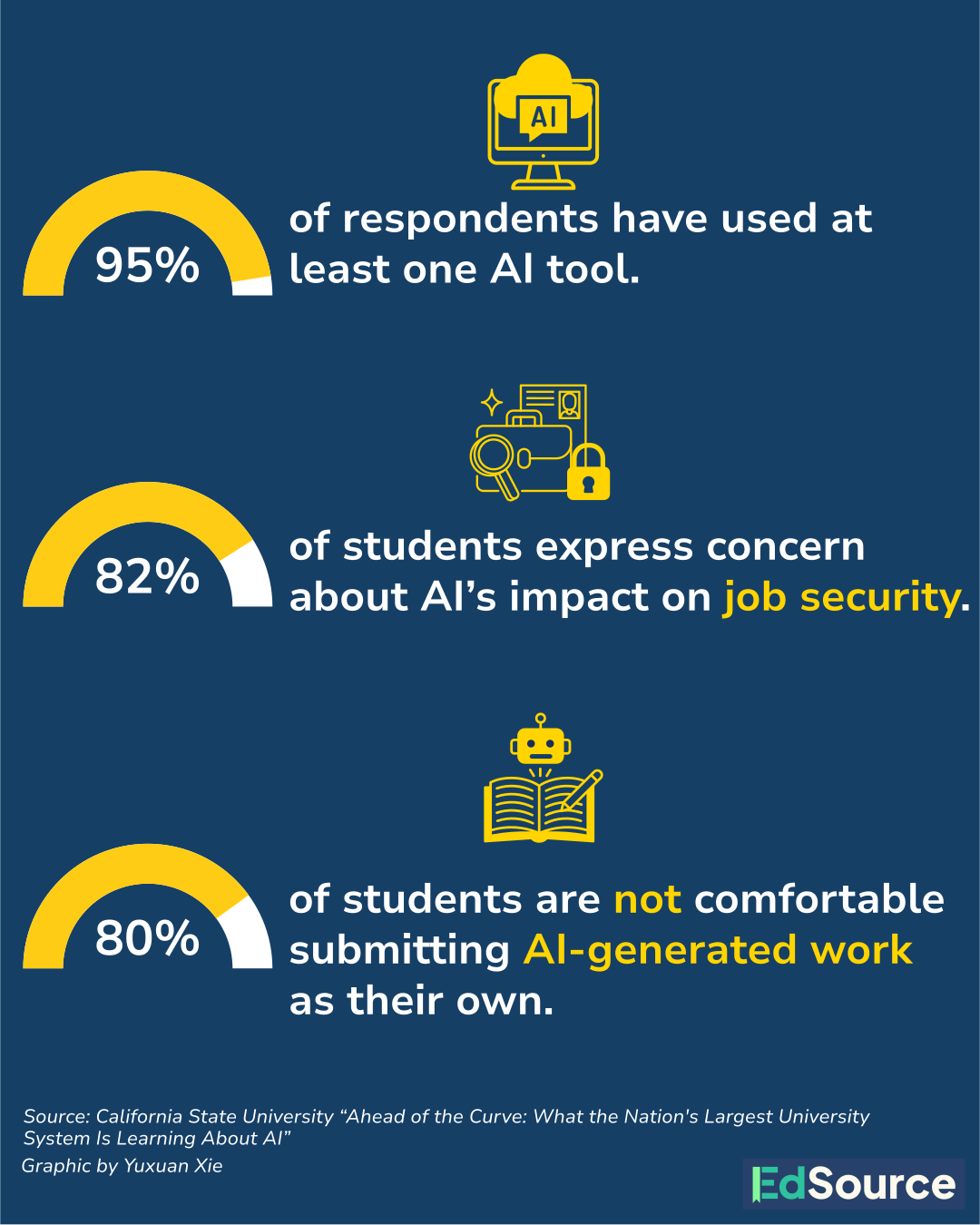
San Diego State University faculty designed the survey, which received more than 94,000 responses from students, faculty, and staff. Of all CSU students who responded, 95% reported using AI tools. 84% say they use ChatGPT, and 82% are worried that AI will negatively impact their future job security. Some worry that not understanding AI well enough will make them uncompetitive.
“I don’t want to use it, but I have to!” I majored in computer science and wrote this. “Because if I don’t, I’ll be left behind, and that’s the last thing anyone wants in this stupid job market.”
Faculty members are divided about the impact of AI on teaching and research. Just over 55% reported a positive impact, while 52% said AI has had a negative impact so far.
San Diego State University conducted its first university-wide survey in 2023 in response to student complaints about inconsistent rules regarding the use of AI in courses, said James Frazee, the campus’ vice president for information technology.
“Students face this patchwork of expectations even within the same course taught by different instructors,” Frazee said. A professor in one introductory course might encourage students to use AI, while another professor teaching the same course might forbid it, he said. “It was extremely hot.”
In the 2023 survey, one student made the following request: “Please tell me clearly what to do.”
Following this study, the San Diego State Academic Senate approved guidelines for the use of generative AI in instruction and assessment. In 2025, the Senate mandated that instructors include language about the use of AI in their course syllabi.
“I don’t know what your disposition should be, whether you’re for it or against it,” Frazee said. “It just says you need to be clear about your expectations. Without the 2023 survey data, that would never have happened.”
A 2025 university-wide survey found that only 68% of faculty included language about the use of AI in their syllabi.
Sobo and other faculty members who helped create the 2025 survey hope the data will help other CSU campuses inform their policies regarding the use of AI. The dashboard allows users to search for data for specific campuses and disciplines, and view student responses by demographic group.
A 2025 study shows that first-generation students are more interested in formal AI training, with Black, Hispanic, and Latino students more interested than white students. At San Diego State University, students are required to earn a microcredential in AI use in their first year. This also changed after the 2023 survey.
In this year’s survey, students said they want training that is relevant to their career. “I want to learn about AI tools that are actually used in my industry, not just common chatbots,” the mechanical engineering student responded. “Show us what engineers are actually doing with AI in the field.”
The California Teachers Association, which represents about 29,000 educators in the CSU system, said in a February statement that faculty should be included in future system-wide decisions about AI, including whether to renew the contract with OpenAI in July.
“CFA members continue to advocate for ethical and legally enforceable safeguards governing the use of artificial intelligence,” the CFA said in a statement, calling for “protections against the use or refusal to use the technology, professional development resources to adapt pedagogy and incorporate the technology, and further protection of faculty intellectual property.”