KYIV — Warfare inside and outside Ukraine will face a paradigm shift in the coming years as artificial intelligence systems are integrated into integrated networks to speed up decision-making on the battlefield, a senior Ukrainian official said.
Now in its fifth year of fighting a full-scale Russian invasion, Ukraine is already using AI for many battlefield functions, from flying drones toward targets to supporting combat operations planning and processing data about Russian missile attacks.
“AI will shape the new paradigm of warfare, and it is already actively doing so,” Danilo Tuvok, director of the Defense Ministry’s AI Center, told Reuters.
He predicted that if the conflict continues, AI systems will eventually be integrated into a single network monitoring the battlefield, leading to an “operating systems war” with Russia within the next three to five years.
“The system that has more data and understands that data better will propose solutions. That system will gain an advantage over other systems,” he said.
The center was established in March as Defense Minister Mykhailo Fedorov seeks to put AI and data-driven decision-making at the heart of Ukraine’s defense.
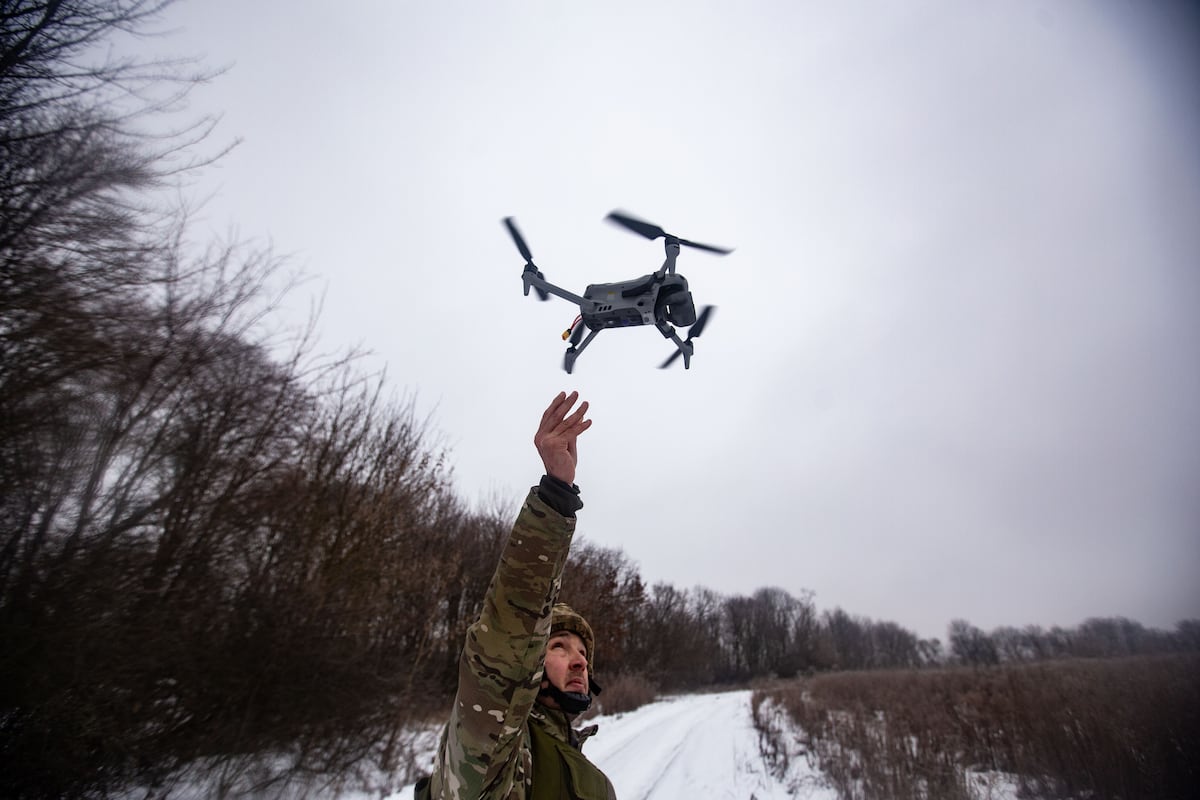
Drones are still operated by pilots, but they are already changing the way wars are fought.
The Ukrainian and Russian militaries launch thousands of unmanned aerial vehicles (UAVs) at each other every day. Kiev is also trying to solve the shortage of frontline troops with ground robots.
Drones’ ability to constantly monitor the battlefield and strike targets with precision has accelerated the “kill chain,” the process of planning and executing an attack on an enemy. AI decision-making will further speed this up, Zvok said.
technological arms race
Ukraine, which has about 1 million military personnel, is already using AI tools in its command system.
But Tuvok said the goal is to create a single operating system that encourages battlefield decisions from individual front-line units to strategic command.
He said this would greatly speed up data analysis from the 1,200-kilometer (750-mile) front and enable recommendations to human commanders.
The goal, Tuvok said, is to integrate weapons and data systems into “a single living entity that can work together.”
The technological arms race started by Europe’s largest war since World War II, which lasted from 1939 to 1945, has attracted the attention of foreign AI companies hungry for combat data to train models and opportunities to test systems.
Some companies, such as the American company Palantir, provide systems to Ukraine. Kiev has created Brave1 Dataroom, a project to share battlefield data with allies for software training.
“This is a place where you can understand whether your system is working or not,” said Zvok, wearing a black T-shirt and jeans.
Moscow is also developing artificial intelligence capabilities. A senior commander of Ukraine’s air defense force told Reuters in April that he was concerned that Russia was increasing its use of AI to plan drone and missile attacks on cities, which could significantly reduce the planning time for each attack.
“The question is how quickly we can build solutions and how practically we can apply them to have a major impact on the battlefield from our side,” Tvok said.
He added that the Defense Ministry is developing an AI-driven recruitment and personnel system as part of Fedorov’s vast data-driven transformation of the government sector.
Although Ukraine operates on the principle of human involvement in combat decisions, Tuvok said AI systems could eventually overtake humans and their presence would delay decisions.
“Then the question arises: How do we respond to the decisions proposed by autonomous systems?” he said.