Researchers at the Technion-Israel Institute of Technology have developed technology that allows users to control movement in AI-generated videos using simple mouse gestures without requiring extensive computing resources or retraining on large video datasets.
The system, called Time to Move (TTM), was developed by Dr. Or Litany of the Henry and Marilyn Taub Department of Computer Science, along with Professor Ron Kimmel and students Asaf Singer, Noam Rotstein, and Amir Mann.
Technion tools allow users to create AI videos with the mouse
(Video: Technion)


Litany presented the research last month at the International Conference on Learning Representations (ICLR 2026) in Brazil. This conference is considered one of the world’s leading gatherings in deep learning and artificial intelligence.
This technology is designed to address one of the key limitations of AI video generation: the difficulty of precisely controlling how objects and characters move over time. “Our development solves one of the main limitations of AI-based video generation: the difficulty of precisely controlling the movement of objects and characters over time,” said Litany.
He said TTM can be integrated into existing video models as a plug-in and no retraining is required. Unlike previous approaches that require model-specific adaptations and significant computational power, the Technion system operates without additional computational costs, he said.
“This expands access beyond giants like Google and Meta and helps democratize AI video creation,” Litany said.
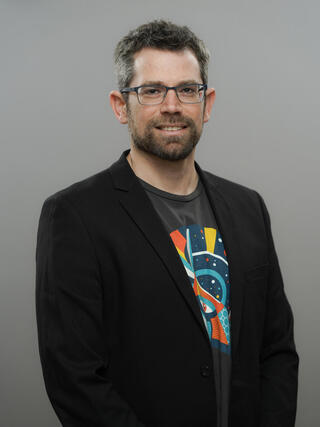 Doctor or Litany Photo: Technion
1 View gallery
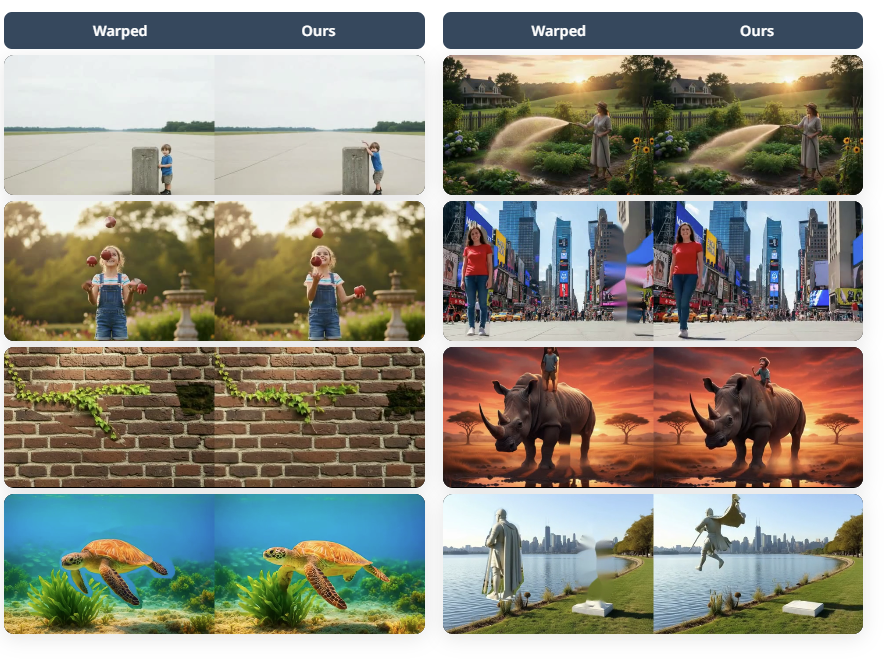
Demonstrate new technology by comparing it to existing technology. For each pair of images, the left side shows the current feature and the right side shows the TTM feature.
(Illustration: Technion)
The key innovation behind this technology is a method called Dual Clock Denoising, which refines movement while balancing the user’s intended movement with natural-looking video results.
According to the Technion, experiments conducted by the researchers showed that TTM matches training-based methods and outperforms TTM in terms of movement accuracy and realism. The system also allows users to edit the appearance of objects and add new objects to the scene. This is a feature not provided by some previously trained methods.
The researchers said the technology is a step toward more intuitive and controllable tools for video generation.
Mr. Litany joined the Technion’s Computer Science Department as a senior lecturer in 2023 after being selected as an Azrieli Faculty Fellow and a Taub Fellow. He previously completed postdoctoral fellowships at Stanford University and Meta University’s FAIR, working on computer vision technology.